
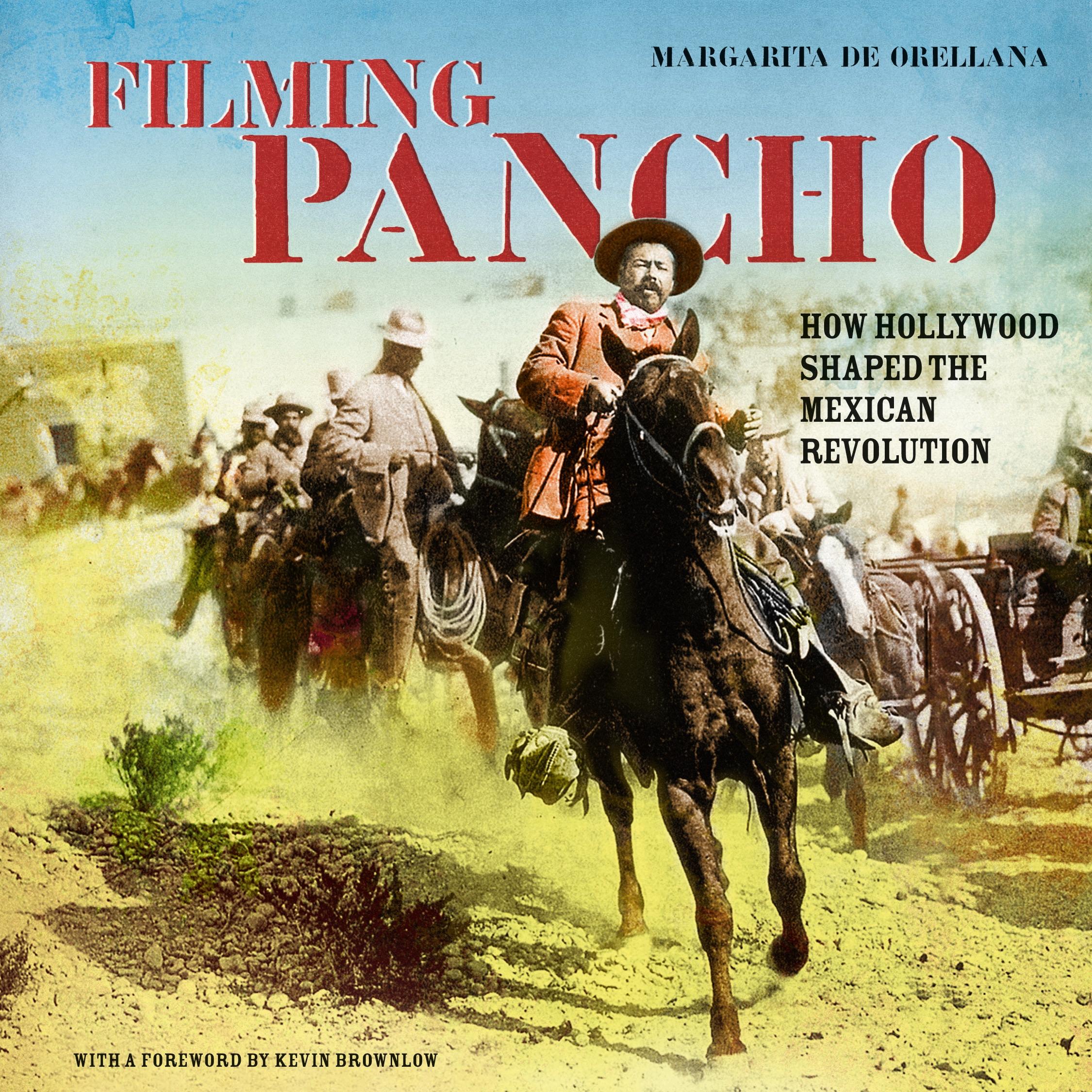
On January 3, 1914 Pancho Villa became Hollywood's first Mexican superstar. In signing an exclusive movie contract, Villa agreed to keep other film companies from his battlefield, to fight in daylight wherever possible, and to reconstruct battles if the footage needed reshooting.
Through memoir and newspaper reports, Margarita De Orellana looks at the documentary film-makers who went down to cover events in Mexico. Feature film-makers in Hollywood portrayed the border as the dividing line between order and chaos, in the process developing a series of lasting Mexican stereotypes-the greaser, the bandit, the beautiful se�orita, the exotic Aztec. Filming Pancho reveals how Mexico was constructed in the American imagination and how movies reinforced and justified both American expansionism and racial and social prejudice.
Through memoir and newspaper reports, Margarita De Orellana looks at the documentary film-makers who went down to cover events in Mexico. Feature film-makers in Hollywood portrayed the border as the dividing line between order and chaos, in the process developing a series of lasting Mexican stereotypes-the greaser, the bandit, the beautiful se�orita, the exotic Aztec. Filming Pancho reveals how Mexico was constructed in the American imagination and how movies reinforced and justified both American expansionism and racial and social prejudice.
Payez facilement par carte, Klarna, Apple Pay ou Google Pay. Pas satisfait ? Vous avez toujours une garantie de remboursement de 14 jours. En savoir plus dans nos conditions. Si vous avez des questions, envoyez-nous un e-mail à hello@memmo.org.
Memmo facilite tes études, où que tu sois dans le monde. On rassemble tes manuels de cours et des outils d'étude intelligents au même endroit : résumés, quiz, podcasts et flashcards. Et il y a Ted, ton compagnon d'étude qui répond à toutes tes questions. Plus de 50 000 étudiants étudient déjà ici – conçu pour t'aider à apprendre plus vite et à moins stresser.
Tu pourrais aussi aimer
Acheter le livre0