
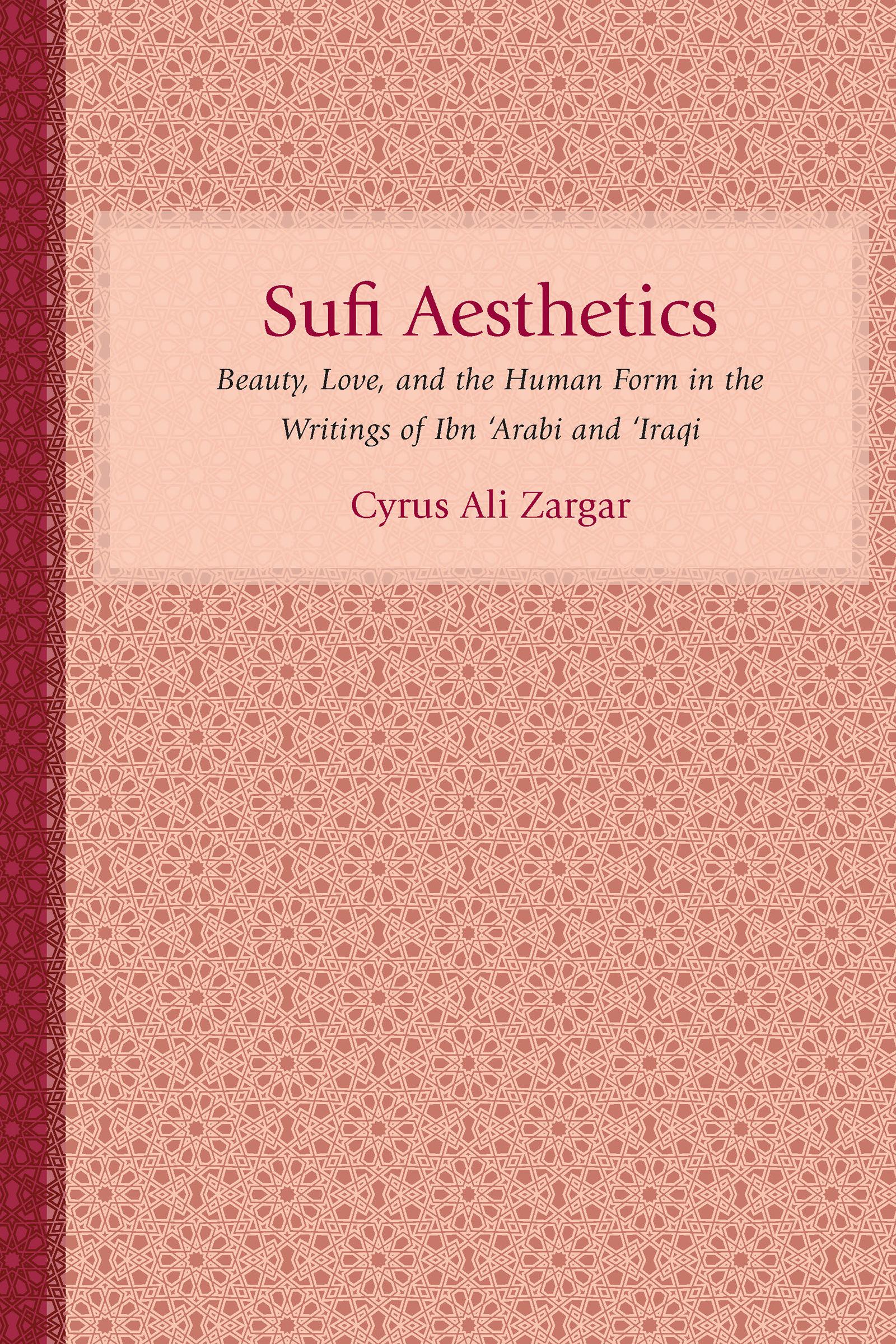
An approach to understanding Muslim mystics as perceiving divine beauty and human beauty as one reality
Sufi Aesthetics argues that the interpretive keys to erotic Sufi poems and their medieval commentaries lie in understanding a unique perceptual experience. Using careful analysis of primary texts, Cyrus Ali Zargar explores the theoretical and poetic pronouncements of two major Muslim mystics, Muhyi al-Din ibn al-'Arabi (d. 1240) and Fakhr al-Din 'Iraqi (d. 1289), under the premise that behind any literary tradition exist organic aesthetic values. The complex assertions of these Sufis appear not as abstract theory, but as a way of seeing all things, including the sensory world.
In this study Zargar responds to a long-standing debate in the study of Sufi poetics over the use of erotic language to describe the divine. He argues that such language results from an altered perception of Muslim mystics in which divine beauty and human beauty are seen as one reality. The Sufi masters, Zargar asserts, shared an aesthetic vision quite different from those who have often studied them. Sufism's foremost theoretician, Ibn 'Arabi, is presented from a neglected perspective as a poet, aesthete, and lover of the human form. Ibn 'Arabi in fact proclaimed a view of human beauty markedly similar to that of many mystics from a Persian contemplative school of thought, the "School of Passionate Love," which would later find its epitome in 'Iraqi, one of Persian literature's most celebrated poet-saints. Many in this school advocated the controversial practice of gazing at beautiful human faces, a topic Zargar also discusses.
The examination of central Sufi texts in Persian and Arabic establishes that the profundity attributed to mystical encounters with the sensory and supersensory has far-reaching extensions in evaluations of that which is seen, that which is deemed beautiful, and that which is expressed as a result. Through this aesthetic approach, this comparative study overturns assumptions made not only about Sufism and classical Arabic and Persian poetry, but also other uses of erotic imagery in Muslim approaches to sexuality, the human body, and the paradise of the afterlife described in the Qur'an.
Payez facilement par carte, Klarna, Apple Pay ou Google Pay. Pas satisfait ? Vous avez toujours une garantie de remboursement de 14 jours. En savoir plus dans nos conditions. Si vous avez des questions, envoyez-nous un e-mail à hello@memmo.org.
Memmo facilite tes études, où que tu sois dans le monde. On rassemble tes manuels de cours et des outils d'étude intelligents au même endroit : résumés, quiz, podcasts et flashcards. Et il y a Ted, ton compagnon d'étude qui répond à toutes tes questions. Plus de 50 000 étudiants étudient déjà ici – conçu pour t'aider à apprendre plus vite et à moins stresser.