
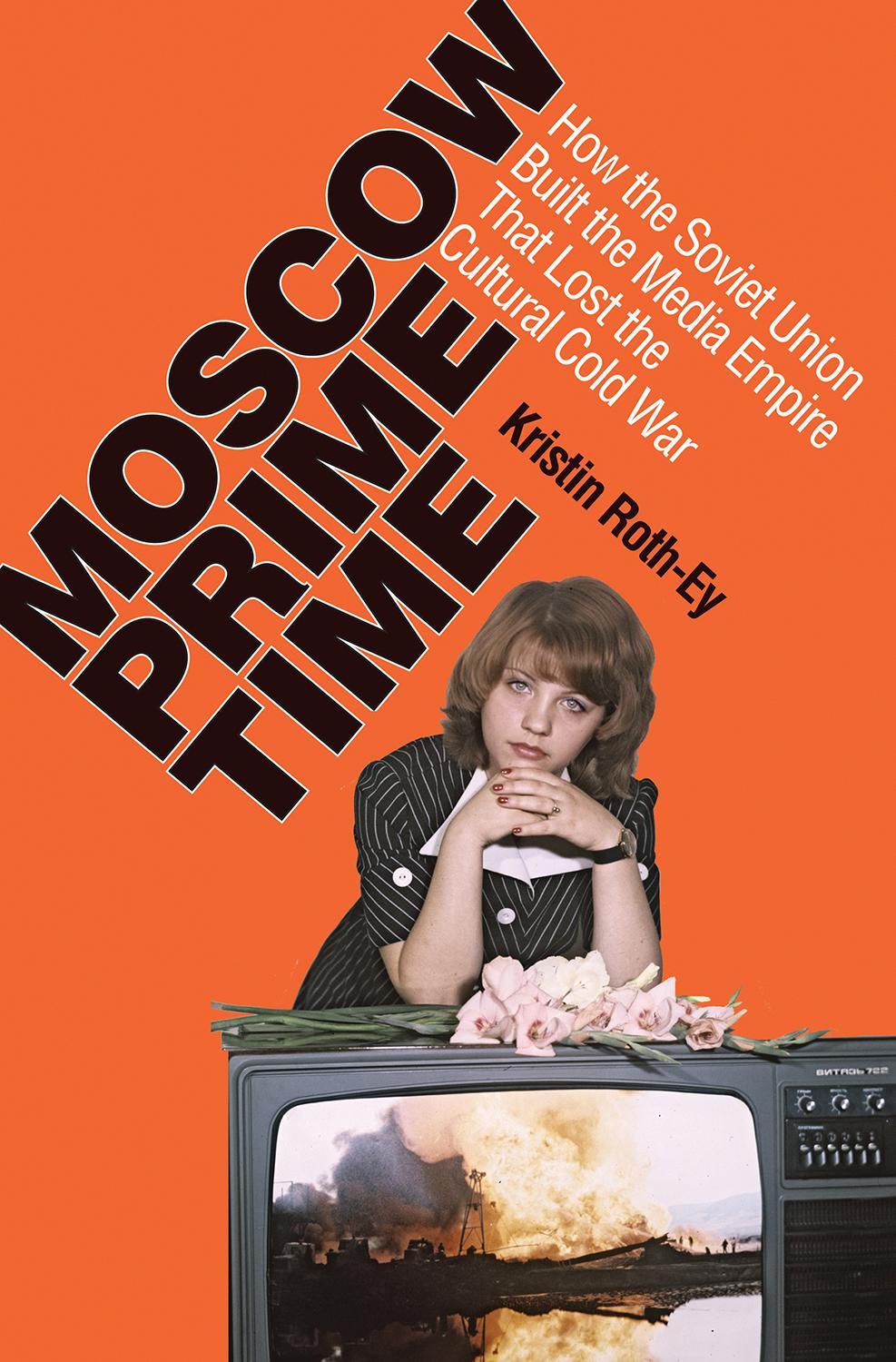
When Nikita Khrushchev visited Hollywood in 1959 only to be scandalized by a group of scantily clad actresses, his message was blunt: Soviet culture would soon consign the mass culture of the West, epitomized by Hollywood, to the "dustbin of history." In Moscow Prime Time, a portrait of the Soviet broadcasting and film industries and of everyday Soviet consumers from the end of World War II through the 1970s, Kristin Roth-Ey shows us how and why Khrushchev's ambitious vision ultimately failed to materialize.
The USSR surged full force into the modern media age after World War II, building cultural infrastructures—and audiences—that were among the world's largest. Soviet people were enthusiastic radio listeners, TV watchers, and moviegoers, and the great bulk of what they were consuming was not the dissident culture that made headlines in the West, but orthodox, made-in-the-USSR content. This, then, was Soviet culture's real prime time and a major achievement for a regime that had long touted easy, everyday access to a socialist cultural experience as a birthright. Yet Soviet success also brought complex and unintended consequences.
Emphasizing such factors as the rise of the single-family household and of a more sophisticated consumer culture, the long reach and seductive influence of foreign media, and the workings of professional pride and raw ambition in the media industries, Roth-Ey shows a Soviet media empire transformed from within in the postwar era. The result, she finds, was something dynamic and volatile: a new Soviet culture, with its center of gravity shifted from the lecture hall to the living room, and a new brand of cultural experience, at once personal, immediate, and eclectic—a new Soviet culture increasingly similar, in fact, to that of its self-defined enemy, the mass culture of the West. By the 1970s, the Soviet media empire, stretching far beyond its founders' wildest dreams, was busily undermining the very promise of a unique Soviet culture—and visibly losing the cultural cold war. Moscow Prime Time is the first book to untangle the paradoxes of Soviet success and failure in the postwar media age.
Payez facilement par carte, Klarna, Apple Pay ou Google Pay. Pas satisfait ? Vous avez toujours une garantie de remboursement de 14 jours. En savoir plus dans nos conditions. Si vous avez des questions, envoyez-nous un e-mail à hello@memmo.org.
Memmo facilite tes études, où que tu sois dans le monde. On rassemble tes manuels de cours et des outils d'étude intelligents au même endroit : résumés, quiz, podcasts et flashcards. Et il y a Ted, ton compagnon d'étude qui répond à toutes tes questions. Plus de 50 000 étudiants étudient déjà ici – conçu pour t'aider à apprendre plus vite et à moins stresser.