
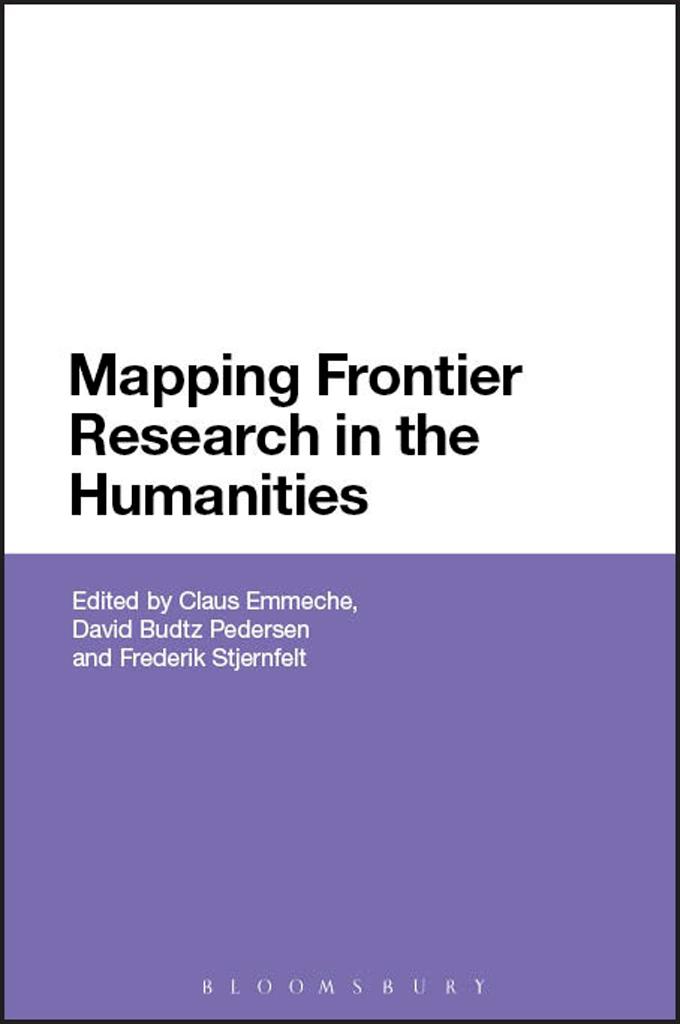
Knowledge production in academia today is burgeoning and increasingly interdisciplinary in nature. Research within the humanities is no exception: it is distributed across a variety of methodic styles of research and increasingly involves interactions with fields outside the narrow confines of the university. As a result, the notion of liberal arts and humanities within Western universities is undergoing profound transformations. In Mapping Frontier Research in the Humanities, the contributors explore this transformative process. What are the implications, both for the modes of research and for the organisation of the humanities and higher education?
The volume explores the intra- and extra-academic engagement of humanities researchers, their styles of research, and exemplifies their interdisciplinary character. The humanities are shaping debates about culture and identity, but how? Has neuroscience changed the humanities? What do they tell us about 'hypes' and economic 'bubbles'? What is their international agenda? Drawing on a number of case studies from the humanities, the perceived divide between classical and 'post-academic' modes of research can be captured by a republican theory of the humanities. Avoiding simple mechanical metrics, the contributors suggest a heuristic appreciation of different types of impact and styles of research. From this perspective, a more composite picture of research on human culture, language and history emerges. It goes beyond “rational agents”, and situates humanities research in more complex landscapes of collective identities, networks, and constraints that open for new forms of intellectual leadership in the 21st century.
The volume explores the intra- and extra-academic engagement of humanities researchers, their styles of research, and exemplifies their interdisciplinary character. The humanities are shaping debates about culture and identity, but how? Has neuroscience changed the humanities? What do they tell us about 'hypes' and economic 'bubbles'? What is their international agenda? Drawing on a number of case studies from the humanities, the perceived divide between classical and 'post-academic' modes of research can be captured by a republican theory of the humanities. Avoiding simple mechanical metrics, the contributors suggest a heuristic appreciation of different types of impact and styles of research. From this perspective, a more composite picture of research on human culture, language and history emerges. It goes beyond “rational agents”, and situates humanities research in more complex landscapes of collective identities, networks, and constraints that open for new forms of intellectual leadership in the 21st century.
Payez facilement par carte, Klarna, Apple Pay ou Google Pay. Pas satisfait ? Vous avez toujours une garantie de remboursement de 14 jours. En savoir plus dans nos conditions. Si vous avez des questions, envoyez-nous un e-mail à hello@memmo.org.
Memmo facilite tes études, où que tu sois dans le monde. On rassemble tes manuels de cours et des outils d'étude intelligents au même endroit : résumés, quiz, podcasts et flashcards. Et il y a Ted, ton compagnon d'étude qui répond à toutes tes questions. Plus de 50 000 étudiants étudient déjà ici – conçu pour t'aider à apprendre plus vite et à moins stresser.