
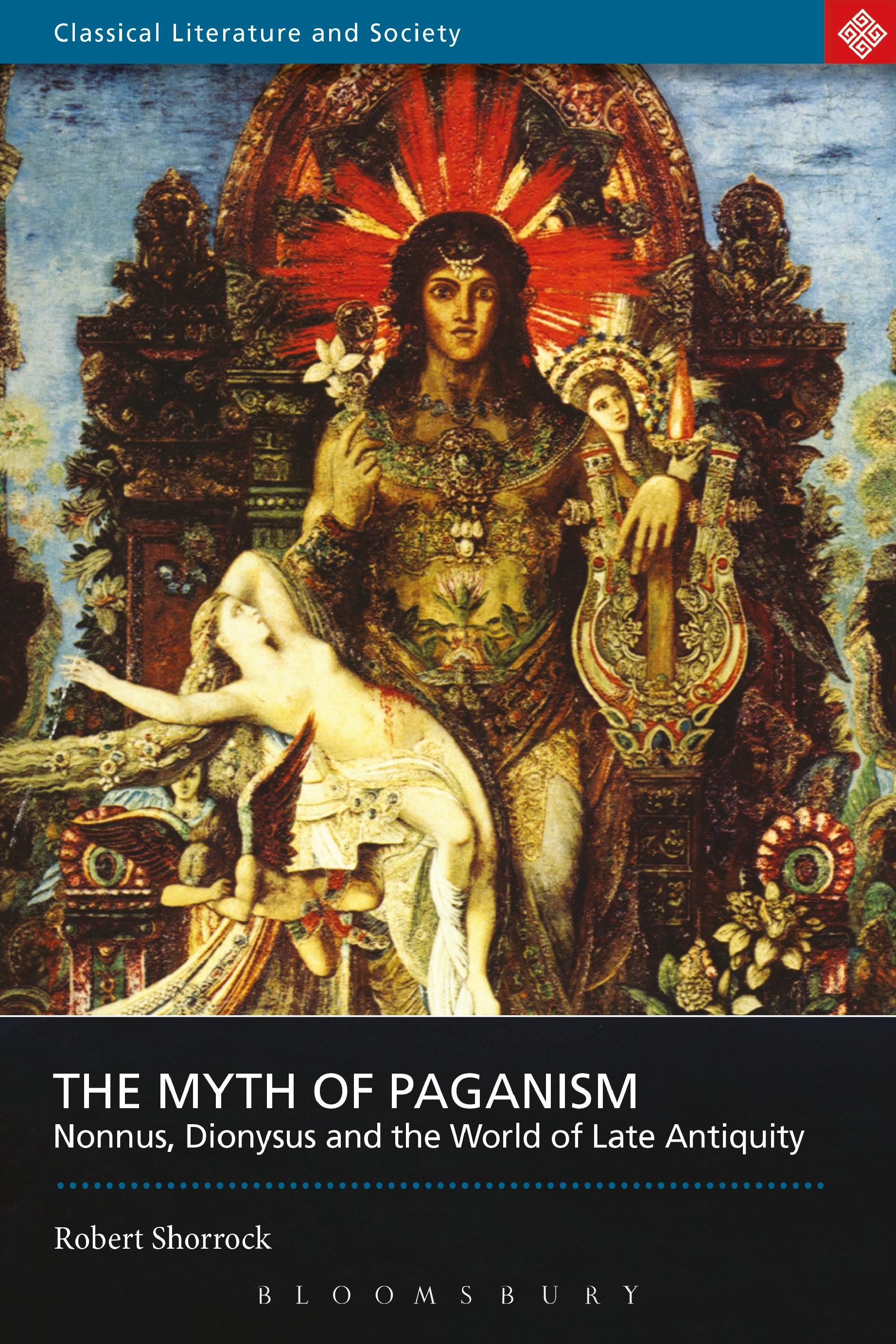
Traditional and still prevalent accounts of late antique literature draw a clear distinction between 'pagan' and 'Christian' forms of poetry: whereas Christian poetry is taken seriously in terms its contribution to culture and society at large, so-called pagan or secular poetry is largely ignored, as though it has no meaningful part to play within the late antique world. The Myth of Paganism sets out to deconstruct this view of two contrasting poetic traditions and proposes in its place a new integrated model for the understanding of late antique poetry. As the book argues, the poet of Christ and the poet of the Muses were drawn together into an active, often provocative, dialogue about the relationship between Christianity and the Classical tradition and, ultimately, about the meaning of late antiquity itself. An analysis of the poetry of Nonnus of Panopolis, author of both a 'pagan' epic about Dionysus and a Christian translation of St John's Gospel, helps to illustrate this complex dialectic between pagan and Christian voices.
Payez facilement par carte, Klarna, Apple Pay ou Google Pay. Pas satisfait ? Vous avez toujours une garantie de remboursement de 14 jours. En savoir plus dans nos conditions. Si vous avez des questions, envoyez-nous un e-mail à hello@memmo.org.
Memmo facilite tes études, où que tu sois dans le monde. On rassemble tes manuels de cours et des outils d'étude intelligents au même endroit : résumés, quiz, podcasts et flashcards. Et il y a Ted, ton compagnon d'étude qui répond à toutes tes questions. Plus de 50 000 étudiants étudient déjà ici – conçu pour t'aider à apprendre plus vite et à moins stresser.