
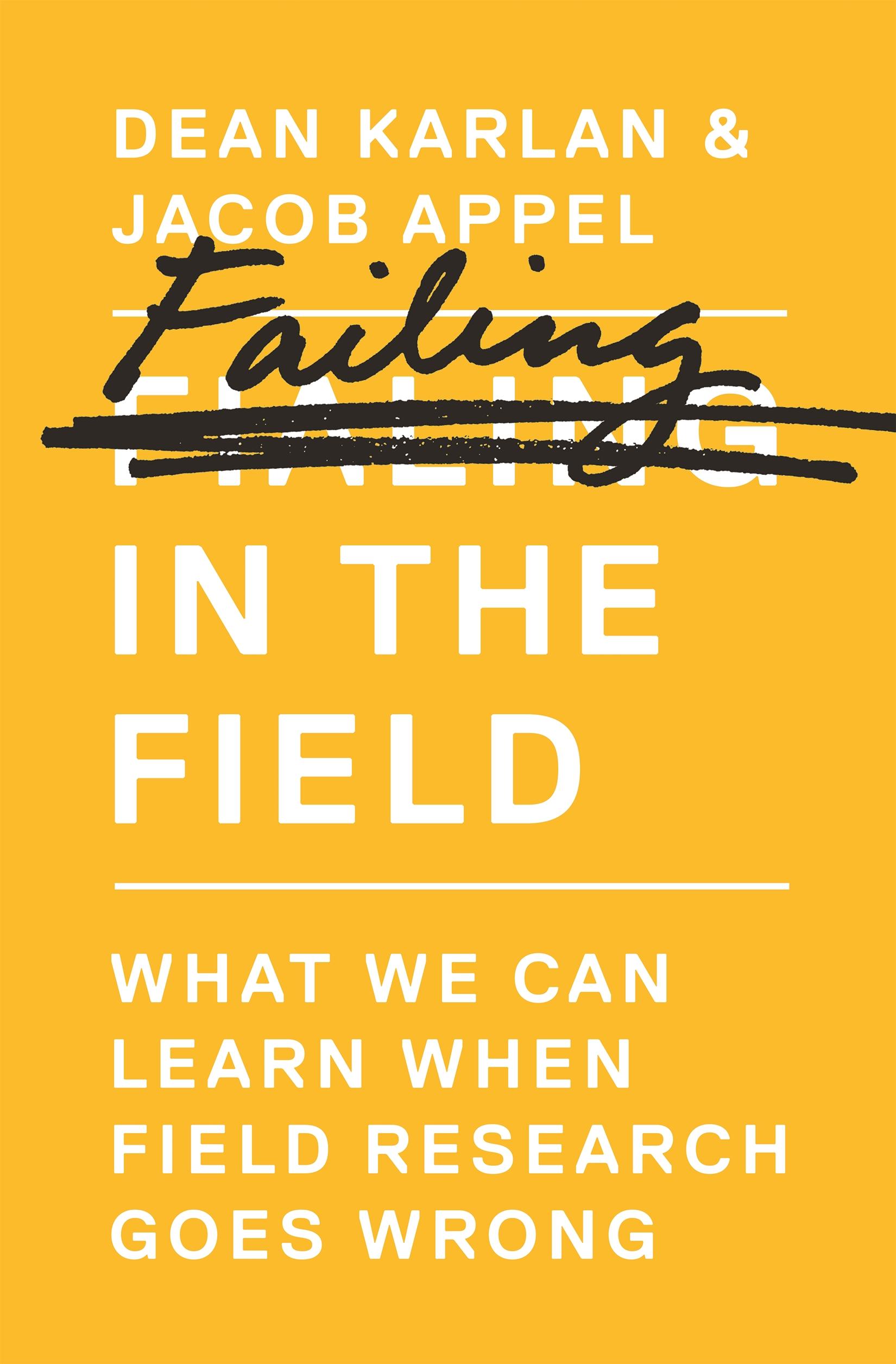
A revealing look at the common causes of failures in randomized control experiments during field reseach—and how to avoid them
All across the social sciences, from development economics to political science departments, researchers are going into the field to collect data and learn about the world. While much has been gained from the successes of randomized controlled trials, stories of failed projects often do not get told. In Failing in the Field, Dean Karlan and Jacob Appel delve into the common causes of failure in field research, so that researchers might avoid similar pitfalls in future work.
Drawing on the experiences of top social scientists working in developing countries, this book delves into failed projects and helps guide practitioners as they embark on their research. From experimental design and implementation to analysis and partnership agreements, Karlan and Appel show that there are important lessons to be learned from failures at every stage. They describe five common categories of failures, review six case studies in detail, and conclude with some reflections on best (and worst) practices for designing and running field projects, with an emphasis on randomized controlled trials. There is much to be gained from investigating what has previously not worked, from misunderstandings by staff to errors in data collection.
Cracking open the taboo subject of the stumbles that can take place in the implementation of research studies, Failing in the Field is a valuable "how-not-to" handbook for conducting fieldwork and running randomized controlled trials in development settings.
Payez facilement par carte, Klarna, Apple Pay ou Google Pay. Pas satisfait ? Vous avez toujours une garantie de remboursement de 14 jours. En savoir plus dans nos conditions. Si vous avez des questions, envoyez-nous un e-mail à hello@memmo.org.
Memmo facilite tes études, où que tu sois dans le monde. On rassemble tes manuels de cours et des outils d'étude intelligents au même endroit : résumés, quiz, podcasts et flashcards. Et il y a Ted, ton compagnon d'étude qui répond à toutes tes questions. Plus de 50 000 étudiants étudient déjà ici – conçu pour t'aider à apprendre plus vite et à moins stresser.