
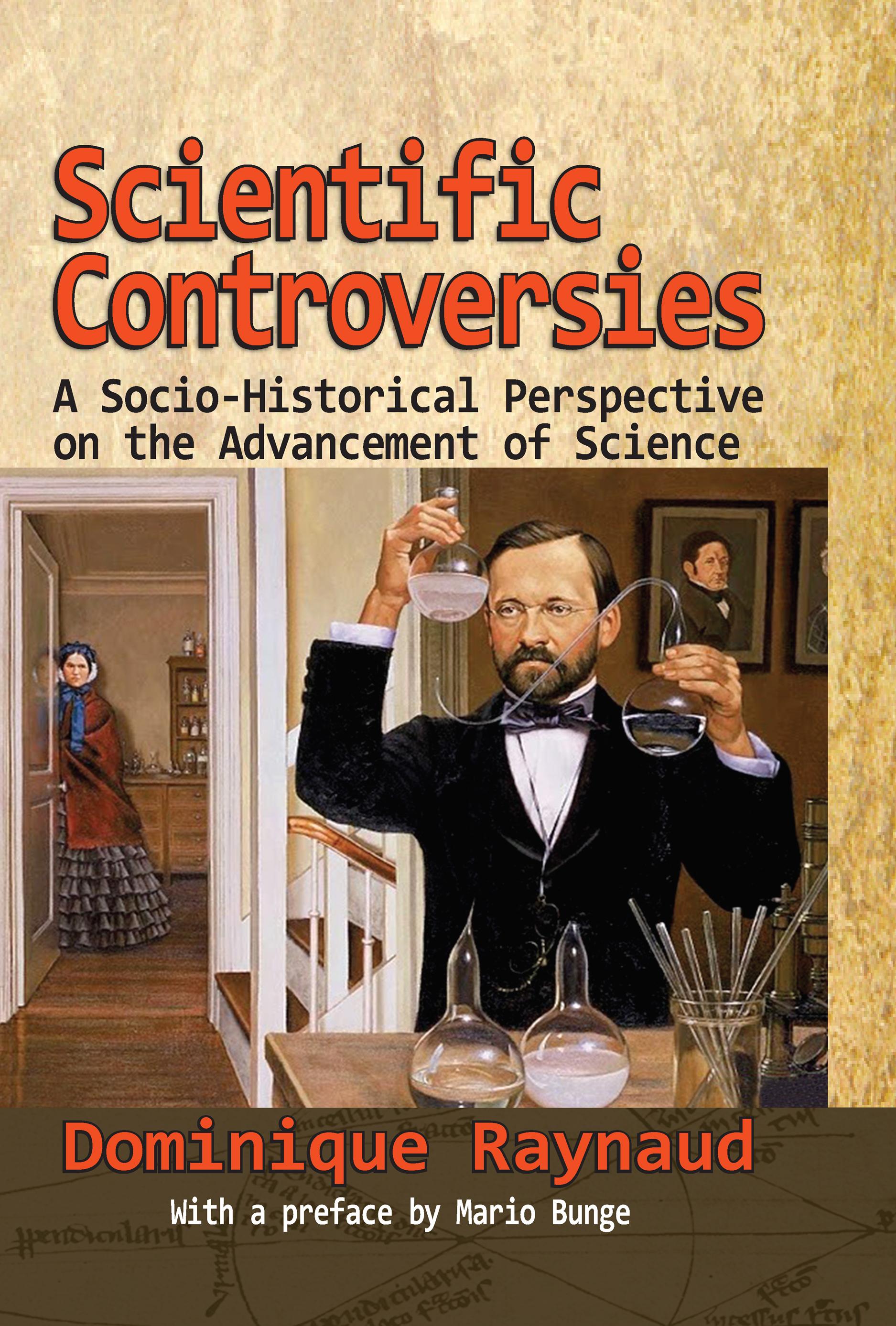
In Scientific Controversies, Dominque Raynaud shows how organized debates in the sciences help us establish or verify our knowledge of the world. If debates focus on form, scientific controversies are akin to public debates that can be understood within the framework of theories of conflict. If they focus on content, then such controversies have to do with a specific activity and address the nature of science itself. Understanding the major focus of a scientific controversy is a first step toward understanding these debates and assessing their merits.Controversies of unique socio-historic context, disciplines, and characteristics are examined: Pasteur's germ theory and Pouchet's theory of spontaneous generation; vitalism advocated at Montpellier versus experimental medicine in Paris; the science of optics about the propagation of visual rays; the origins of relativism (the Duhem-Quine problem). Touching on the work of Boudon, Popper, and others, Raynaud puts forward an incrementalist theory about the advancement of science through scientific controversies.The debates Raynaud has selected share in common their pivotal importance to the history of the sciences. By understanding the role of controversy, we better understand the functioning of science and the stakes of the contemporary scientific debates.
Payez facilement par carte, Klarna, Apple Pay ou Google Pay. Pas satisfait ? Vous avez toujours une garantie de remboursement de 14 jours. En savoir plus dans nos conditions. Si vous avez des questions, envoyez-nous un e-mail à hello@memmo.org.
Memmo facilite tes études, où que tu sois dans le monde. On rassemble tes manuels de cours et des outils d'étude intelligents au même endroit : résumés, quiz, podcasts et flashcards. Et il y a Ted, ton compagnon d'étude qui répond à toutes tes questions. Plus de 50 000 étudiants étudient déjà ici – conçu pour t'aider à apprendre plus vite et à moins stresser.
Tu pourrais aussi aimer
Acheter le livre0