
The idea that research should become more interdisciplinary has become commonplace. According to influential commentators, the unprecedented complexity of problems such as climate change or the social implications of biomedicine demand interdisciplinary efforts integrating both the social and natural sciences. In this context, the question of whether a given knowledge practice is too disciplinary, or interdisciplinary, or not disciplinary enough has become an issue for governments, research policy makers and funding agencies. Interdisciplinarity, in short, has emerged as a key political preoccupation; yet the term tends to obscure as much as illuminate the diverse practices gathered under its rubric.
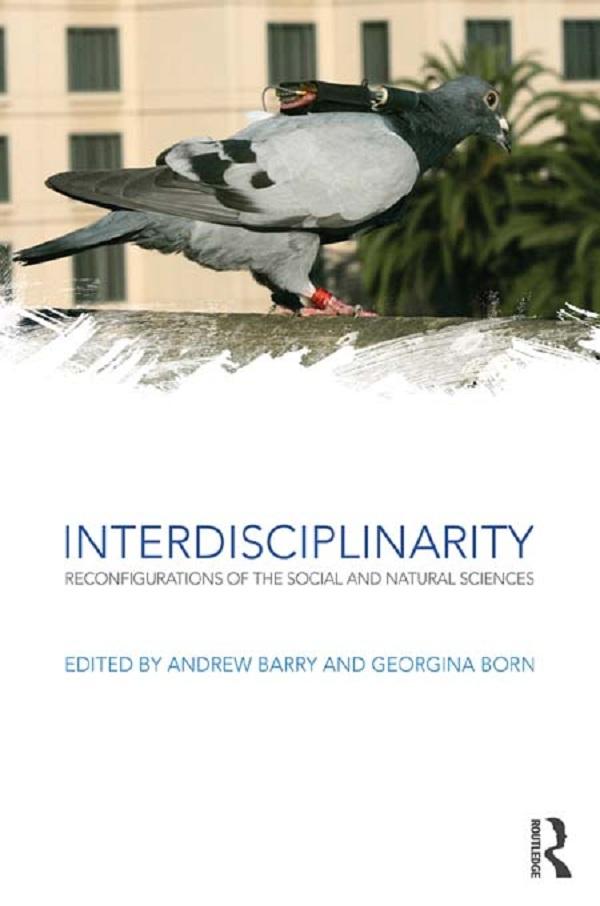
This volume offers a new approach to theorising interdisciplinarity, showing how the boundaries between the social and natural sciences are being reconfigured. It examines the current preoccupation with interdisciplinarity, notably the ascendance of a particular discourse in which it is associated with a transformation in the relations between science, technology and society. Contributors address attempts to promote collaboration between, on the one hand, the natural sciences and engineering and, on the other, the social sciences, arts and humanities. From ethnography in the IT industry to science and technology studies, environmental science to medical humanities, cybernetics to art-science, the collection interrogates how interdisciplinarity has come to be seen as a solution not only to enhancing relations between science and society, but the pursuit of accountability and the need to foster innovation.
Interdisciplinarity is essential reading for scholars, students and policy makers across the social sciences, arts and humanities, including anthropology, geography, sociology, science and technology studies and cultural studies, as well as all those engaged in interdisciplinary research. It will have particular relevance for those concerned with the knowledge economy, science policy, environmental politics, applied anthropology, ELSI research, medical humanities, and art-science.
Payez facilement par carte, Klarna, Apple Pay ou Google Pay. Pas satisfait ? Vous avez toujours une garantie de remboursement de 14 jours. En savoir plus dans nos conditions. Si vous avez des questions, envoyez-nous un e-mail à hello@memmo.org.
Memmo facilite tes études, où que tu sois dans le monde. On rassemble tes manuels de cours et des outils d'étude intelligents au même endroit : résumés, quiz, podcasts et flashcards. Et il y a Ted, ton compagnon d'étude qui répond à toutes tes questions. Plus de 50 000 étudiants étudient déjà ici – conçu pour t'aider à apprendre plus vite et à moins stresser.