
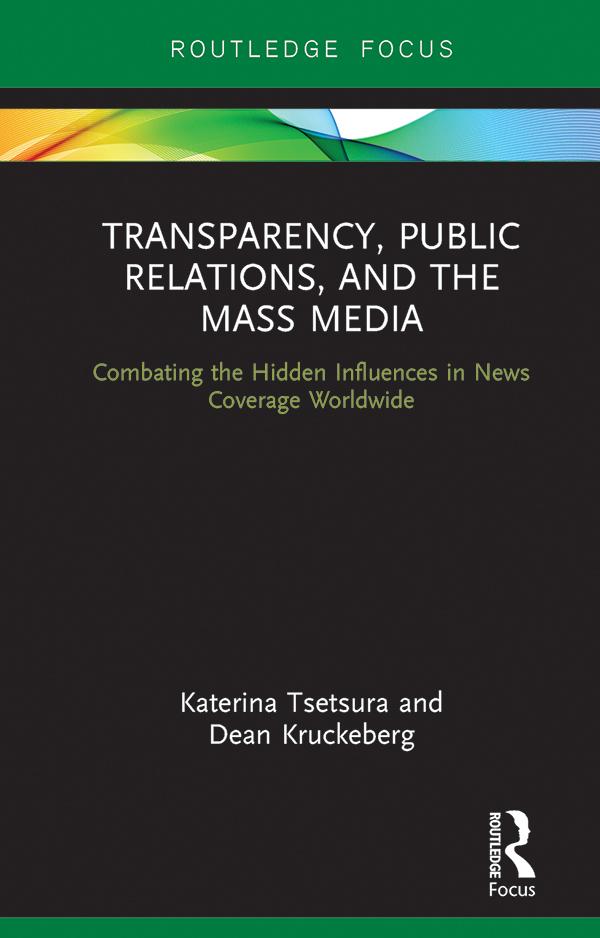
This book is about media transparency and good-faith attempts of honesty by both the sources and the gate-keepers of news and other information that the mass media present as being unbiased. Specifically, this book provides a theoretical framework for understanding media transparency and its antithesis--media opacity--by analyzing extensive empirical data that the authors have collected from more than 60 countries throughout the world. The practice of purposeful media opacity, which exists to greater or lesser extents worldwide, is a powerful hidden influencer of the ostensibly impartial media gate-keepers whose publicly perceived role is to present news and other information based on these gate-keepers’ perception of this information’s truthfulness. Empirical data that the authors have collected globally illustrate the extent of media opacity practices worldwide and note its pervasiveness in specific regions and countries. The authors examine, from multiple perspectives, the complex question of whether media opacity should be categorically condemned as being universally inappropriate and unethical or whether it should be accepted—or at least tolerated—in some situations and environments.
Payez facilement par carte, Klarna, Apple Pay ou Google Pay. Pas satisfait ? Vous avez toujours une garantie de remboursement de 14 jours. En savoir plus dans nos conditions. Si vous avez des questions, envoyez-nous un e-mail à hello@memmo.org.
Memmo facilite tes études, où que tu sois dans le monde. On rassemble tes manuels de cours et des outils d'étude intelligents au même endroit : résumés, quiz, podcasts et flashcards. Et il y a Ted, ton compagnon d'étude qui répond à toutes tes questions. Plus de 50 000 étudiants étudient déjà ici – conçu pour t'aider à apprendre plus vite et à moins stresser.