
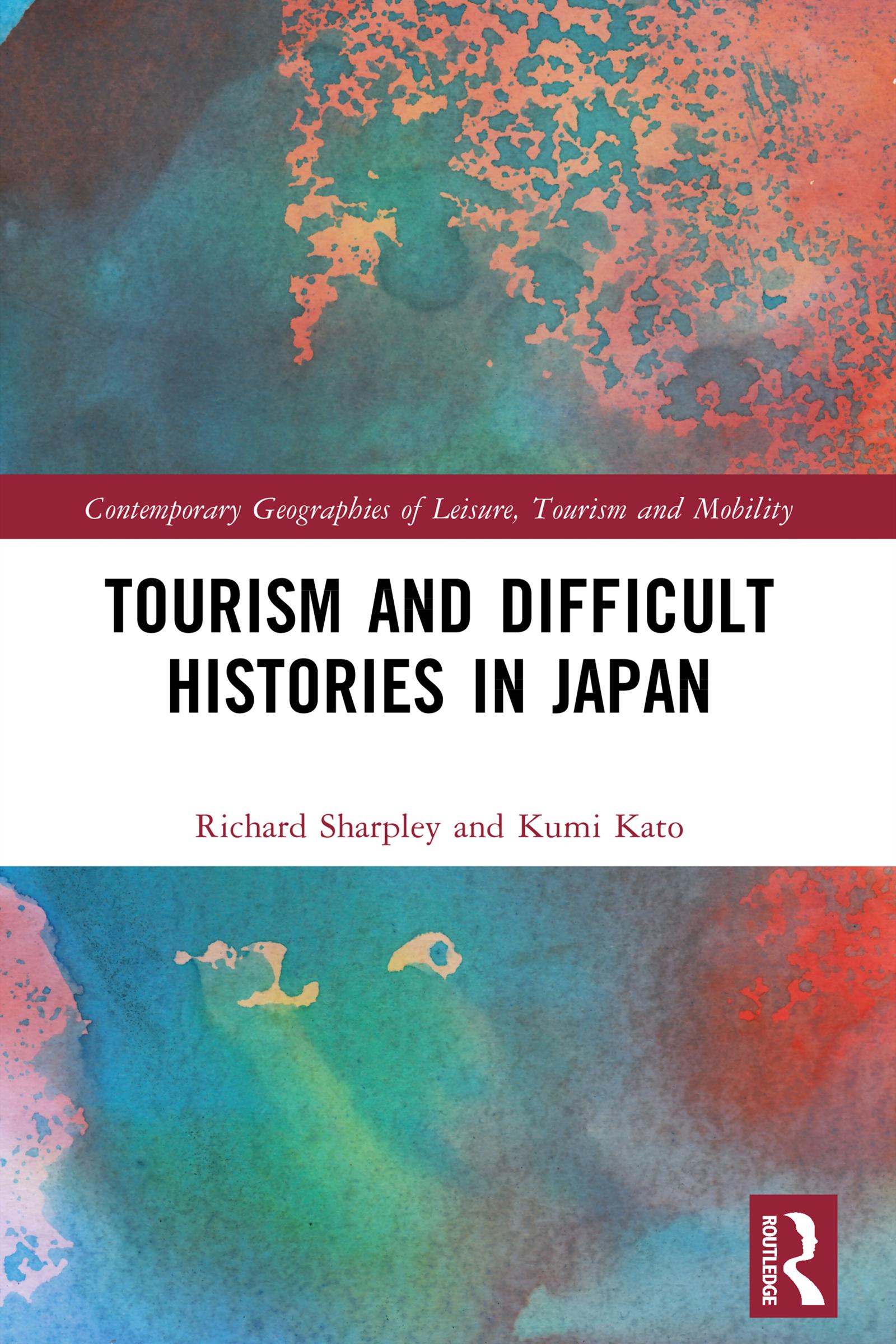
This book explores the relationship between tourism and difficult histories in Japan. More specifically, it considers the manner in which places associated with past dark events are presented and interpreted for tourists. In so doing, it seeks to identify the extent to which tourism contributes to enhancing mutual understanding as a stated objective of Japanese tourism policy.
The book presents a range of tourist destinations which offer the opportunity to consider dark events in Japanese history in the context of broader contemporary debates surrounding how such events should be remembered and the contribution of these tourist destinations to peace and reconciliation. Case studies include both well- and lesser-known destinations related to the Pacific War, from a comparison of the Hiroshima and Nagasaki Peace/Atomic Bomb Museums to an island where poison gas was manufactured and a former copper mine in which prisoners of war worked during 1944–1945. Other case studies focus on disaster sites, contentious industrial heritage, controversial Hansen’s disease (leprosy) sanatoria and more.
This significant volume contributes to an understanding of the relationship between tourism and difficult histories in Japan. This will appeal widely across disciplines, including Tourism, Asian Studies, Geography, War and Reconciliation Studies, Peace Studies and International Relations.
Payez facilement par carte, Klarna, Apple Pay ou Google Pay. Pas satisfait ? Vous avez toujours une garantie de remboursement de 14 jours. En savoir plus dans nos conditions. Si vous avez des questions, envoyez-nous un e-mail à hello@memmo.org.
Memmo facilite tes études, où que tu sois dans le monde. On rassemble tes manuels de cours et des outils d'étude intelligents au même endroit : résumés, quiz, podcasts et flashcards. Et il y a Ted, ton compagnon d'étude qui répond à toutes tes questions. Plus de 50 000 étudiants étudient déjà ici – conçu pour t'aider à apprendre plus vite et à moins stresser.