
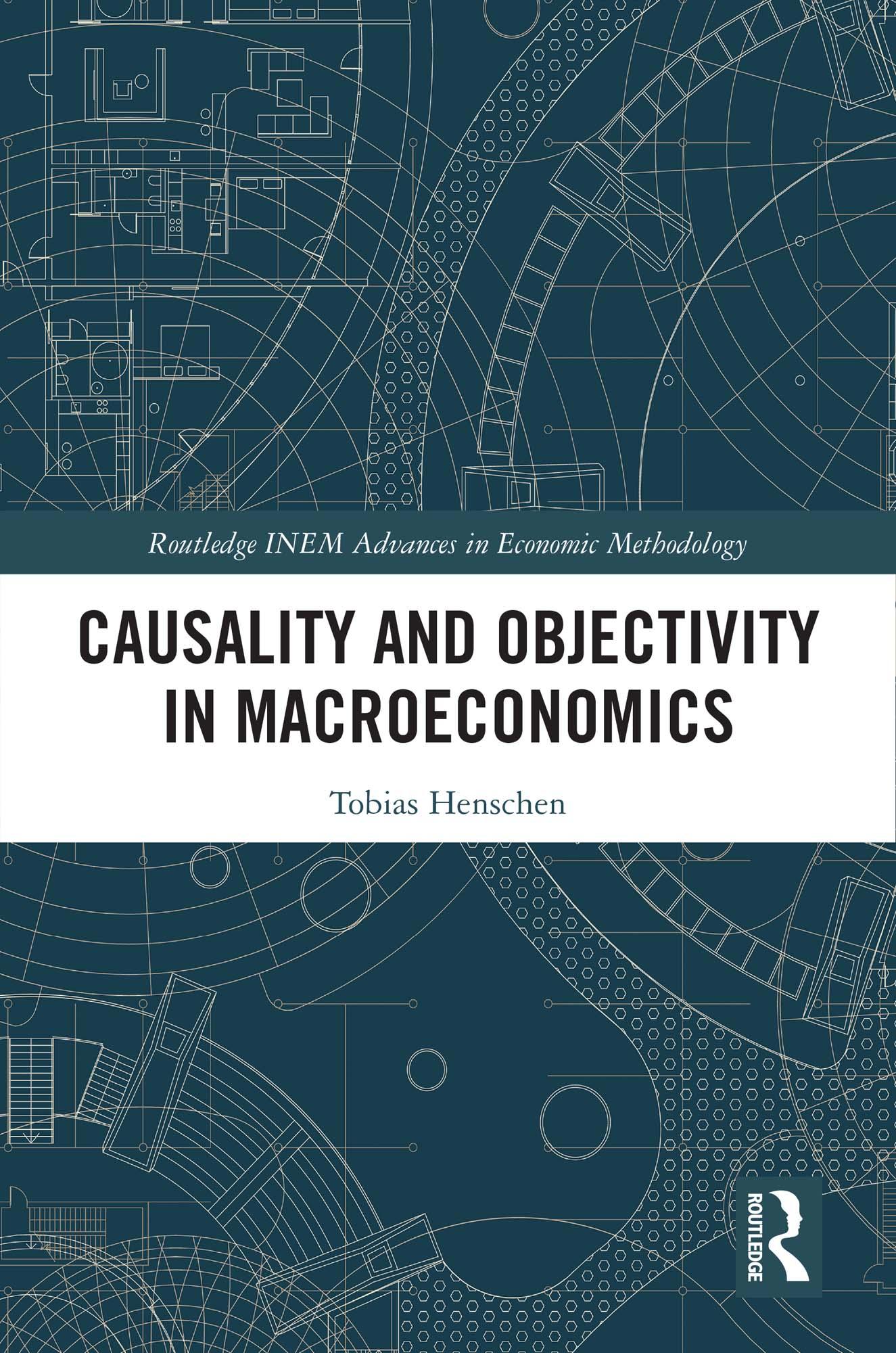
Central banks and other policymaking institutions use causal hypotheses to justify macroeconomic policy decisions to the public and public institutions. These hypotheses say that changes in one macroeconomic aggregate (e.g. aggregate demand) cause changes in other macroeconomic aggregates (e.g. in inflation). An important (perhaps the most important) goal of macroeconomists is to provide conclusive evidence in support of these hypotheses. If they cannot provide any conclusive evidence, then policymaking institutions will be unable to use causal hypotheses to justify policy decisions, and then the scientific objectivity of macroeconomic policy analysis will be questionable.
The book analyzes the accounts of causality that have been or can be proposed to capture the type of causality that underlies macroeconomic policy analysis, the empirical methods of causal inference that contemporary macroeconomists have at their disposal, and the conceptions of scientific objectivity that traditionally play a role in economics. The book argues that contemporary macroeconomists cannot provide any conclusive evidence in support of causal hypotheses, and that macroeconomic policy analysis doesn’t qualify as scientifically objective in any of the traditional meanings. The book also considers a number of steps that might have to be taken in order for macroeconomic policy analysis to become more objective.
The book addresses philosophers of science and economics as well as (macro-) economists, econometricians and statisticians who are interested in causality and macro-econometric methods of causal inference and their wider philosophical and social context.
Payez facilement par carte, Klarna, Apple Pay ou Google Pay. Pas satisfait ? Vous avez toujours une garantie de remboursement de 14 jours. En savoir plus dans nos conditions. Si vous avez des questions, envoyez-nous un e-mail à hello@memmo.org.
Memmo facilite tes études, où que tu sois dans le monde. On rassemble tes manuels de cours et des outils d'étude intelligents au même endroit : résumés, quiz, podcasts et flashcards. Et il y a Ted, ton compagnon d'étude qui répond à toutes tes questions. Plus de 50 000 étudiants étudient déjà ici – conçu pour t'aider à apprendre plus vite et à moins stresser.