
“Black Television Travels provides a detailed and insightful view of the roots and routes of the televisual representations of blackness on the transnational media landscape. By following the circulation of black cultural products and their institutionalized discourses—including industry lore, taste cultures, and the multiple stories of black experiences that have and have not made it onto the small screen—Havens complicates discussions of racial representation and exposes possibilities for more expansive representations of blackness while recognizing the limitations of the seemingly liberatory spaces created by globalization.”
—Bambi Haggins, Associate Professor of Film and Media Studies at Arizona State University
“A major achievement that makes important contributions to the analysis of race, identity, global media, nation, and television production cultures. Discussions of race and television are too often constricted within national boundaries, yet this fantastic book offers a strong, compelling, and utterly refreshing corrective. Read it, assign it, use it.”
—Jonathan Gray, author of Television Entertainment, Television Studies, and Show Sold Separately
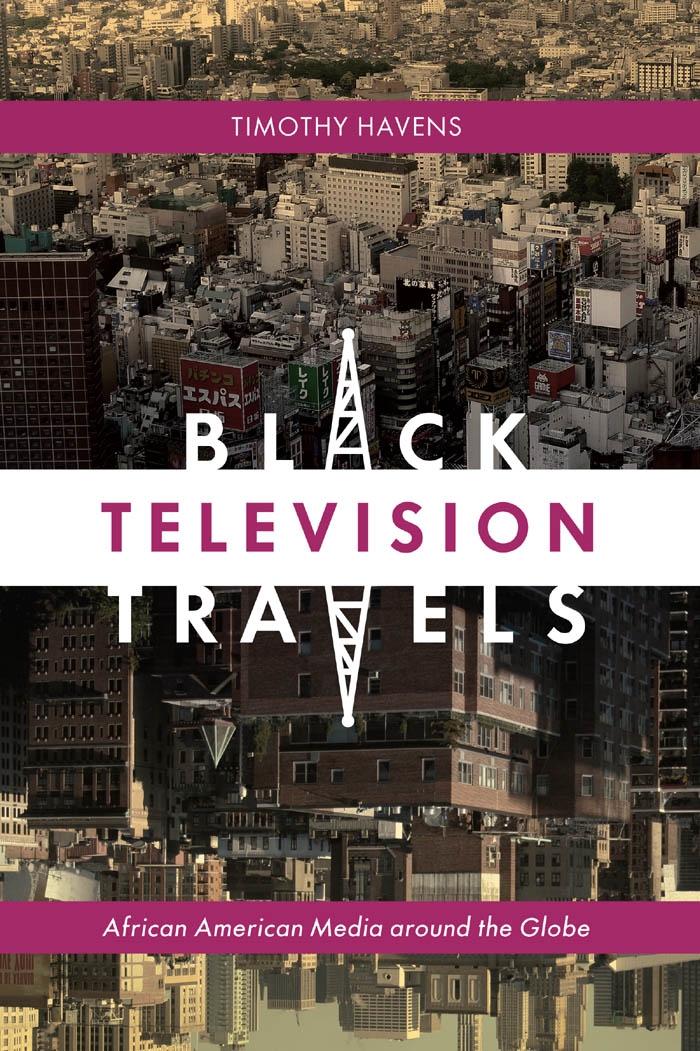
Black Television Travels explores the globalization of African American television and the way in which foreign markets, programming strategies, and viewer preferences have influenced portrayals of African Americans on the small screen. Television executives have been notoriously slow to recognize the potential popularity of black characters and themes, both at home and abroad. As American television brokers increasingly seek revenues abroad, their assumptions about saleability and audience perceptions directly influence the global circulation of these programs, as well as their content. Black Television Travels aims to reclaim the history of African American television circulation in an effort to correct and counteract this predominant industry lore.
Based on interviews with television executives and programmers from around the world, as well as producers in the United States, Havens traces the shift from an era when national television networks often blocked African American television from traveling abroad to the transnational, post-network era of today. While globalization has helped to expand diversity in African American television, particularly in regard to genre, it has also resulted in restrictions, such as in the limited portrayal of African American women in favor of attracting young male demographics across racial and national boundaries. Havens underscores the importance of examining boardroom politics as part of racial discourse in the late modern era, when transnational cultural industries like television are the primary sources for dominant representations of blackness.
Payez facilement par carte, Klarna, Apple Pay ou Google Pay. Pas satisfait ? Vous avez toujours une garantie de remboursement de 14 jours. En savoir plus dans nos conditions. Si vous avez des questions, envoyez-nous un e-mail à hello@memmo.org.
Memmo facilite tes études, où que tu sois dans le monde. On rassemble tes manuels de cours et des outils d'étude intelligents au même endroit : résumés, quiz, podcasts et flashcards. Et il y a Ted, ton compagnon d'étude qui répond à toutes tes questions. Plus de 50 000 étudiants étudient déjà ici – conçu pour t'aider à apprendre plus vite et à moins stresser.