
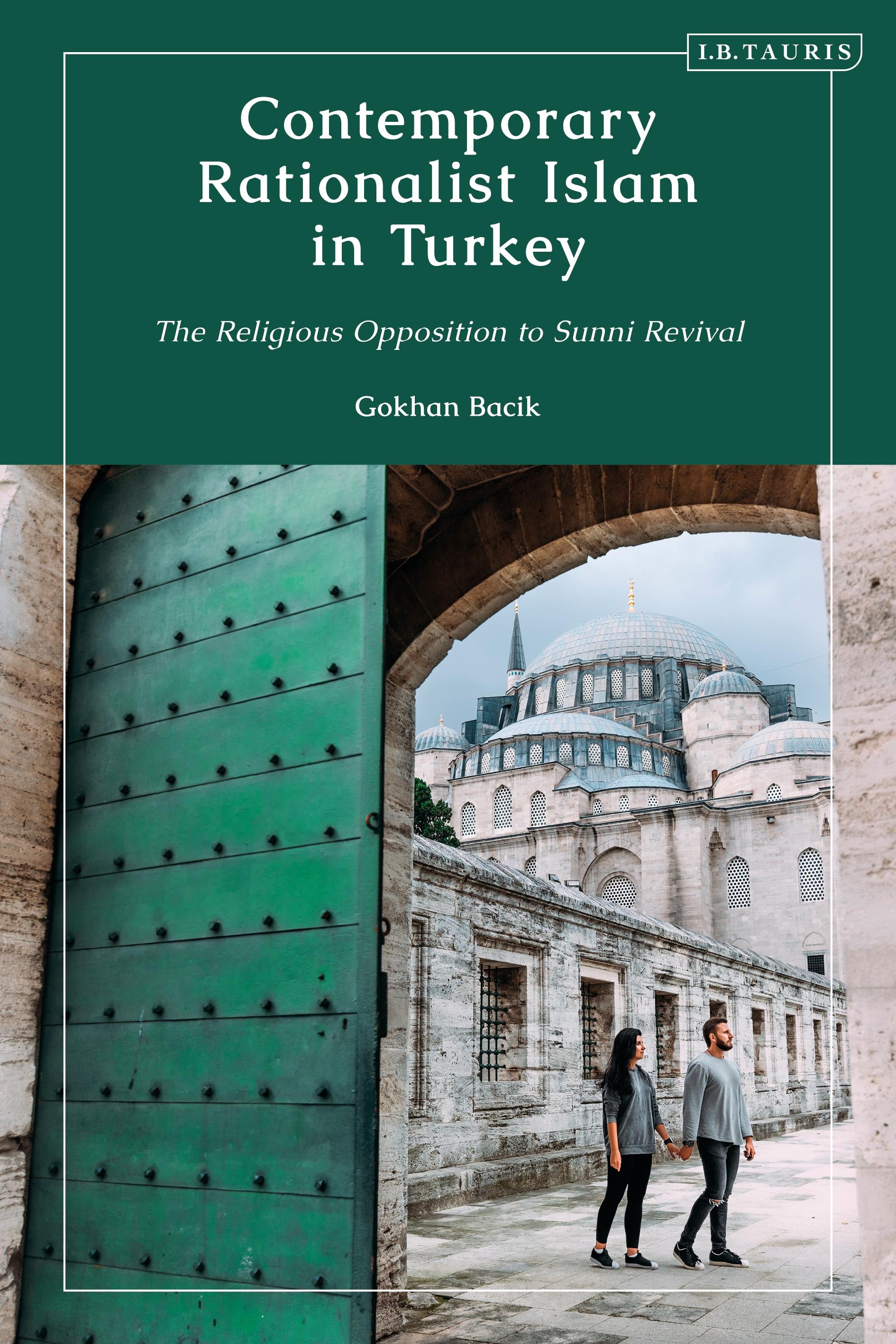
Nineteenth-century Istanbul was an intellectual hub of rich discussions about Islam, in which leading reformists had a significant role. Turkey today appears to be an intellectual vacuum to anyone searching for ongoing critical engagement with Islam. The main purpose of this book is to adjust this view of Turkey by showcasing the modern Turkish theologians who challenge mainstream Sunni interpretations of Islam. Labelling these theologians as 'rationalist' rather than 'reformist', the author reveals that their theology is inherently anti-establishment and thus a religiously-oriented challenge to the hegemony of the state-sanctioned Islam: for the rationalists, Turkey's problems have their origins in the Sunni interpretation of Islam.
Contemporary Rationalist Islam in Turkey analyses nine prominent scholars of Islam who provide a religious opposition to the Sunni revival in Turkey: Hüseyin Atay, Yasar Nuri Öztürk, M. Hayri Kirbasoglu, Ilhami Güler, R. Ihsan Eliaçik, Ömer Özsoy, Mustafa Öztürk, Israfil Balci, and Mehmet Azimli. These scholars' writings are almost exclusively published in Turkish, so this book makes their ideas available in English for the first time. It also examines the scope, methodology and argumentation of the scholars' theology, categorizing their theological interpretations from 'historicist' to 'universalist' and from 'empiricist' to 'rationalist'. In identifying a new 'rationalist' school of Turkish theology and outlining its different manifestations, the book breaks new ground. It fills a significant gap in the literature on Islamic studies and reveals an understudied dimension of Turkey and Turkish Islam beyond the well-known ideas of the AKP and the Gulenists.
Contemporary Rationalist Islam in Turkey analyses nine prominent scholars of Islam who provide a religious opposition to the Sunni revival in Turkey: Hüseyin Atay, Yasar Nuri Öztürk, M. Hayri Kirbasoglu, Ilhami Güler, R. Ihsan Eliaçik, Ömer Özsoy, Mustafa Öztürk, Israfil Balci, and Mehmet Azimli. These scholars' writings are almost exclusively published in Turkish, so this book makes their ideas available in English for the first time. It also examines the scope, methodology and argumentation of the scholars' theology, categorizing their theological interpretations from 'historicist' to 'universalist' and from 'empiricist' to 'rationalist'. In identifying a new 'rationalist' school of Turkish theology and outlining its different manifestations, the book breaks new ground. It fills a significant gap in the literature on Islamic studies and reveals an understudied dimension of Turkey and Turkish Islam beyond the well-known ideas of the AKP and the Gulenists.
Payez facilement par carte, Klarna, Apple Pay ou Google Pay. Pas satisfait ? Vous avez toujours une garantie de remboursement de 14 jours. En savoir plus dans nos conditions. Si vous avez des questions, envoyez-nous un e-mail à hello@memmo.org.
Memmo facilite tes études, où que tu sois dans le monde. On rassemble tes manuels de cours et des outils d'étude intelligents au même endroit : résumés, quiz, podcasts et flashcards. Et il y a Ted, ton compagnon d'étude qui répond à toutes tes questions. Plus de 50 000 étudiants étudient déjà ici – conçu pour t'aider à apprendre plus vite et à moins stresser.