
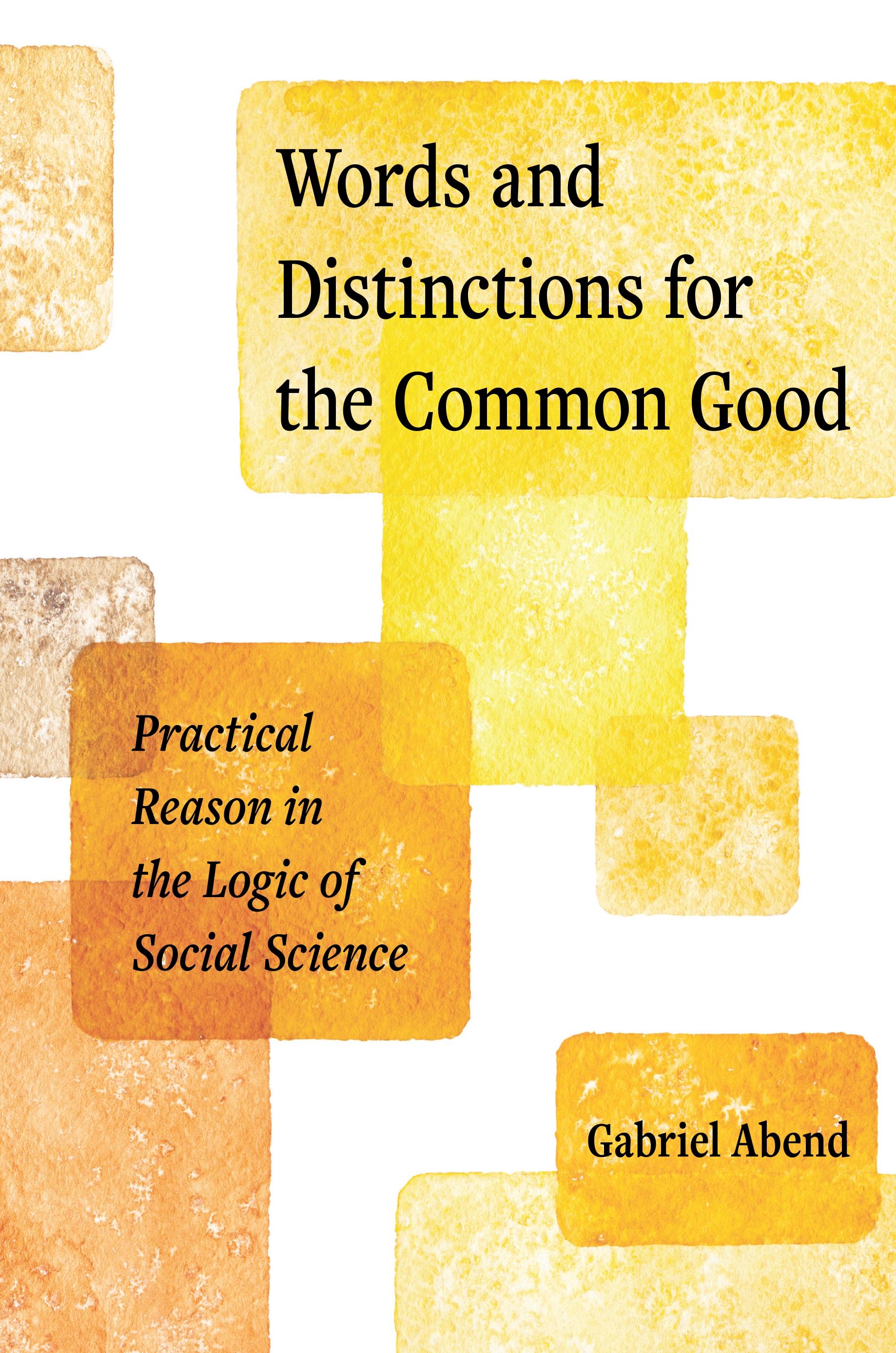
How social scientists' disagreements about their key words and distinctions have been misconceived, and what to do about it
Social scientists do research on a variety of topics—gender, capitalism, populism, and race and ethnicity, among others. They make descriptive and explanatory claims about empathy, intelligence, neoliberalism, and power. They advise policymakers on diversity, digitalization, work, and religion. And yet, as Gabriel Abend points out in this provocative book, they can’t agree on what these things are and how to identify them. How to tell if something is a religion or a cult or a sect? What is empathy? What makes this society a capitalist one? Disputes of this sort arise again and again in the social sciences.
Abend argues that these disagreements have been doubly misconceived. First, they conflate two questions: how a social science community should use its most important words, and what distinctions it should accept and work with. Second, there’s no fact of the matter about either. Instead, they’re practical reason questions for a community, which aim at epistemically and morally good outcomes. Abend calls on social science communities to work together on their words, distinctions, and classifications. They must make collective decisions about the uses of words, the acceptability of distinctions, and the criteria for assessing both. These decisions aren’t up to individual scholars; the community gets the last word. According to Abend, the common good, justice, and equality should play a significant role in the logic of scientific research.
Gabriel Abend is professor of sociology at University of Lucerne and the author of The Moral Background: An Inquiry into the History of Business Ethics (Princeton).
Payez facilement par carte, Klarna, Apple Pay ou Google Pay. Pas satisfait ? Vous avez toujours une garantie de remboursement de 14 jours. En savoir plus dans nos conditions. Si vous avez des questions, envoyez-nous un e-mail à hello@memmo.org.
Memmo facilite tes études, où que tu sois dans le monde. On rassemble tes manuels de cours et des outils d'étude intelligents au même endroit : résumés, quiz, podcasts et flashcards. Et il y a Ted, ton compagnon d'étude qui répond à toutes tes questions. Plus de 50 000 étudiants étudient déjà ici – conçu pour t'aider à apprendre plus vite et à moins stresser.