
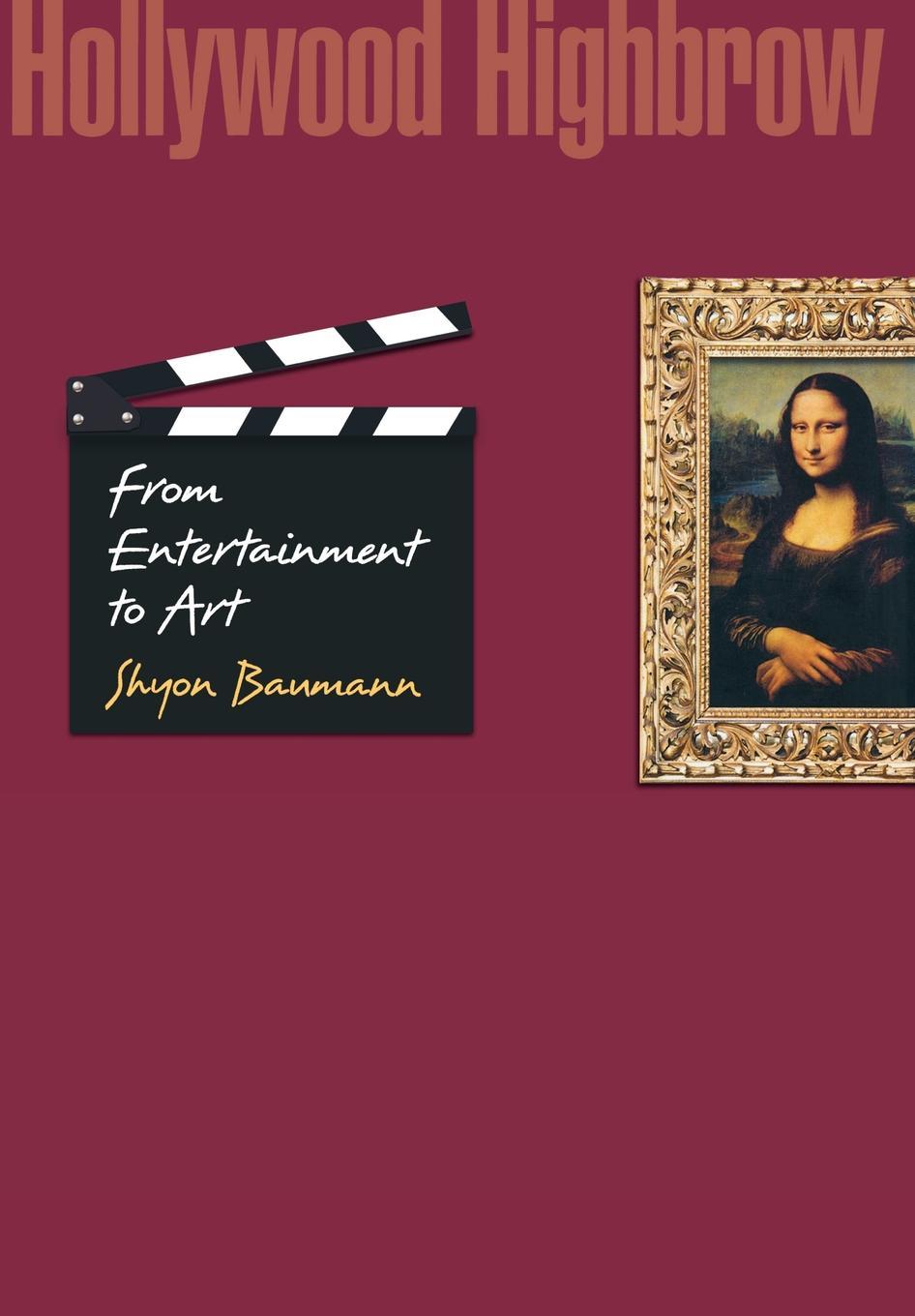
Today's moviegoers and critics generally consider some Hollywood products--even some blockbusters--to be legitimate works of art. But during the first half century of motion pictures very few Americans would have thought to call an American movie "art." Up through the 1950s, American movies were regarded as a form of popular, even lower-class, entertainment. By the 1960s and 1970s, however, viewers were regularly judging Hollywood films by artistic criteria previously applied only to high art forms. In Hollywood Highbrow, Shyon Baumann for the first time tells how social and cultural forces radically changed the public's perceptions of American movies just as those forces were radically changing the movies themselves.
The development in the United States of an appreciation of film as an art was, Baumann shows, the product of large changes in Hollywood and American society as a whole. With the postwar rise of television, American movie audiences shrank dramatically and Hollywood responded by appealing to richer and more educated viewers. Around the same time, European ideas about the director as artist, an easing of censorship, and the development of art-house cinemas, film festivals, and the academic field of film studies encouraged the idea that some American movies--and not just European ones--deserved to be considered art.
Payez facilement par carte, Klarna, Apple Pay ou Google Pay. Pas satisfait ? Vous avez toujours une garantie de remboursement de 14 jours. En savoir plus dans nos conditions. Si vous avez des questions, envoyez-nous un e-mail à hello@memmo.org.
Memmo facilite tes études, où que tu sois dans le monde. On rassemble tes manuels de cours et des outils d'étude intelligents au même endroit : résumés, quiz, podcasts et flashcards. Et il y a Ted, ton compagnon d'étude qui répond à toutes tes questions. Plus de 50 000 étudiants étudient déjà ici – conçu pour t'aider à apprendre plus vite et à moins stresser.