
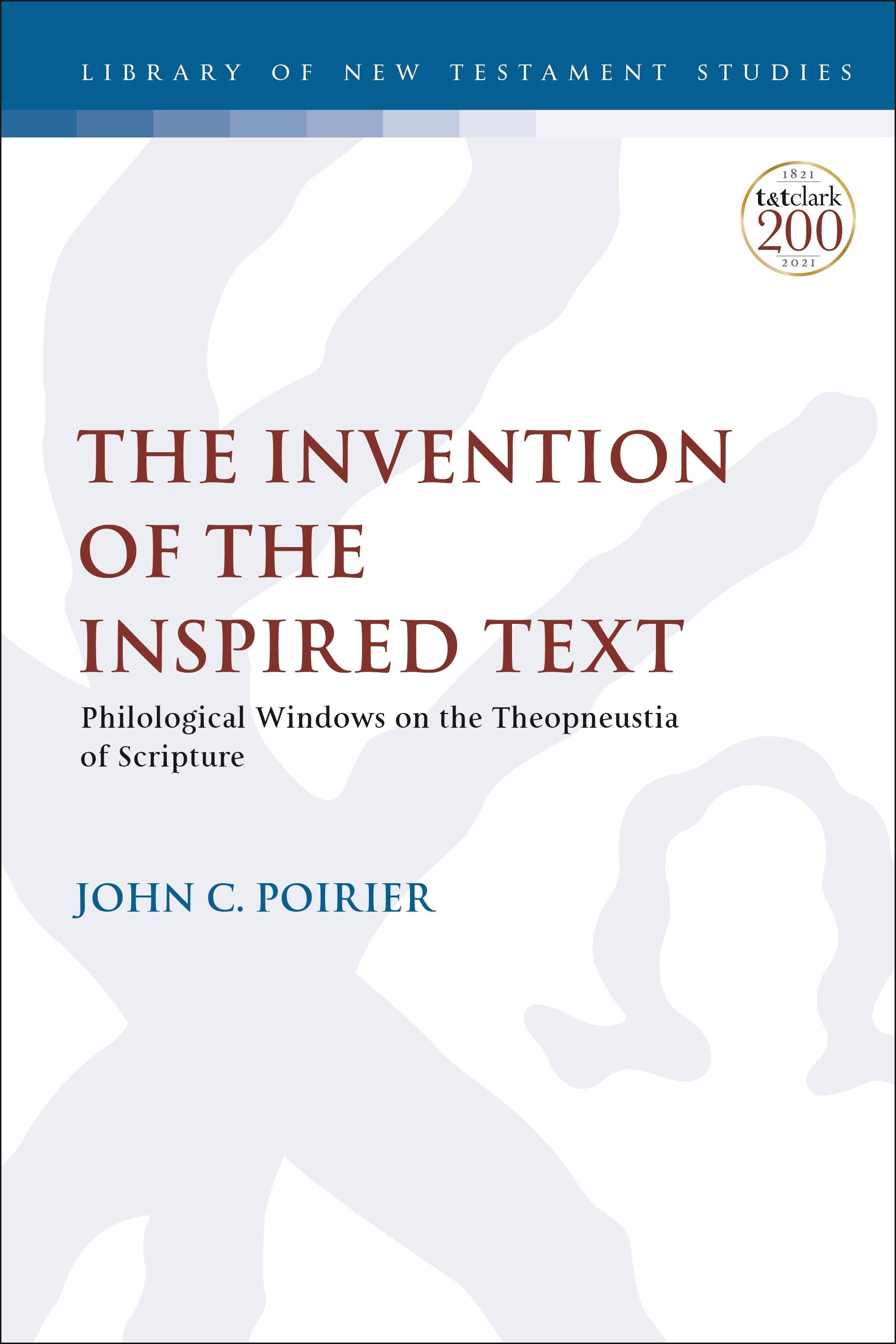
John C. Poirier examines the “theopneustic” nature of the Scripture, as a response to the view that “inspiration” lies at the heart of most contemporary Christian theology. In contrast to the traditional rendering of the Greek word theopneustos as “God-inspired” in 2 Tim 3:16, Poirier argues that a close look at first- and second-century uses of theopneustos reveals that the traditional inspirationist understanding of the term did not arise until the time of Origen in the early third century CE, and that in every pre-Origen use of theopneustos the word instead means “life-giving.”
Poirier thus conducts a detailed investigation of theopneustos as it appears in the fifth Sibylline Oracle, the Testament of Abraham, Vettius Valens, Pseudo-Plutarch (Placita Philosophorum), and Pseudo-Phocylides, all of whom understand the word to mean “life-giving.” He also studies the use of the cognate term theopnous in Numenius, the Corpus Hermeticum, on an inscription at the Great Sphinx of Giza, and on an inscription at a nymphaeum at Laodicea on the Lycus. Poirier argues that a rendering of “life-giving” also fits better within the context of 2 Tim 3:16, and that this meaning survived late enough to figure in a fifth-century work by Nonnus of Panopolis. He further traces the pre-Origen use of theopneustos among the Church Fathers. Poirier concludes by addressing the implication of rethinking the traditional understanding of Scripture, stressing that the lack of “God-inspired” scripture ultimately does not affect the truth status of the gospel as preached by the apostles.
Poirier thus conducts a detailed investigation of theopneustos as it appears in the fifth Sibylline Oracle, the Testament of Abraham, Vettius Valens, Pseudo-Plutarch (Placita Philosophorum), and Pseudo-Phocylides, all of whom understand the word to mean “life-giving.” He also studies the use of the cognate term theopnous in Numenius, the Corpus Hermeticum, on an inscription at the Great Sphinx of Giza, and on an inscription at a nymphaeum at Laodicea on the Lycus. Poirier argues that a rendering of “life-giving” also fits better within the context of 2 Tim 3:16, and that this meaning survived late enough to figure in a fifth-century work by Nonnus of Panopolis. He further traces the pre-Origen use of theopneustos among the Church Fathers. Poirier concludes by addressing the implication of rethinking the traditional understanding of Scripture, stressing that the lack of “God-inspired” scripture ultimately does not affect the truth status of the gospel as preached by the apostles.
Payez facilement par carte, Klarna, Apple Pay ou Google Pay. Pas satisfait ? Vous avez toujours une garantie de remboursement de 14 jours. En savoir plus dans nos conditions. Si vous avez des questions, envoyez-nous un e-mail à hello@memmo.org.
Memmo facilite tes études, où que tu sois dans le monde. On rassemble tes manuels de cours et des outils d'étude intelligents au même endroit : résumés, quiz, podcasts et flashcards. Et il y a Ted, ton compagnon d'étude qui répond à toutes tes questions. Plus de 50 000 étudiants étudient déjà ici – conçu pour t'aider à apprendre plus vite et à moins stresser.