
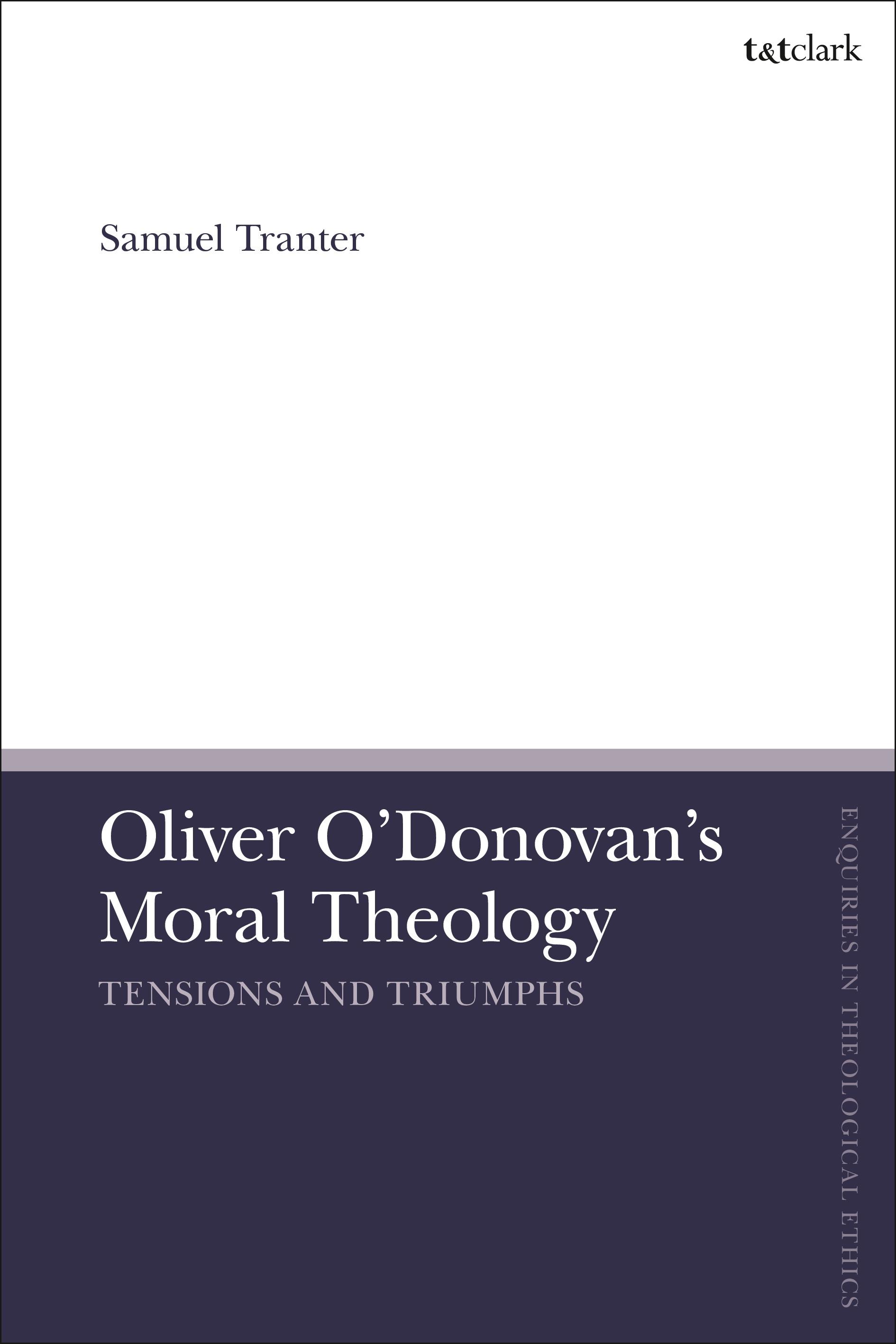
This book offers the first sustained, full-length treatment of the wide-ranging work of major Anglican theologian Oliver O'Donovan. Analyzing such key texts as Resurrection and Moral Order, The Desire of the Nations and Ethics as Theology, Samuel Tranter shows that the relationship between eschatology and ethics is an area of significant tension in O'Donovan's evolving vision of moral theology.
Tranter traces this tension as it relates to O'Donovan's writing and contemporary discussion around natural law, divine command and human flourishing, as well as to particular topics such as poverty, marriage and singleness and biotechnology. He also connects it with the broader doctrinal features of O'Donovan's project, such as his accounts of creation, sin and redemption, and his understanding of the relationships between the cross and the resurrection, on one hand, and Christology and pneumatology, on the other. Throughout, Tranter indicates the implications of these themes for our understanding of the Christian life.
This volume establishes and evaluates O'Donovan's influence on contemporary Christian ethicists and political theologians (such as Luke Bretherton, Gilbert Meilaender, Jean Porter and Brent Waters), and engages with critical readings of O'Donovan (such as those by Stanley Hauerwas and Gerald McKenny). In conversation with these and other voices from a range of perspectives, Tranter shows how O'Donovan's proposals may be appropriated and amended as a resource for theology and ethics going forward.
Tranter traces this tension as it relates to O'Donovan's writing and contemporary discussion around natural law, divine command and human flourishing, as well as to particular topics such as poverty, marriage and singleness and biotechnology. He also connects it with the broader doctrinal features of O'Donovan's project, such as his accounts of creation, sin and redemption, and his understanding of the relationships between the cross and the resurrection, on one hand, and Christology and pneumatology, on the other. Throughout, Tranter indicates the implications of these themes for our understanding of the Christian life.
This volume establishes and evaluates O'Donovan's influence on contemporary Christian ethicists and political theologians (such as Luke Bretherton, Gilbert Meilaender, Jean Porter and Brent Waters), and engages with critical readings of O'Donovan (such as those by Stanley Hauerwas and Gerald McKenny). In conversation with these and other voices from a range of perspectives, Tranter shows how O'Donovan's proposals may be appropriated and amended as a resource for theology and ethics going forward.
Payez facilement par carte, Klarna, Apple Pay ou Google Pay. Pas satisfait ? Vous avez toujours une garantie de remboursement de 14 jours. En savoir plus dans nos conditions. Si vous avez des questions, envoyez-nous un e-mail à hello@memmo.org.
Memmo facilite tes études, où que tu sois dans le monde. On rassemble tes manuels de cours et des outils d'étude intelligents au même endroit : résumés, quiz, podcasts et flashcards. Et il y a Ted, ton compagnon d'étude qui répond à toutes tes questions. Plus de 50 000 étudiants étudient déjà ici – conçu pour t'aider à apprendre plus vite et à moins stresser.