
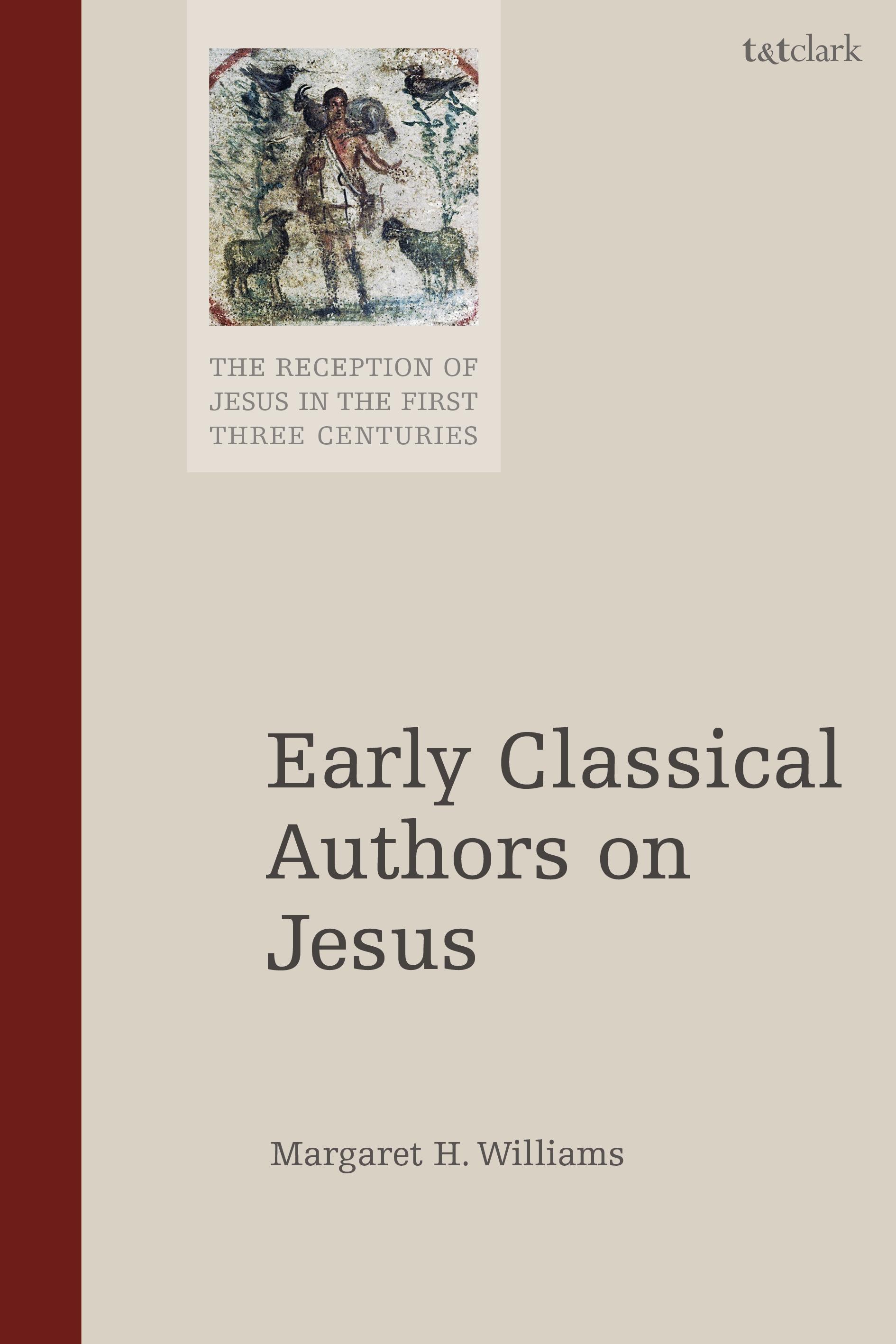
Margaret H. Williams examines how classical writers saw and portrayed Jesus, engaging with the fact that as the originator of a new (and still existing) world religion, Jesus of Nazareth, otherwise known as Christus (Christ), is an individual of indisputable historical significance.
Williams shows how from the outset Jesus was a controversial figure. Contemporary Jews in the Roman province of Judaea tended either to adore or to abhor him. When indue course his fame spread throughout the wider Roman empire, reactions to him there among both Jews and non-Jews were no less divergent. Each of the early classical writers who makes mention of him, the historian Tacitus, the biographer Suetonius, the epistolographer Pliny and the satirist Lucian, takes a different view of him and presents him in a different way. Williams considers these different depictions and questions why these writers had such differing views of Jesus. To answer this question Williams examines not only to the different literary conventions by which each of these writers was bound but also to the social, cultural and religious contexts in which they operated.
Williams shows how from the outset Jesus was a controversial figure. Contemporary Jews in the Roman province of Judaea tended either to adore or to abhor him. When indue course his fame spread throughout the wider Roman empire, reactions to him there among both Jews and non-Jews were no less divergent. Each of the early classical writers who makes mention of him, the historian Tacitus, the biographer Suetonius, the epistolographer Pliny and the satirist Lucian, takes a different view of him and presents him in a different way. Williams considers these different depictions and questions why these writers had such differing views of Jesus. To answer this question Williams examines not only to the different literary conventions by which each of these writers was bound but also to the social, cultural and religious contexts in which they operated.
Payez facilement par carte, Klarna, Apple Pay ou Google Pay. Pas satisfait ? Vous avez toujours une garantie de remboursement de 14 jours. En savoir plus dans nos conditions. Si vous avez des questions, envoyez-nous un e-mail à hello@memmo.org.
Memmo facilite tes études, où que tu sois dans le monde. On rassemble tes manuels de cours et des outils d'étude intelligents au même endroit : résumés, quiz, podcasts et flashcards. Et il y a Ted, ton compagnon d'étude qui répond à toutes tes questions. Plus de 50 000 étudiants étudient déjà ici – conçu pour t'aider à apprendre plus vite et à moins stresser.