
A free open access book is available upon publication. Learn more at www.luminosoa.org.
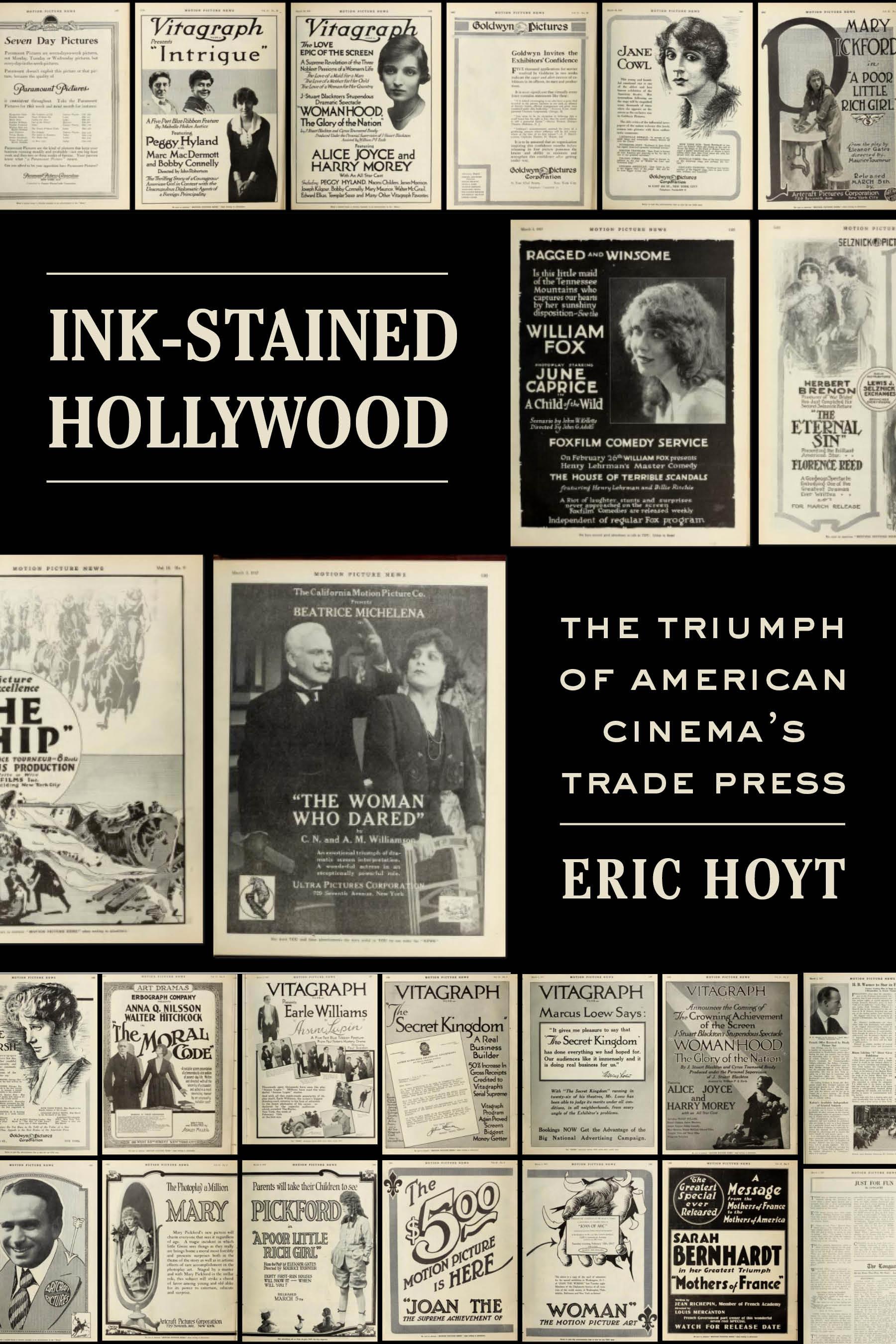
For the first half of the twentieth century, no American industry boasted a more motley and prolific trade press than the movie business—a cutthroat landscape that set the stage for battle by ink. In 1930, Martin Quigley, publisher of Exhibitors Herald, conspired with Hollywood studios to eliminate all competing trade papers, yet this attempt and each one thereafter collapsed. Exploring the communities of exhibitors and creative workers that constituted key subscribers, Ink-Stained Hollywood tells the story of how a heterogeneous trade press triumphed by appealing to the foundational aspects of industry culture—taste, vanity, partisanship, and exclusivity. In captivating detail, Eric Hoyt chronicles the histories of well-known trade papers (Variety, Motion Picture Herald) alongside important yet forgotten publications (Film Spectator, Film Mercury, and Camera!), and challenges the canon of film periodicals, offering new interpretative frameworks for understanding print journalism’s relationship with the motion picture industry and its continued impact on creative industries today.
For the first half of the twentieth century, no American industry boasted a more motley and prolific trade press than the movie business—a cutthroat landscape that set the stage for battle by ink. In 1930, Martin Quigley, publisher of Exhibitors Herald, conspired with Hollywood studios to eliminate all competing trade papers, yet this attempt and each one thereafter collapsed. Exploring the communities of exhibitors and creative workers that constituted key subscribers, Ink-Stained Hollywood tells the story of how a heterogeneous trade press triumphed by appealing to the foundational aspects of industry culture—taste, vanity, partisanship, and exclusivity. In captivating detail, Eric Hoyt chronicles the histories of well-known trade papers (Variety, Motion Picture Herald) alongside important yet forgotten publications (Film Spectator, Film Mercury, and Camera!), and challenges the canon of film periodicals, offering new interpretative frameworks for understanding print journalism’s relationship with the motion picture industry and its continued impact on creative industries today.
Payez facilement par carte, Klarna, Apple Pay ou Google Pay. Pas satisfait ? Vous avez toujours une garantie de remboursement de 14 jours. En savoir plus dans nos conditions. Si vous avez des questions, envoyez-nous un e-mail à hello@memmo.org.
Memmo facilite tes études, où que tu sois dans le monde. On rassemble tes manuels de cours et des outils d'étude intelligents au même endroit : résumés, quiz, podcasts et flashcards. Et il y a Ted, ton compagnon d'étude qui répond à toutes tes questions. Plus de 50 000 étudiants étudient déjà ici – conçu pour t'aider à apprendre plus vite et à moins stresser.
Tu pourrais aussi aimer
Acheter le livre0