
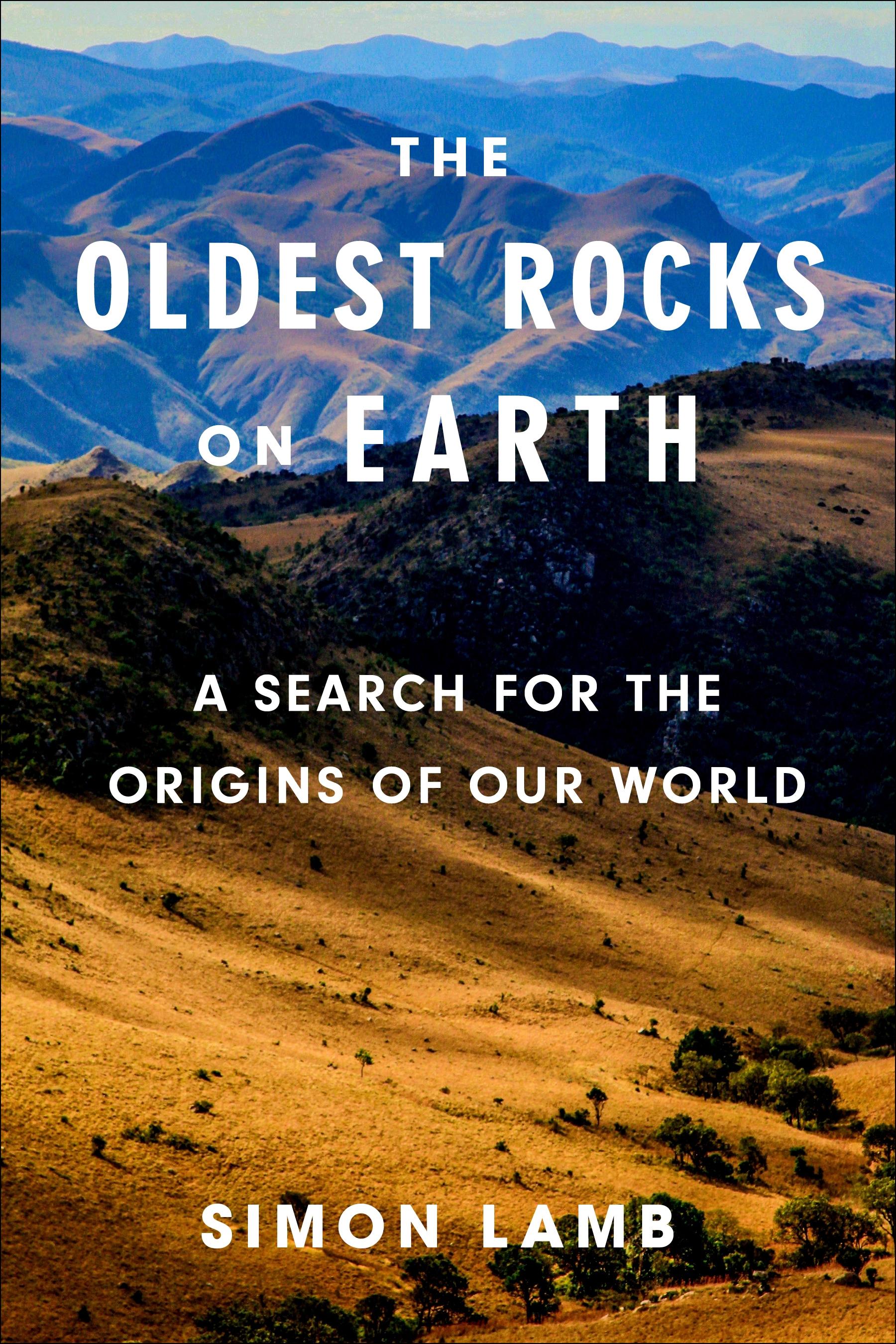
Earth has existed for an immense period of time—an almost unimaginable 4.6 billion years. If we ventured far enough into the past, would we reach a time when our planet was fundamentally different? Did it always have landscapes like those we see today, sculpted by wind, rain, and the forces of plate tectonics? When did Earth turn into the distinctive “blue planet” where life could emerge and evolve?
Geologist Simon Lamb shows that the key to answering these questions lies in ancient rocks from the days when the planet was young. His research in remote southern Africa looks at some of the oldest known rocks—some more than 3.5 billion years old—which have survived unfathomable spans of geological time. He takes readers on a journey of scientific discovery, walking—and sometimes diving—through landscapes from the time of the earliest documented forms of life. Lamb unearths a violent world of volcanic eruptions, natural disasters, and profound geological forces in the deep ocean, along ancient shorelines, and amid rising mountains. In so doing, he shows how geologists work and think, and how they read rocks and decipher what they tell us about the past. Finding the foundations of our world, The Oldest Rocks on Earth sheds light on why Earth is the only planet known to harbor life and what this might tell us about our future.
Payez facilement par carte, Klarna, Apple Pay ou Google Pay. Pas satisfait ? Vous avez toujours une garantie de remboursement de 14 jours. En savoir plus dans nos conditions. Si vous avez des questions, envoyez-nous un e-mail à hello@memmo.org.
Memmo facilite tes études, où que tu sois dans le monde. On rassemble tes manuels de cours et des outils d'étude intelligents au même endroit : résumés, quiz, podcasts et flashcards. Et il y a Ted, ton compagnon d'étude qui répond à toutes tes questions. Plus de 50 000 étudiants étudient déjà ici – conçu pour t'aider à apprendre plus vite et à moins stresser.