
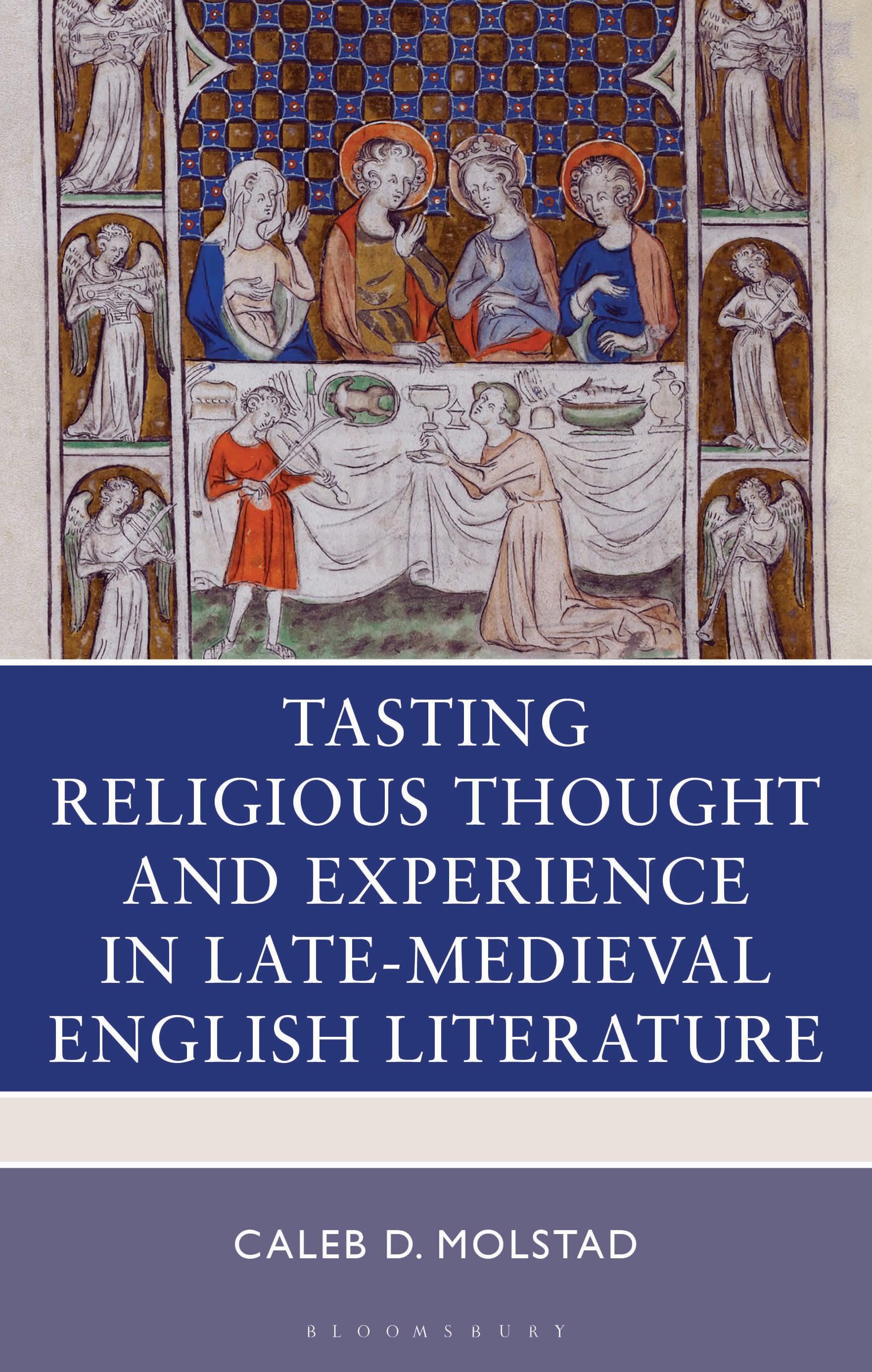
Through an analysis of vernacular metaphors of food and consumption for religious experience and theology in late-fourteenth and early fifteenth century England, Caleb D. Molstad explores what that language reveals about late-medieval religion during a time of swift religious and linguistic change.
In the move from Latin to Middle English, medieval authors gave vibrant expression to religious ideas through the emerging literary language, a phenomenon Nicholas Watson has termed “vernacular theology.” Molstad places focus on poetic and prose works including William Langland's Piers Plowman, Nicholas Love's A Mirror of the Blessed Life of Jesus Christ, and Walter Hilton's Scale of Perfection, Pearl-Poet's Cleanness, and A Ladder of Foure Ronges. Alimentary metaphors not only make religious concepts more accessible to a non-educated, lay audience, the language of food and consumption alters the shape of the religious content communicated through it. This book employs cognitive linguistics and food studies to explore the transcultural, sociological, anthropological, and historical significance of the food and foodways behind the metaphorical language and the theological transformations the metaphors produce.
In the move from Latin to Middle English, medieval authors gave vibrant expression to religious ideas through the emerging literary language, a phenomenon Nicholas Watson has termed “vernacular theology.” Molstad places focus on poetic and prose works including William Langland's Piers Plowman, Nicholas Love's A Mirror of the Blessed Life of Jesus Christ, and Walter Hilton's Scale of Perfection, Pearl-Poet's Cleanness, and A Ladder of Foure Ronges. Alimentary metaphors not only make religious concepts more accessible to a non-educated, lay audience, the language of food and consumption alters the shape of the religious content communicated through it. This book employs cognitive linguistics and food studies to explore the transcultural, sociological, anthropological, and historical significance of the food and foodways behind the metaphorical language and the theological transformations the metaphors produce.
Betal enkelt med kort, Klarna, Apple Pay eller Google Pay. Ikke fornøyd? Du har alltid 14 dagers angrerett. Les mer i våre vilkår. Har du spørsmål, send oss en e-post på hello@memmo.org.
Memmo gjør det enklere å studere – uansett hvor du er i verden. Hos oss samler du pensumbøker og smarte studieverktøy på ett og samme sted: sammendrag, quizer, podkaster og flashcards. Og så Ted, din studiekompis som svarer på alt du lurer på. Over 50 000 studenter studerer allerede her – bygget for at du skal lære raskere og stresse mindre.