
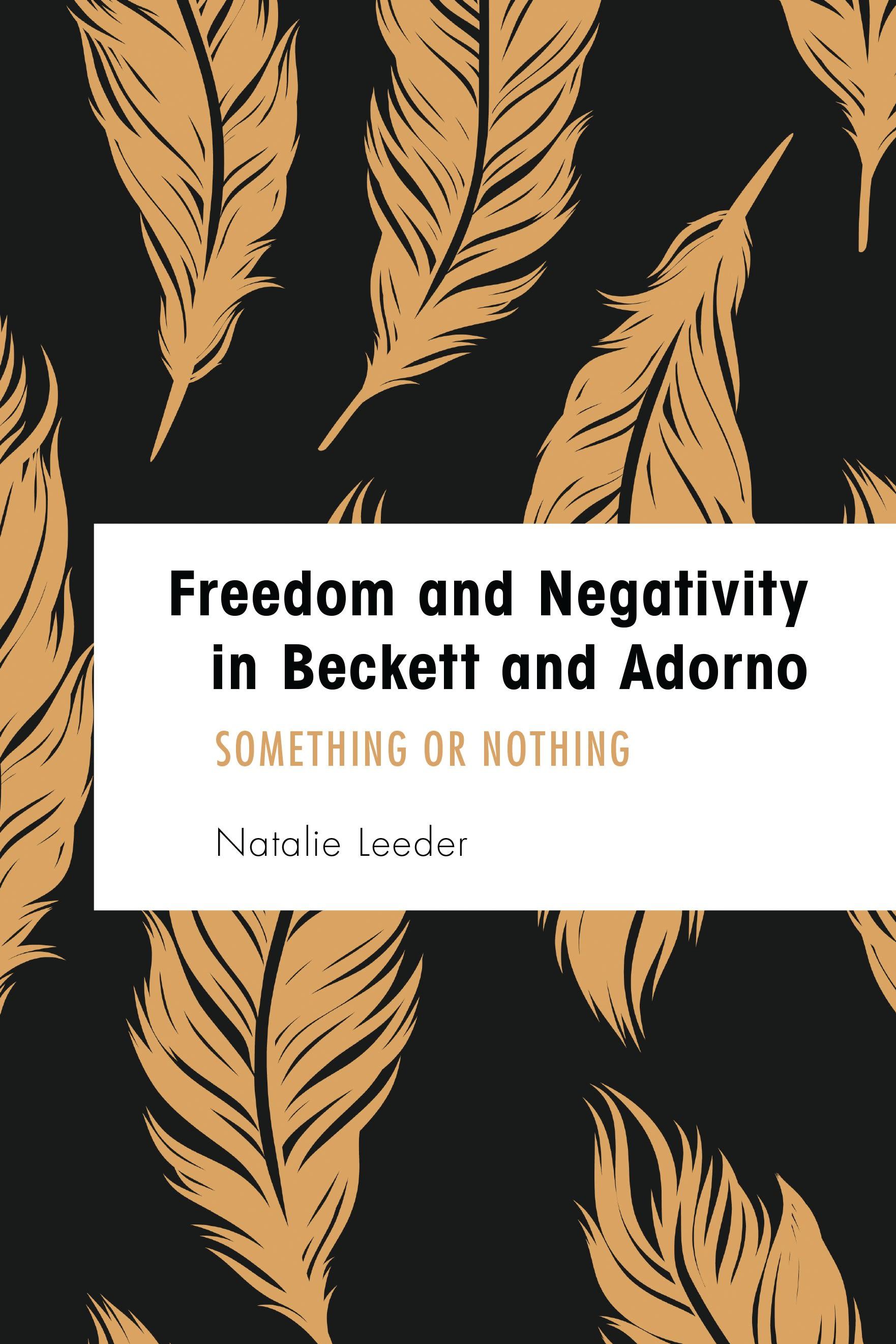
Since his notorious 1961 lecture, 'Trying to Understand Endgame', Theodor W. Adorno's name has been frequently coupled with that of Samuel Beckett. This book offers a radical reappraisal of the intellectual affinities between these two figures, whose paths crossed all too fleetingly. Specifically the book argues for a preoccupation with the concept of freedom in Beckett's works - one which situates him as a profoundly radical and even political writer. Adorno's own more explicit reconceptualization of freedom and its scarcity in modernity offers a unique lens through which to examine the way Beckett's works preserve a minimal space of freedom that acts in opposition to an unfree social totality. While acknowledging both the biographical encounters between Adorno and Beckett and the influence Beckett's writings had on Adorno's aesthetics, Natalie Leeder goes further to establish a dialogue between their intellectual positions, working with a range of texts from both writers and seeking insight in Adorno's less familiar works, as well as his magnum opera, Aesthetic Theory and Negative Dialectics.
Betal enkelt med kort, Klarna, Apple Pay eller Google Pay. Ikke fornøyd? Du har alltid 14 dagers angrerett. Les mer i våre vilkår. Har du spørsmål, send oss en e-post på hello@memmo.org.
Memmo gjør det enklere å studere – uansett hvor du er i verden. Hos oss samler du pensumbøker og smarte studieverktøy på ett og samme sted: sammendrag, quizer, podkaster og flashcards. Og så Ted, din studiekompis som svarer på alt du lurer på. Over 50 000 studenter studerer allerede her – bygget for at du skal lære raskere og stresse mindre.