
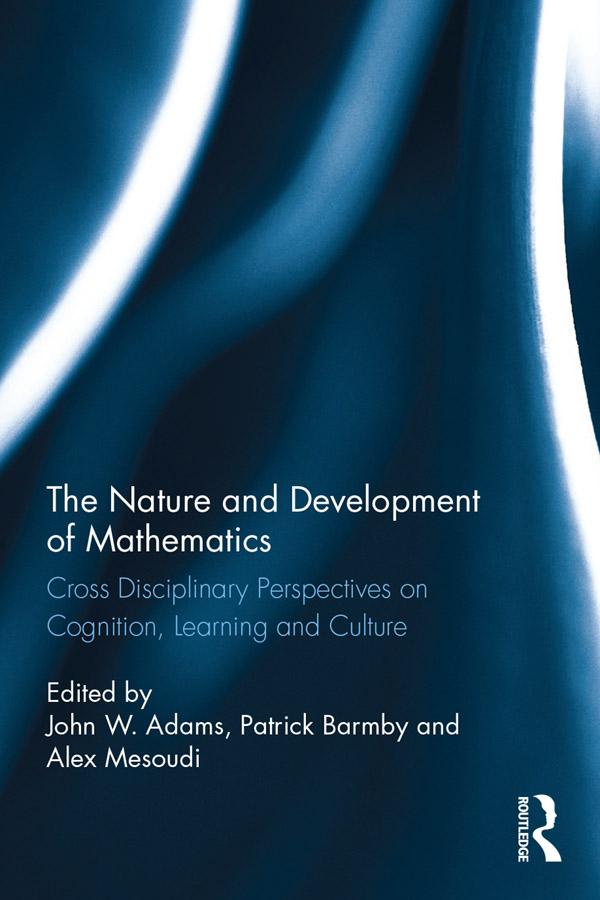
From an infant’s first grasp of quantity to Einstein’s theory of relativity, the human experience of number has intrigued researchers for centuries. Numeracy and mathematics have played fundamental roles in the development of societies and civilisations, and yet there is an essential mystery to these concepts, evidenced by the fear many people still feel when confronted by apparently simple sums.
Including perspectives from anthropology, education and psychology, The Nature and Development of Mathematics addresses three core questions: Is maths natural? What is the impact of our culture and environment on mathematical thinking? And how can we improve our mathematical ability? Examining the cognitive processes that we use, the origins of these skills and their cultural context, and how learning and teaching can be supported in the classroom, the book contextualises each issue within the wider field, arguing that only by taking a cross-disciplinary perspective can we fully understand what it means to be numerate, as well as how we become numerate in our modern world.
This is a unique collection including contributions from a range of renowned international researchers. It will be of interest to students and researchers across cognitive psychology, cultural anthropology and educational research.
Betal enkelt med kort, Klarna, Apple Pay eller Google Pay. Ikke fornøyd? Du har alltid 14 dagers angrerett. Les mer i våre vilkår. Har du spørsmål, send oss en e-post på hello@memmo.org.
Memmo gjør det enklere å studere – uansett hvor du er i verden. Hos oss samler du pensumbøker og smarte studieverktøy på ett og samme sted: sammendrag, quizer, podkaster og flashcards. Og så Ted, din studiekompis som svarer på alt du lurer på. Over 50 000 studenter studerer allerede her – bygget for at du skal lære raskere og stresse mindre.