
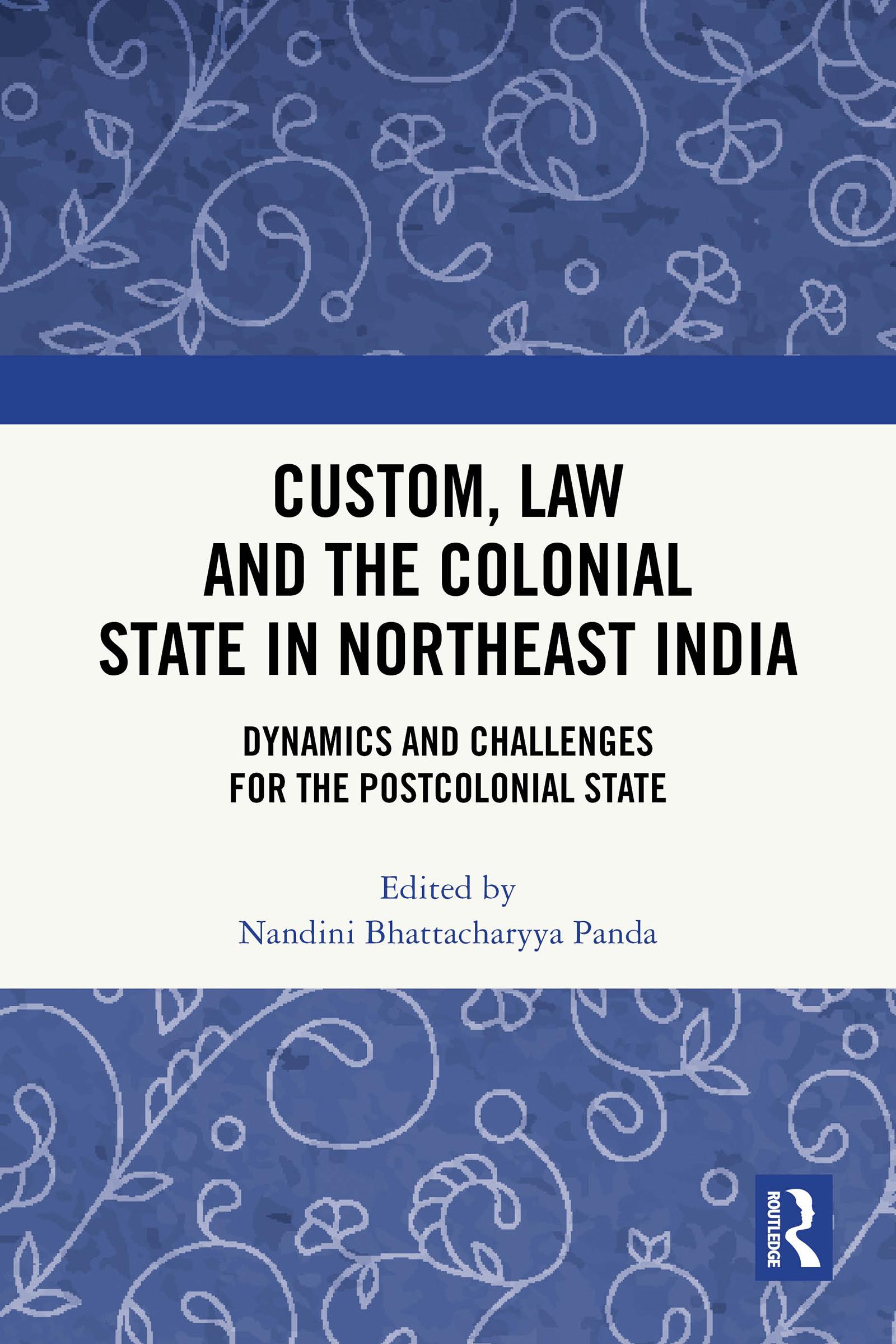
This volume presents a multidimensional analysis of the current operational law – both constitutional and customary – in Northeast India. It looks at how colonialism redesigned and redefined extant customary practices, leaving a permanent legacy on the legal governance and societal structure of the post-colonial Indian state.
The book interrogates “law” through a broad spectrum of issues including gender, partition, the legacy of colonial structures, and religion as a form of resistance against land grabbing and censorship. It delineates a distinct historical process of the evolution of law and custom and focuses on the intimate links between law and the dynamics of state, ethnicity, and governance.
As a unique contribution, the book offers new insights into how and why the continuity of colonial law within a democratic framework perpetuates deep-rooted problems in governance and the psyche of the people. It will be indispensable for students and researchers of history, law, anthropology, legal anthropology, sociology, Indian politics, and South Asian studies.
Betal enkelt med kort, Klarna, Apple Pay eller Google Pay. Ikke fornøyd? Du har alltid 14 dagers angrerett. Les mer i våre vilkår. Har du spørsmål, send oss en e-post på hello@memmo.org.
Memmo gjør det enklere å studere – uansett hvor du er i verden. Hos oss samler du pensumbøker og smarte studieverktøy på ett og samme sted: sammendrag, quizer, podkaster og flashcards. Og så Ted, din studiekompis som svarer på alt du lurer på. Over 50 000 studenter studerer allerede her – bygget for at du skal lære raskere og stresse mindre.