
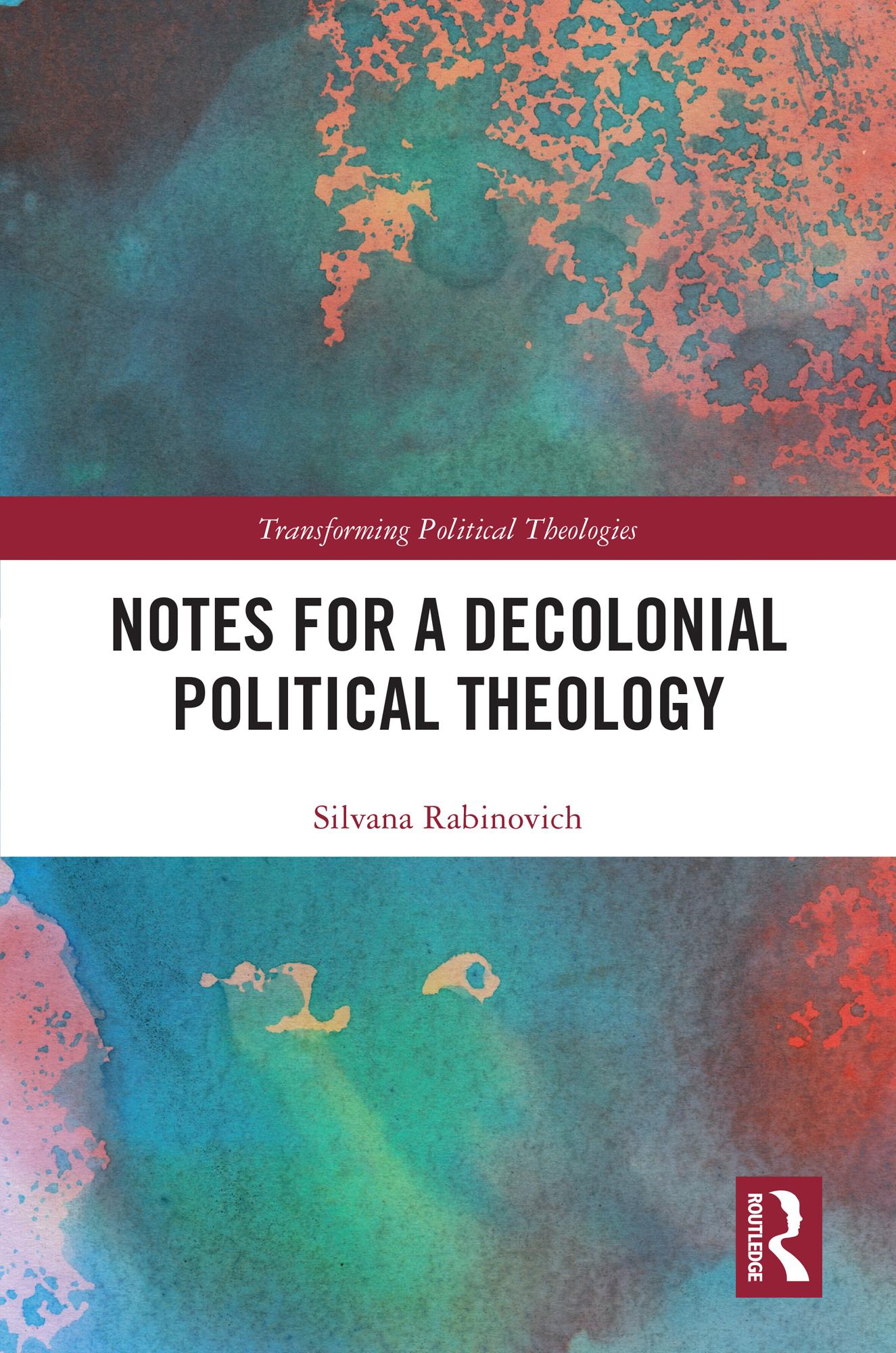
At the crossroads of ethics, poetics and politics, this innovative book outlines a series of notes to decolonize political theology. The author proposes counter-hegemonic forms of reading, which deconstruct domination by embracing fragility. The book opens with a diapason of prejudicelessness as a decolonial key, focusing on prejudices that hinder critical attention to a colonial political theology that perpetuates hatred. The first set of notes aims to ‘de-orientalize the Semite’ by reading midrashic and biblical texts in the present context, the second seeks to decolonize language by exploring the power of translation, and the third ponders decolonial theo-logics to outline a justice of the other. Connecting a number of fields, authors, and epistemologies, the book addresses the Israeli-Palestinian conflict and brings together Jewish thought, continental philosophy, and Latin American perspectives. It engages with a range of thinkers, including Benjamin and Arendt, and features an interview with Enrique Dussel as well as a foreword by Gil Anidjar. This is an important methodological proposal for interdisciplinary and intercultural political theology and a valuable contribution towards rethinking the paradigm of political theology beyond its Eurocentric and colonialist premises.
Betal enkelt med kort, Klarna, Apple Pay eller Google Pay. Ikke fornøyd? Du har alltid 14 dagers angrerett. Les mer i våre vilkår. Har du spørsmål, send oss en e-post på hello@memmo.org.
Memmo gjør det enklere å studere – uansett hvor du er i verden. Hos oss samler du pensumbøker og smarte studieverktøy på ett og samme sted: sammendrag, quizer, podkaster og flashcards. Og så Ted, din studiekompis som svarer på alt du lurer på. Over 50 000 studenter studerer allerede her – bygget for at du skal lære raskere og stresse mindre.