
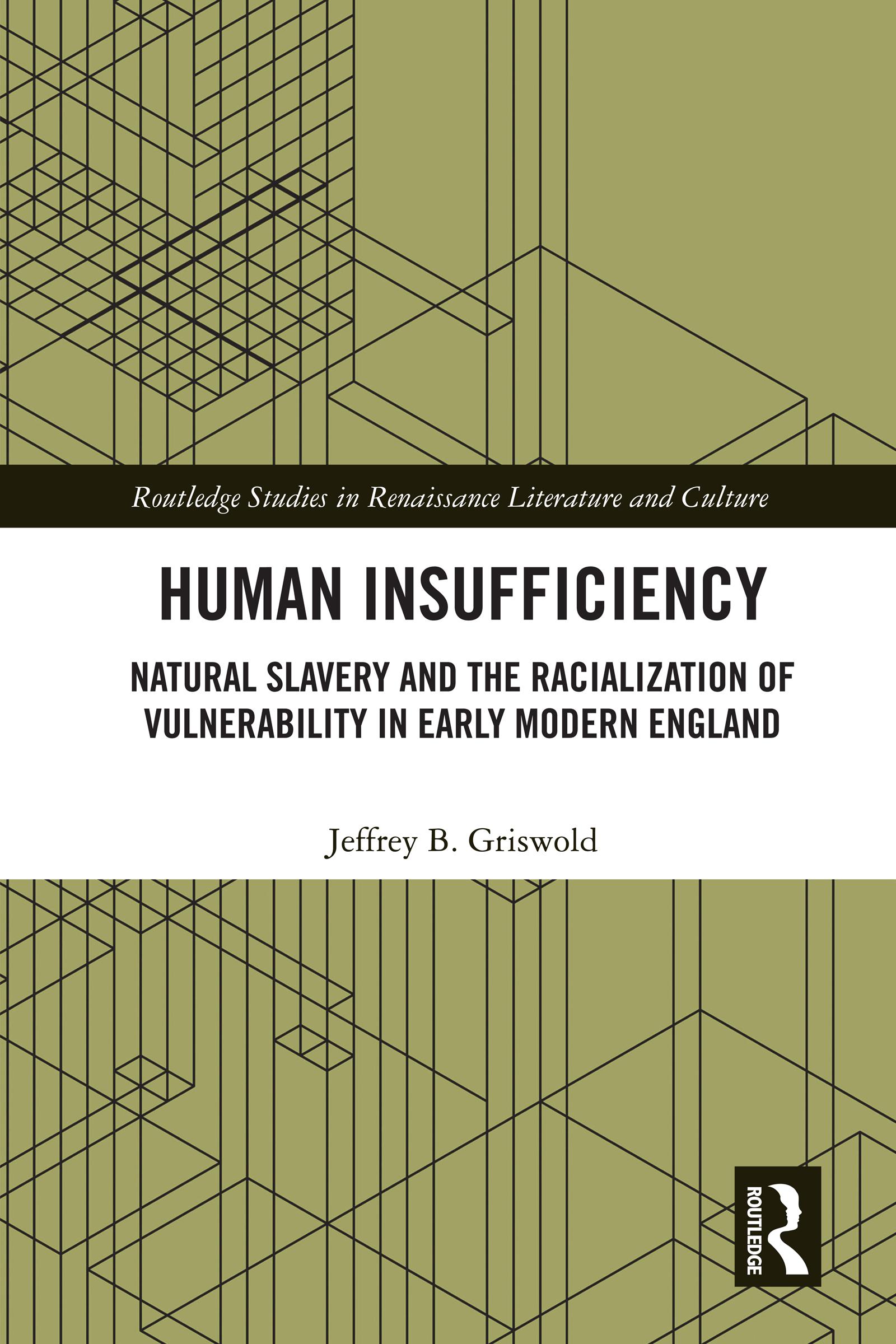
Human Insufficiency argues that early modern writers depict the human political subject as physically vulnerable in order to naturalize slavery. Representations of Man as a weak creature—“poor” and “bare” in King Lear’s words—strategically portrayed English bodies as needing care from people who were imagined to be less fragile. Drawing on Aristotle’s depictions of the natural master and the natural slave in the Politics, English writers distinguished the fully human political subject from the sub-human Slave who would care for his feeble body. This justification of a nascent slaving economy reinvents the violence of enslaving Afro-diasporic peoples as a natural system of care. Human Insufficiency’s most important contribution to early modern critical race studies is expanding the scope of the human as a racialized category by demonstrating how depictions of Man as a vulnerable species were part of a discourse racializing slavery.
Betal enkelt med kort, Klarna, Apple Pay eller Google Pay. Ikke fornøyd? Du har alltid 14 dagers angrerett. Les mer i våre vilkår. Har du spørsmål, send oss en e-post på hello@memmo.org.
Memmo gjør det enklere å studere – uansett hvor du er i verden. Hos oss samler du pensumbøker og smarte studieverktøy på ett og samme sted: sammendrag, quizer, podkaster og flashcards. Og så Ted, din studiekompis som svarer på alt du lurer på. Over 50 000 studenter studerer allerede her – bygget for at du skal lære raskere og stresse mindre.