
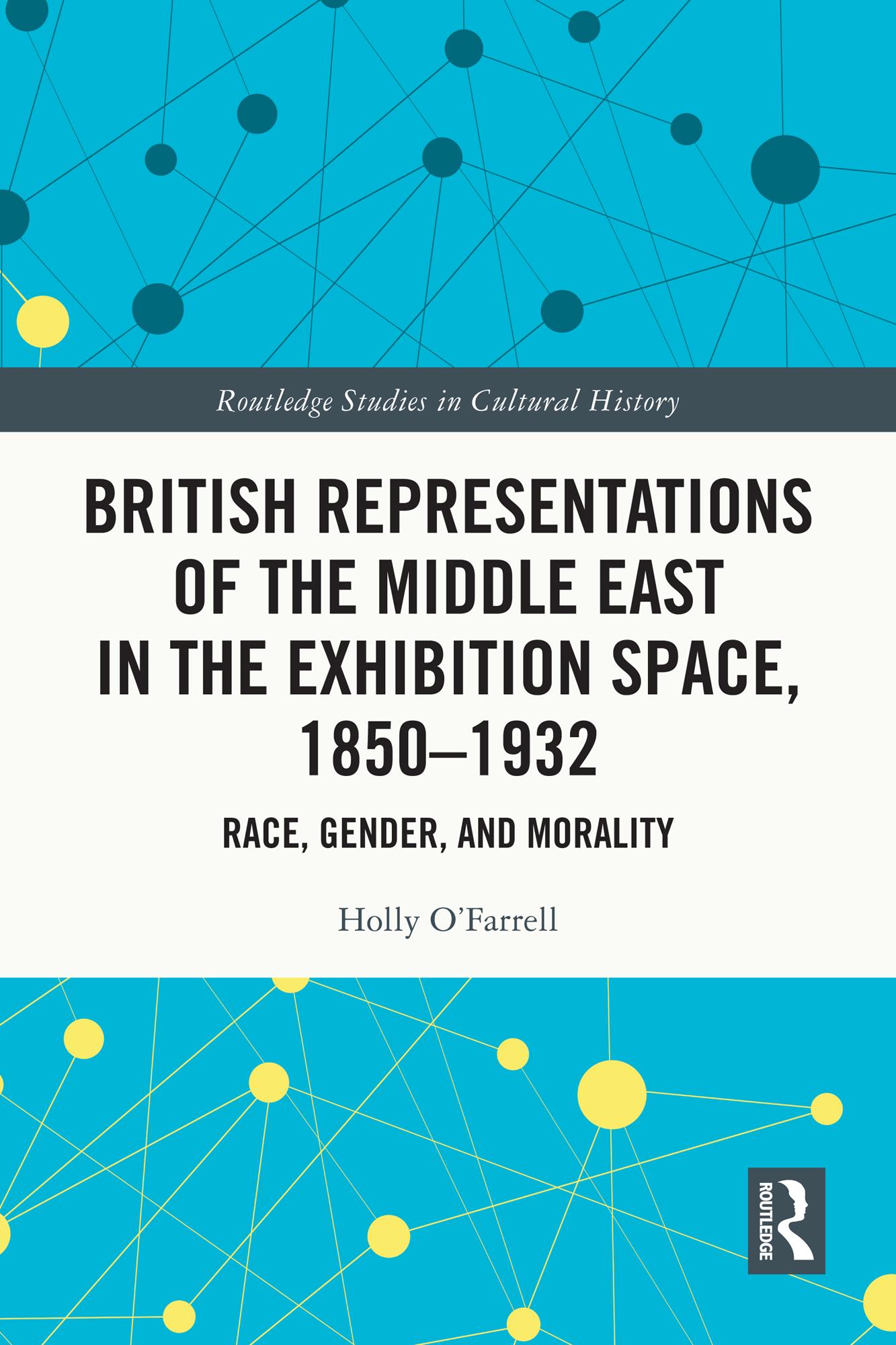
This volume analyses British exhibitions of Middle Eastern (particularly ancient Egyptian and Persian) artefacts during the nineteenth and early twentieth centuries – examining how these exhibitions defined British self image in response to the Middle Eastern ‘other’.
This study is an original interpretation of the exhibition space along intersectional constructionist lines, revealing how forces such as gender, race, morality and space come together to provide an argument for British supremacy. The position of museums as instruments of representation of display made them important points of contact between the British national imperialist scheme and the public. Displays in the British Museum, Victoria and Albert Museum and Burlington House provide a focus for analysis. Through the employment of a constructionist lens, the research outlines a complex relationship between British society and the Middle Eastern artefacts presented in museums during the nineteenth and early twentieth centuries. This allows a dialogue to emerge which has consequences for both societies which is achieved through intersections of gender, race and morality in space.
This book will be of value to students and scholars alike interested in museology, cultural studies, history and art history.
Betal enkelt med kort, Klarna, Apple Pay eller Google Pay. Ikke fornøyd? Du har alltid 14 dagers angrerett. Les mer i våre vilkår. Har du spørsmål, send oss en e-post på hello@memmo.org.
Memmo gjør det enklere å studere – uansett hvor du er i verden. Hos oss samler du pensumbøker og smarte studieverktøy på ett og samme sted: sammendrag, quizer, podkaster og flashcards. Og så Ted, din studiekompis som svarer på alt du lurer på. Over 50 000 studenter studerer allerede her – bygget for at du skal lære raskere og stresse mindre.