
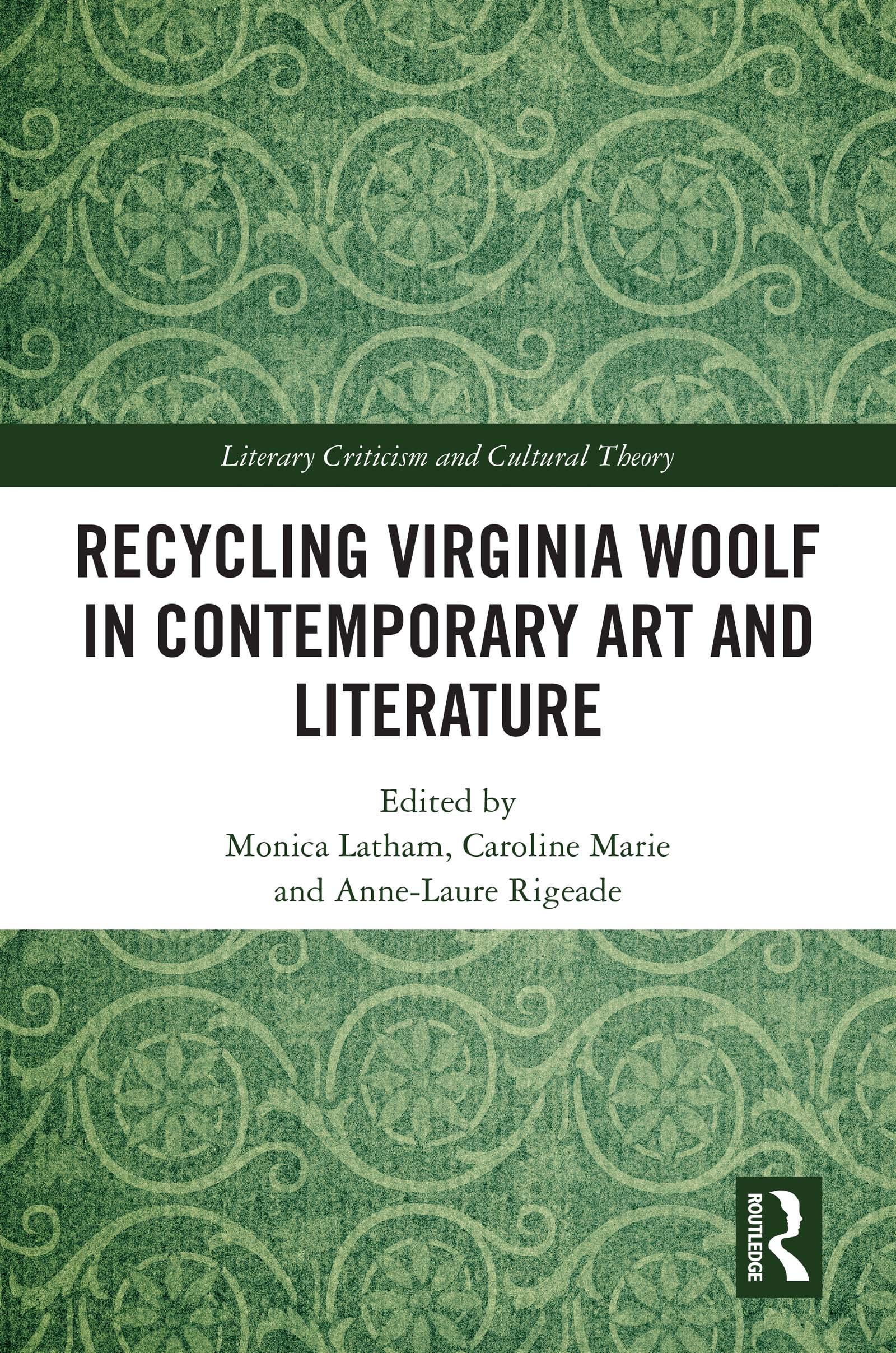
Recycling Virginia Woolf in Contemporary Art and Literature exam>ines Woolf’s life and oeuvre from the perspective of recycling and pro>vides answers to essential questions such as: Why do artists and writers recycle Woolf’s texts and introduce them into new circuits of meaning? Why do they perpetuate her iconic fgure in literature, art and popular culture? What does this practice of recycling tell us about the endurance of her oeuvre on the current literary, artistic and cultural scene and what does it tell us about our current modes of production and consumption of art and literature?
This volume offers theoretical defnitions of the concept of recycling applied to a multitude of specifc case studies. The reasons why Woolf’s work and authorial fgure lend themselves so well to the notion of recy>cling are manifold: frst, Woolf was a recycler herself and had a personal theory and practice of recycling; second, her work continues to be a
prolifc compost that is used in various ways by contemporary writers and artists; fnally, since Woolf has left the original literary sphere to permeate popular culture, the limits of what has been recycled have ex>panded in unexpected ways. These essays explore today’s trends of fab>ricating new, original artefacts with Woolf’s work, which thus remains completely relevant to our contemporary needs and beliefs
Betal enkelt med kort, Klarna, Apple Pay eller Google Pay. Ikke fornøyd? Du har alltid 14 dagers angrerett. Les mer i våre vilkår. Har du spørsmål, send oss en e-post på hello@memmo.org.
Memmo gjør det enklere å studere – uansett hvor du er i verden. Hos oss samler du pensumbøker og smarte studieverktøy på ett og samme sted: sammendrag, quizer, podkaster og flashcards. Og så Ted, din studiekompis som svarer på alt du lurer på. Over 50 000 studenter studerer allerede her – bygget for at du skal lære raskere og stresse mindre.