
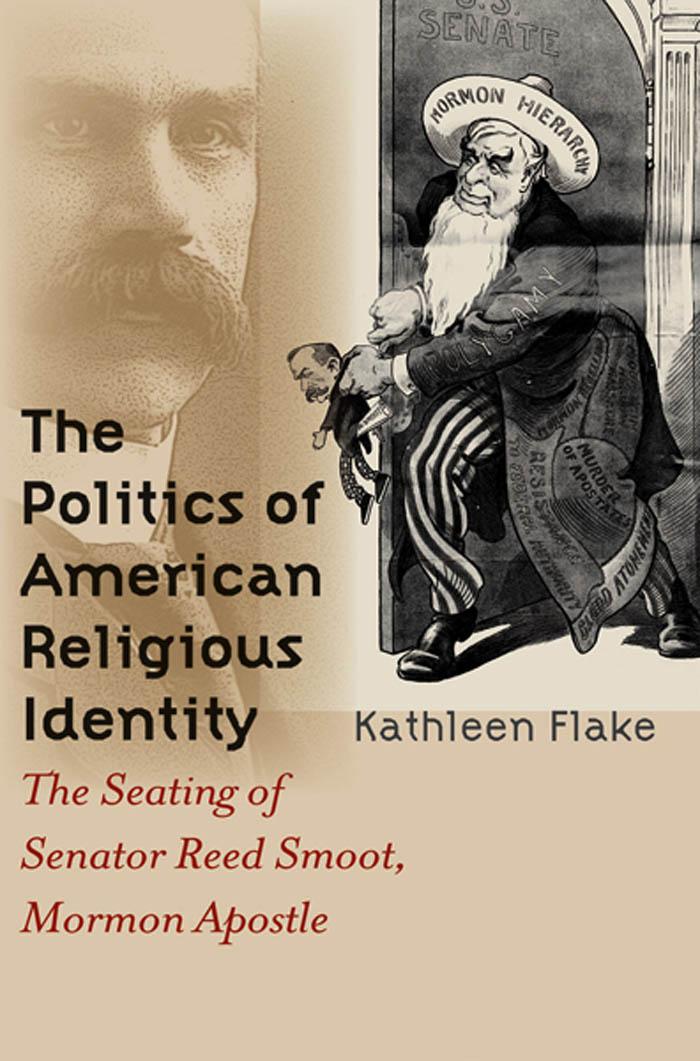
Between 1901 and 1907, a broad coalition of Protestant churches sought to expel newly elected Reed Smoot from the Senate, arguing that as an apostle in the Church of Jesus Christ of Latter-day Saints, Smoot was a lawbreaker and therefore unfit to be a lawmaker. The resulting Senate investigative hearing featured testimony on every peculiarity of Mormonism, especially its polygamous family structure. The Smoot hearing ultimately mediated a compromise between Progressive Era Protestantism and Mormonism and resolved the nation’s long-standing “Mormon Problem.” On a broader scale, Kathleen Flake shows how this landmark hearing provided the occasion for the country — through its elected representatives, the daily press, citizen petitions, and social reform activism — to reconsider the scope of religious free exercise in the new century.
Flake contends that the Smoot hearing was the forge in which the Latter-day Saints, the Protestants, and the Senate hammered out a model for church-state relations, shaping for a new generation of non-Protestant and non-Christian Americans what it meant to be free and religious. In addition, she discusses the Latter-day Saints' use of narrative and collective memory to retain their religious identity even as they changed to meet the nation’s demands.
Betal enkelt med kort, Klarna, Apple Pay eller Google Pay. Ikke fornøyd? Du har alltid 14 dagers angrerett. Les mer i våre vilkår. Har du spørsmål, send oss en e-post på hello@memmo.org.
Memmo gjør det enklere å studere – uansett hvor du er i verden. Hos oss samler du pensumbøker og smarte studieverktøy på ett og samme sted: sammendrag, quizer, podkaster og flashcards. Og så Ted, din studiekompis som svarer på alt du lurer på. Over 50 000 studenter studerer allerede her – bygget for at du skal lære raskere og stresse mindre.