
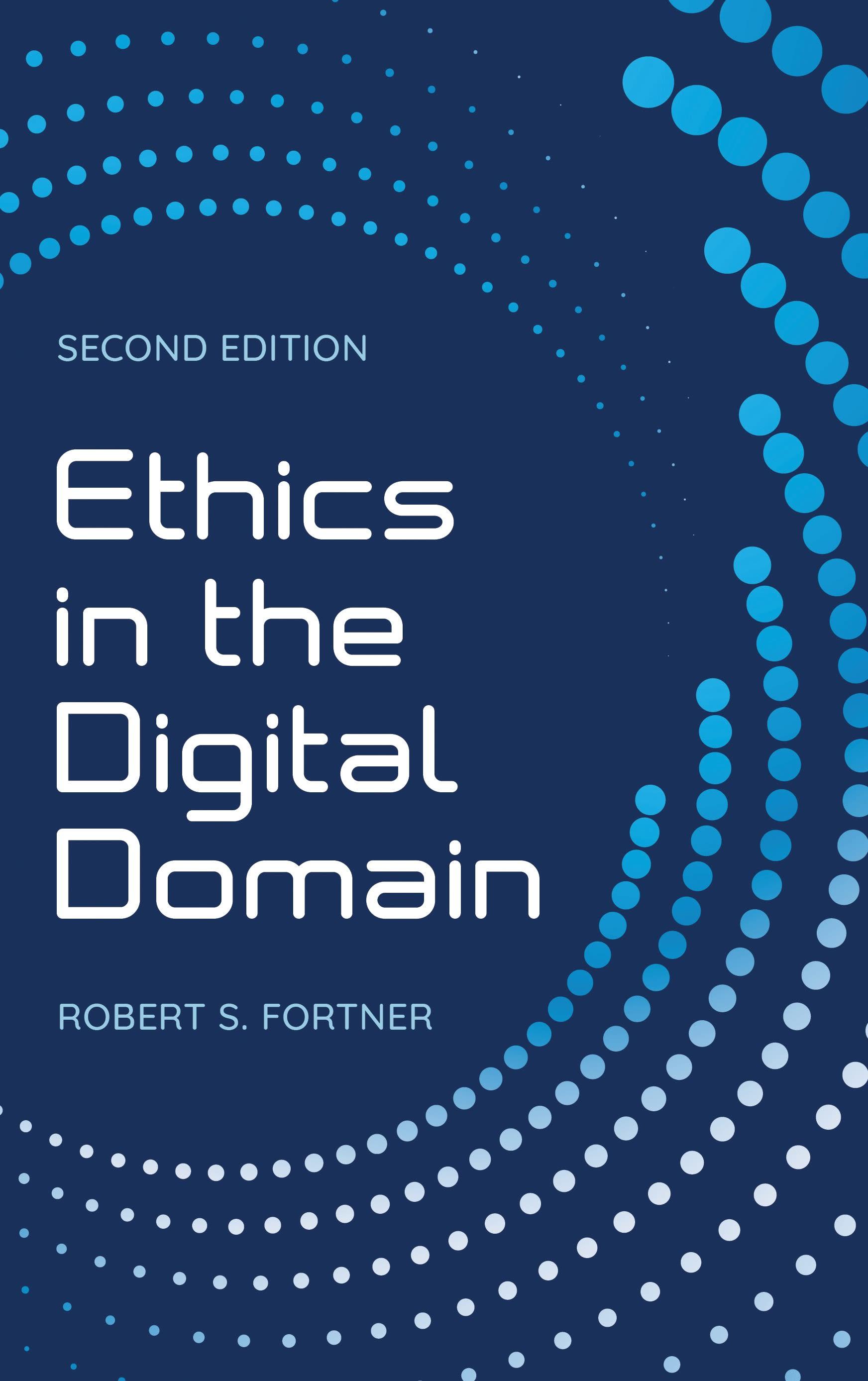
Fortner's introduction to media ethics challenges students to confront the impact of the digital world on their lives.
Ethics in the Digital Domain addresses the principal ethical issues created or enhanced by life increasingly conducted in digital environments. Chapters discuss social media, the construction and maintenance of identity, the incursion of robots into the workplace and their replacement of work, the increasing reliance on artificial intelligence and the likely future of its implementation, the arrival of alternative realities, such as virtual and augmented reality, even reality after death. Fortner explores what constitutes truth in what many consider a post-truth world, and the implications of our new digital age for the maintenance and conduct of democracy.
This book raises significant questions about how the digital age may change our conception of our selves, our friendships and marriage opportunities, our conception of the value and concept of work and career, along with the necessity of navigating through both physical and digital (or artificial) life quickly becoming dominant in the human experience.
The second edition includes expanded treatments of truth, politics, identity construction and maintenance, and social change resulting from our increasing existence within digital realities. It includes new chapters on the consequences of incorporating robots into everyday life, and both virtual and augmented realities' realities for human flourishing. It asks the question of what “human” means in this new set of environments and whether people's understanding of their own humanity, or that of others, will change as technology advances.
Features include
a glossary of keywords highlighted throughout the text;case studies in each chapter that allow students to debate significant ethical issues in the digital age;discussion questions at the end of each chapter to further explore the issues raised in each chapter; andfigures that illustrate the realities of this digital age;
Ethics in the Digital Domain addresses the principal ethical issues created or enhanced by life increasingly conducted in digital environments. Chapters discuss social media, the construction and maintenance of identity, the incursion of robots into the workplace and their replacement of work, the increasing reliance on artificial intelligence and the likely future of its implementation, the arrival of alternative realities, such as virtual and augmented reality, even reality after death. Fortner explores what constitutes truth in what many consider a post-truth world, and the implications of our new digital age for the maintenance and conduct of democracy.
This book raises significant questions about how the digital age may change our conception of our selves, our friendships and marriage opportunities, our conception of the value and concept of work and career, along with the necessity of navigating through both physical and digital (or artificial) life quickly becoming dominant in the human experience.
The second edition includes expanded treatments of truth, politics, identity construction and maintenance, and social change resulting from our increasing existence within digital realities. It includes new chapters on the consequences of incorporating robots into everyday life, and both virtual and augmented realities' realities for human flourishing. It asks the question of what “human” means in this new set of environments and whether people's understanding of their own humanity, or that of others, will change as technology advances.
Features include
a glossary of keywords highlighted throughout the text;case studies in each chapter that allow students to debate significant ethical issues in the digital age;discussion questions at the end of each chapter to further explore the issues raised in each chapter; andfigures that illustrate the realities of this digital age;
Payez facilement par carte, Klarna, Apple Pay ou Google Pay. Pas satisfait ? Vous avez toujours une garantie de remboursement de 14 jours. En savoir plus dans nos conditions. Si vous avez des questions, envoyez-nous un e-mail à hello@memmo.org.
Memmo facilite tes études, où que tu sois dans le monde. On rassemble tes manuels de cours et des outils d'étude intelligents au même endroit : résumés, quiz, podcasts et flashcards. Et il y a Ted, ton compagnon d'étude qui répond à toutes tes questions. Plus de 50 000 étudiants étudient déjà ici – conçu pour t'aider à apprendre plus vite et à moins stresser.