
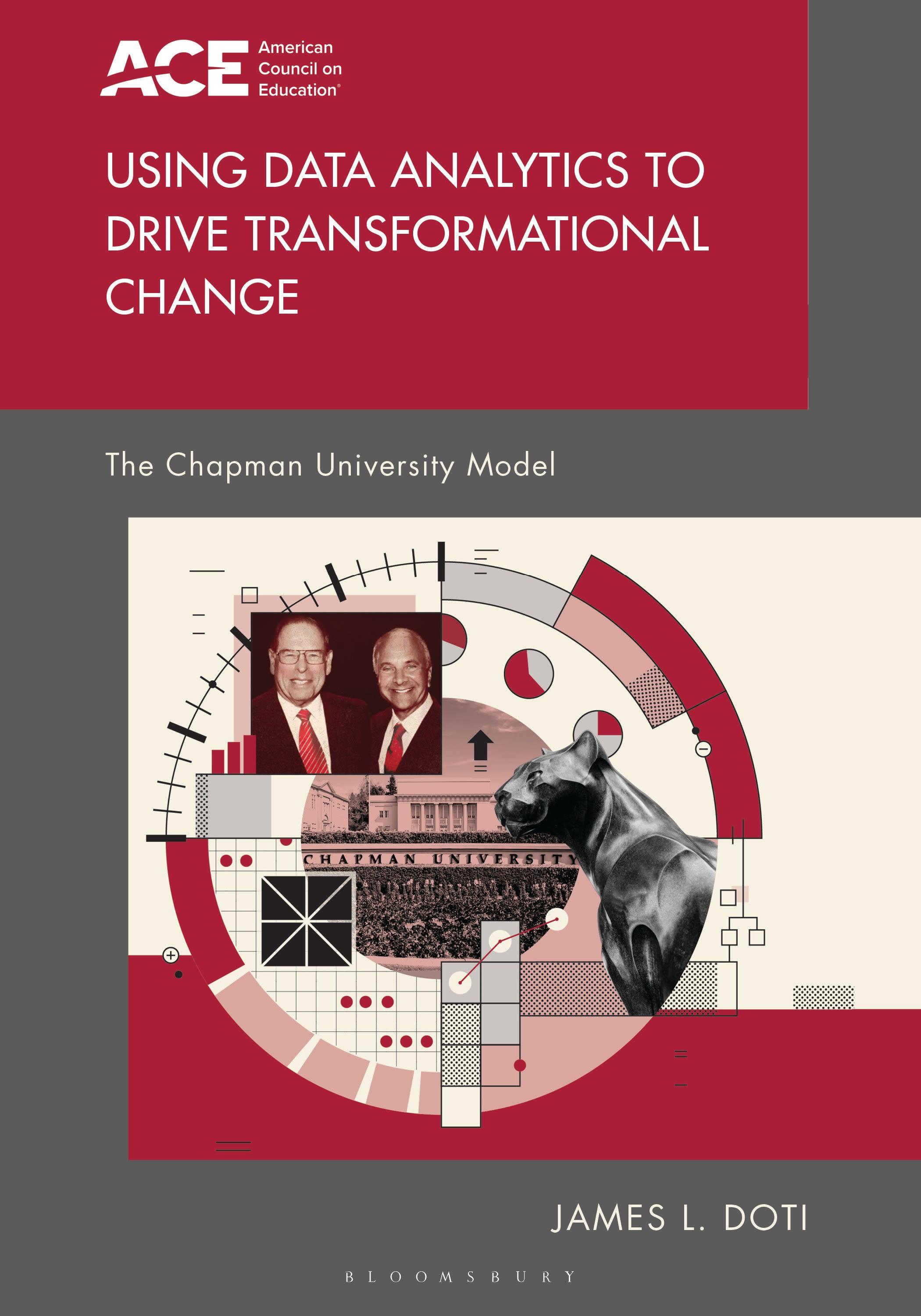
Using Data Analytics to Drive Transformational Change: The Chapman University Model opens with the statement, “Most strategic plans are a waste of time – a drain on precious resources.” An alternative planning approach is described in this book. It represents a paradigm shift in tackling transformational change. Rather than developing all-around strategies, the author presents a planning model that guided Chapman's transformation that took place during James Doti's 25-year presidency at Chapman University.
Chapter 2 describes how data analytics were used to increase student selectivity by utilizing specific strategies relating to tuition pricing and discounting.
Chapter 3 shows how the progress of competing universities can be identified and measured in helping determine the optimal size for a university. The specific strategies relating to establishing a new film school, law school and physical therapy program are presented, as well as when and how to pursue national accreditation for a school's academic programs.
Chapter 4 describes how analytical tools can be used to optimally invest in buildings and land. Putting those tools to work is described in examples related to the construction of a new film studio, library, underground parking, and landscape development.
Chapter 5 explains how a unique budgetary system was developed to move Chapman's faculty salaries into the 95th percentile for all professional ranks. It also presents specific strategies relating to increasing the number of endowed faculty chairs and professorships.
Chapter 6 describes how the net income ratio can be used to assess the financial health of the institution as well as increase endowment growth and investments in buildings and land. Specific examples include increasing the number of natural science majors as well as developing a new campus devoted to graduate health science programs. The chapter also presents a unique strategy relating to succession planning
Chapter 2 describes how data analytics were used to increase student selectivity by utilizing specific strategies relating to tuition pricing and discounting.
Chapter 3 shows how the progress of competing universities can be identified and measured in helping determine the optimal size for a university. The specific strategies relating to establishing a new film school, law school and physical therapy program are presented, as well as when and how to pursue national accreditation for a school's academic programs.
Chapter 4 describes how analytical tools can be used to optimally invest in buildings and land. Putting those tools to work is described in examples related to the construction of a new film studio, library, underground parking, and landscape development.
Chapter 5 explains how a unique budgetary system was developed to move Chapman's faculty salaries into the 95th percentile for all professional ranks. It also presents specific strategies relating to increasing the number of endowed faculty chairs and professorships.
Chapter 6 describes how the net income ratio can be used to assess the financial health of the institution as well as increase endowment growth and investments in buildings and land. Specific examples include increasing the number of natural science majors as well as developing a new campus devoted to graduate health science programs. The chapter also presents a unique strategy relating to succession planning
Payez facilement par carte, Klarna, Apple Pay ou Google Pay. Pas satisfait ? Vous avez toujours une garantie de remboursement de 14 jours. En savoir plus dans nos conditions. Si vous avez des questions, envoyez-nous un e-mail à hello@memmo.org.
Memmo facilite tes études, où que tu sois dans le monde. On rassemble tes manuels de cours et des outils d'étude intelligents au même endroit : résumés, quiz, podcasts et flashcards. Et il y a Ted, ton compagnon d'étude qui répond à toutes tes questions. Plus de 50 000 étudiants étudient déjà ici – conçu pour t'aider à apprendre plus vite et à moins stresser.