
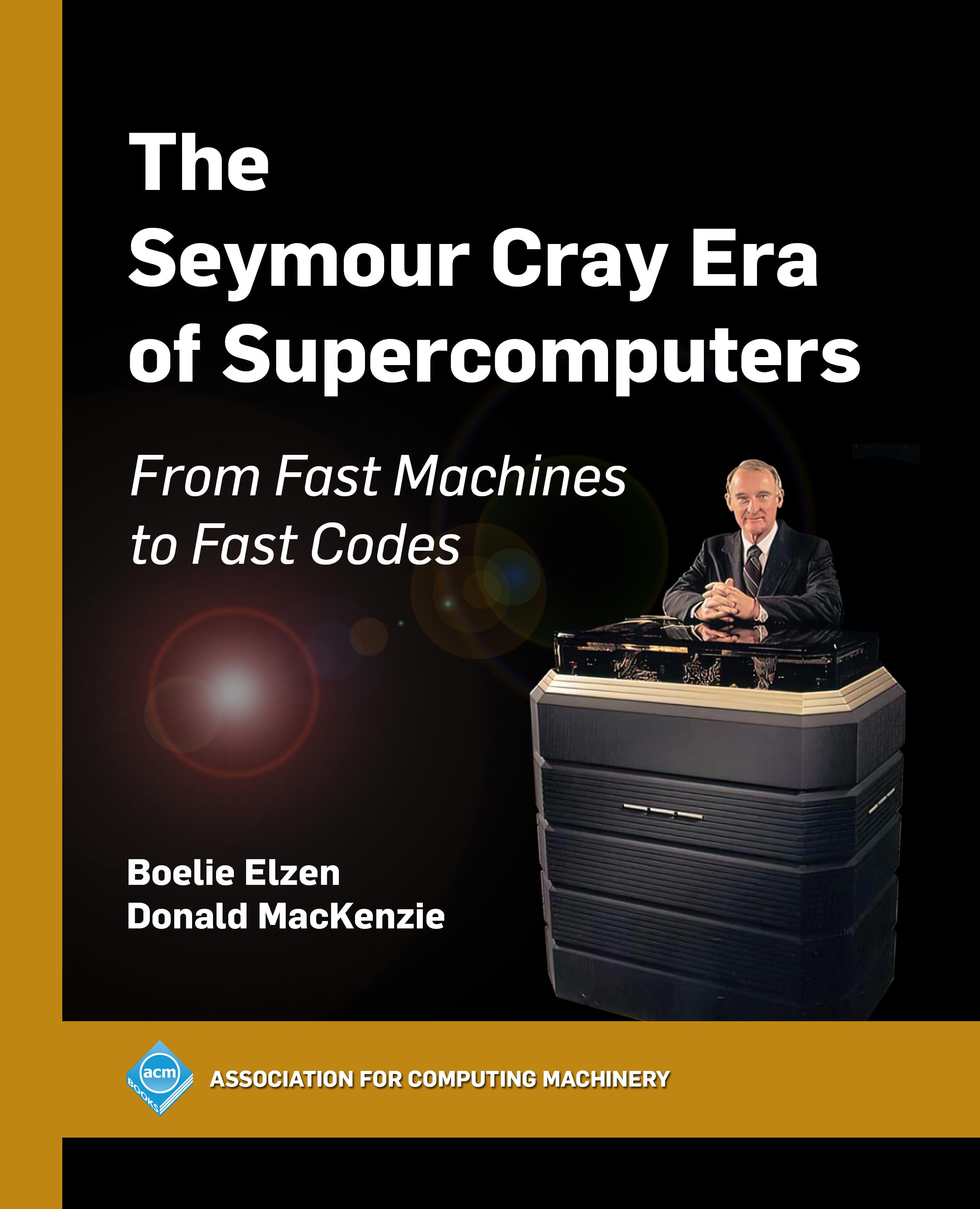
This book describes the development and use of supercomputers in the period 1960-1996, a time that can be called the Seymour Cray Era. For more than three decades, Cray’s computer designs were seen as the yardstick against which all other efforts were measured. Initially, this yardstick was sheer computing speed. However, the supercomputer world gradually became more complex and other factors became equally important.
The initial development of supercomputers was commissioned and financed by the Los Alamos and Lawrence Livermore National Laboratories, which had huge computational needs in connection with nuclear weapons development. The computers designed by Cray satisfied those needs, while these computers were also sold to a few dozen other big research organizations and weather agencies. From the 1980s, a variety of companies started to compete with the Cray designs by offering supercomputers that used a new architectural approach, MPP: massively parallel processing. This new architecture, based on using tens of thousands of relatively simple microprocessors, subsequently began to dominate high-performance computing and marked the end of the Seymour Cray Era.
This book is important reading for anyone working in the area of high-performance computing, providing essential historical context for the work of a legendary pioneer and the computers he became famous for designing. It will also be valuable to students of computing history and, more generally, to readers interested in the history of science and technology. For advanced students, the book illustrates how innovation in its very essence is a socio-technical process: not just a matter of developing the “best technology,” but also of making appropriate choices concerning the interaction of human and technical factors in product design.
Payez facilement par carte, Klarna, Apple Pay ou Google Pay. Pas satisfait ? Vous avez toujours une garantie de remboursement de 14 jours. En savoir plus dans nos conditions. Si vous avez des questions, envoyez-nous un e-mail à hello@memmo.org.
Memmo facilite tes études, où que tu sois dans le monde. On rassemble tes manuels de cours et des outils d'étude intelligents au même endroit : résumés, quiz, podcasts et flashcards. Et il y a Ted, ton compagnon d'étude qui répond à toutes tes questions. Plus de 50 000 étudiants étudient déjà ici – conçu pour t'aider à apprendre plus vite et à moins stresser.