
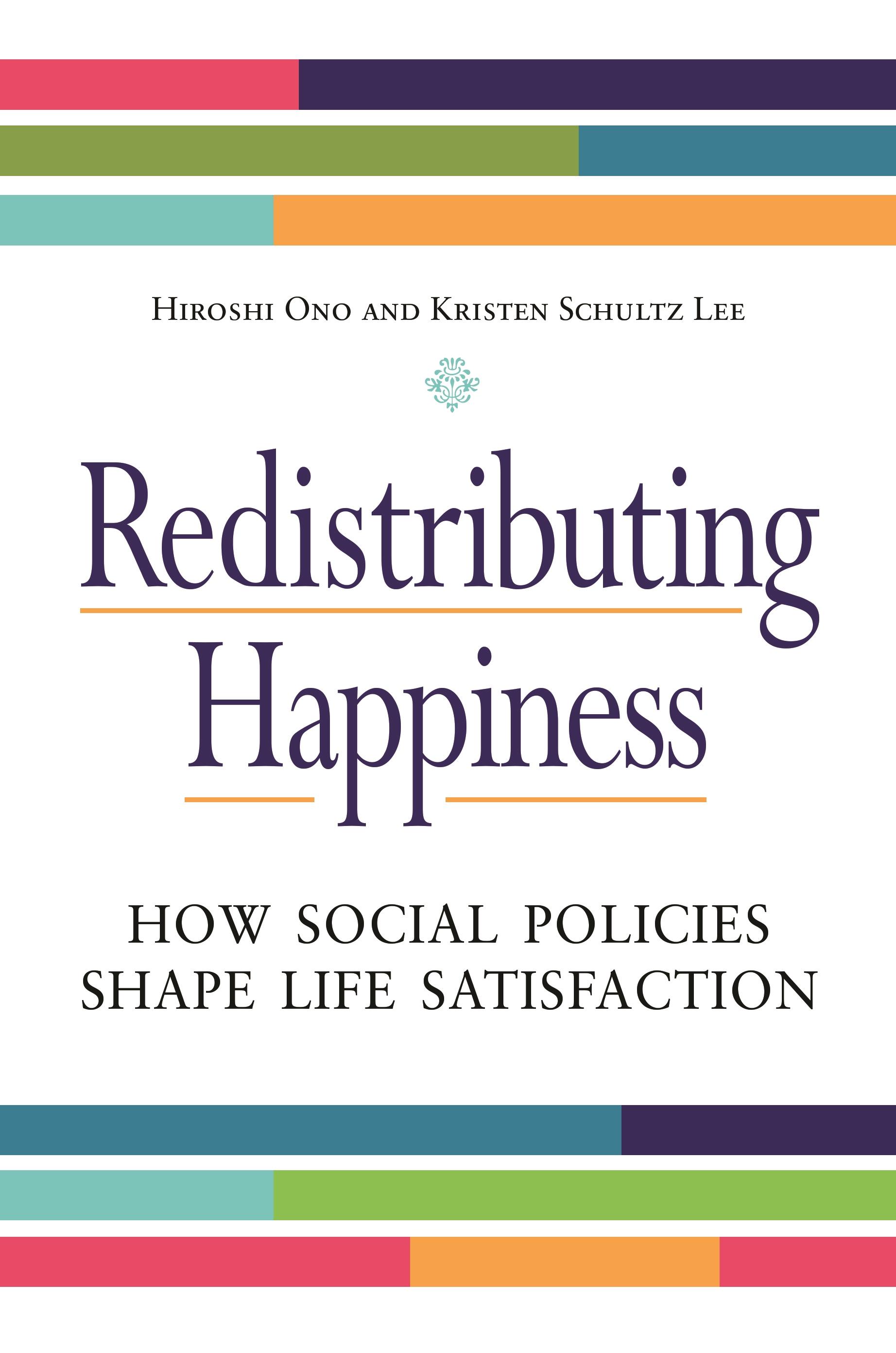
Drawing on international comparisons of data on happiness, this book offers both general and academic audiences a simple, deep, and honest answer to the timeless question: "What makes people happy"?
The conventional recipe for happiness has long included money, marriage, and parenthood as basic ingredients. What research is telling us, however, is that these elements don't relate to happiness in quite the way we might expect them to. Redistributing Happiness: How Social Policies Shape Life Satisfaction explores the factors that determine "life satisfaction" and demonstrate how an individual's happiness is largely shaped by social context—by where they live and local policies, norms and attitudes about religious beliefs, economic and political security, income redistribution, and more.
The book begins with a review of the contributions of other disciplines—such as economics, psychology, and political science—to common explanations of the sources of happiness. Next, the authors offer an international comparison based on their own research on what makes people happy, taking into consideration factors such as marriage, children, money, and job status. Most importantly, special attention is paid to how social policies and social context directly affect people's happiness. All readers high school age and up will enjoy the book's comprehensive—and fascinating—answer to the happiness question because of how the authors connect an individual's experience to the broader environment of the social system and situation in which that person resides.
The conventional recipe for happiness has long included money, marriage, and parenthood as basic ingredients. What research is telling us, however, is that these elements don't relate to happiness in quite the way we might expect them to. Redistributing Happiness: How Social Policies Shape Life Satisfaction explores the factors that determine "life satisfaction" and demonstrate how an individual's happiness is largely shaped by social context—by where they live and local policies, norms and attitudes about religious beliefs, economic and political security, income redistribution, and more.
The book begins with a review of the contributions of other disciplines—such as economics, psychology, and political science—to common explanations of the sources of happiness. Next, the authors offer an international comparison based on their own research on what makes people happy, taking into consideration factors such as marriage, children, money, and job status. Most importantly, special attention is paid to how social policies and social context directly affect people's happiness. All readers high school age and up will enjoy the book's comprehensive—and fascinating—answer to the happiness question because of how the authors connect an individual's experience to the broader environment of the social system and situation in which that person resides.
Payez facilement par carte, Klarna, Apple Pay ou Google Pay. Pas satisfait ? Vous avez toujours une garantie de remboursement de 14 jours. En savoir plus dans nos conditions. Si vous avez des questions, envoyez-nous un e-mail à hello@memmo.org.
Memmo facilite tes études, où que tu sois dans le monde. On rassemble tes manuels de cours et des outils d'étude intelligents au même endroit : résumés, quiz, podcasts et flashcards. Et il y a Ted, ton compagnon d'étude qui répond à toutes tes questions. Plus de 50 000 étudiants étudient déjà ici – conçu pour t'aider à apprendre plus vite et à moins stresser.