
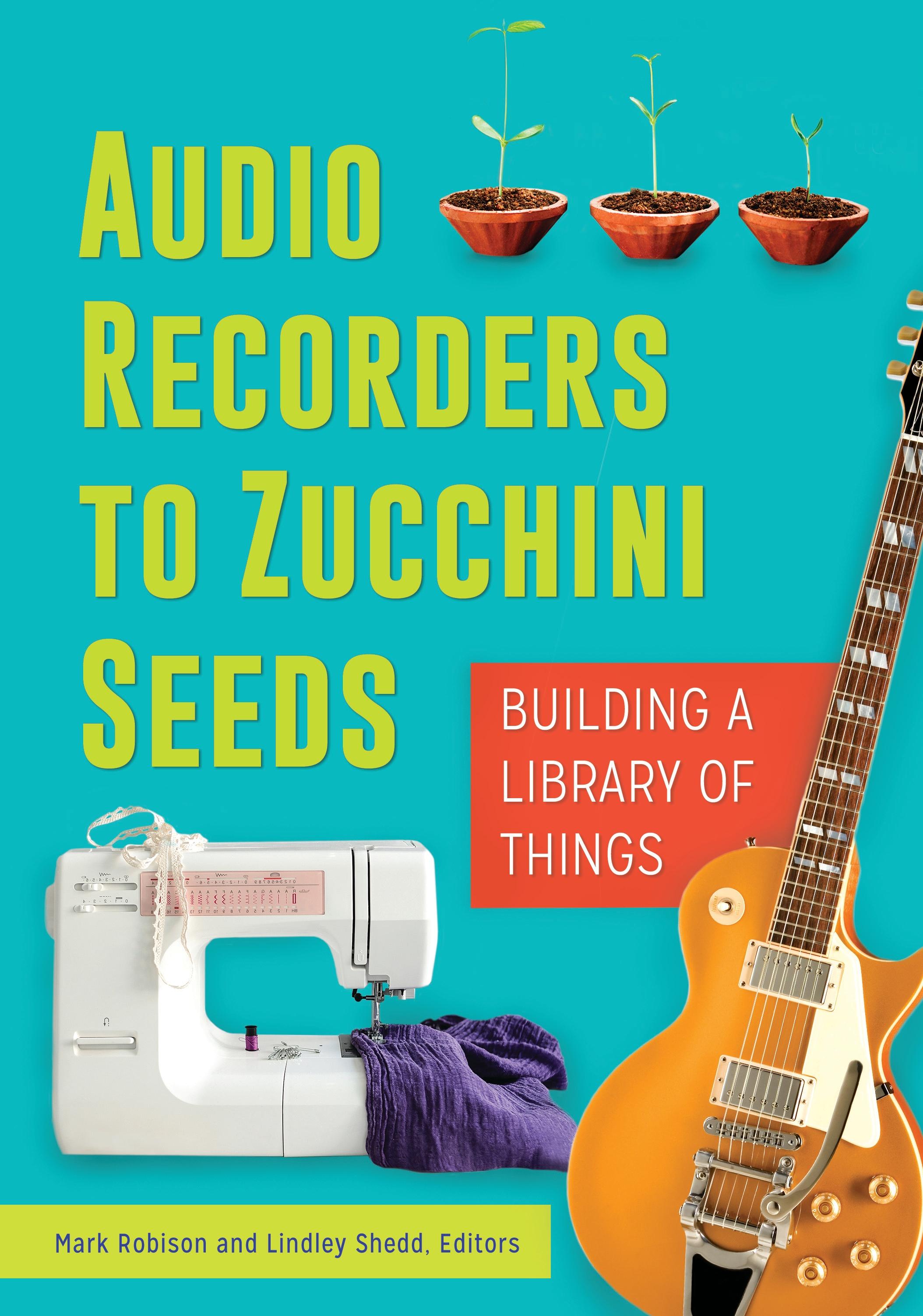
This exploration of the range of options for a "library of things" collection demonstrates what has been implemented successfully and offers practical insights regarding these nontraditional projects, from the development of concepts to the everyday realities of maintaining these collections.
What services libraries provide and how they function in their communities is constantly being reconsidered and redefined. One example of this is the trend of experimenting with building circulating collections of nonliterary "things"—such as tools, seeds, cooking equipment, bicycles, household machinery, and educational materials—by drawing on traditional library functions and strengths of acquisition, organization, and circulation. Audio Recorders to Zucchini Seeds: Building a Library of Things enables you to consider the feasibility of creating a specific type of "thing" collection in your library and get practical advice about the processes necessary to successfully launch and maintain it, from planning and funding to circulation, promotion, and upkeep.
This contributed volume provides a survey of "library of things" projects within the United States, from both public and academic libraries, offering real-world lessons learned from these early experiments with nontraditional collections. The authors offer practical insights from their projects, from the development of their initial ideas to the everyday realities of maintaining and circulating these collections, including cataloging, space needs, safety concerns, staff training, circulation, marketing, and assessment. The contributed chapters are organized thematically, covering "things" collections that encompass a wide variety of objects first, followed by collections with a community-building focus (seeds, recreation, tools) and those that serve an educational purpose, such as curriculum centers, children's toys, or collections that support a university curriculum. The last section addresses collections that support media production.
What services libraries provide and how they function in their communities is constantly being reconsidered and redefined. One example of this is the trend of experimenting with building circulating collections of nonliterary "things"—such as tools, seeds, cooking equipment, bicycles, household machinery, and educational materials—by drawing on traditional library functions and strengths of acquisition, organization, and circulation. Audio Recorders to Zucchini Seeds: Building a Library of Things enables you to consider the feasibility of creating a specific type of "thing" collection in your library and get practical advice about the processes necessary to successfully launch and maintain it, from planning and funding to circulation, promotion, and upkeep.
This contributed volume provides a survey of "library of things" projects within the United States, from both public and academic libraries, offering real-world lessons learned from these early experiments with nontraditional collections. The authors offer practical insights from their projects, from the development of their initial ideas to the everyday realities of maintaining and circulating these collections, including cataloging, space needs, safety concerns, staff training, circulation, marketing, and assessment. The contributed chapters are organized thematically, covering "things" collections that encompass a wide variety of objects first, followed by collections with a community-building focus (seeds, recreation, tools) and those that serve an educational purpose, such as curriculum centers, children's toys, or collections that support a university curriculum. The last section addresses collections that support media production.
Payez facilement par carte, Klarna, Apple Pay ou Google Pay. Pas satisfait ? Vous avez toujours une garantie de remboursement de 14 jours. En savoir plus dans nos conditions. Si vous avez des questions, envoyez-nous un e-mail à hello@memmo.org.
Memmo facilite tes études, où que tu sois dans le monde. On rassemble tes manuels de cours et des outils d'étude intelligents au même endroit : résumés, quiz, podcasts et flashcards. Et il y a Ted, ton compagnon d'étude qui répond à toutes tes questions. Plus de 50 000 étudiants étudient déjà ici – conçu pour t'aider à apprendre plus vite et à moins stresser.