
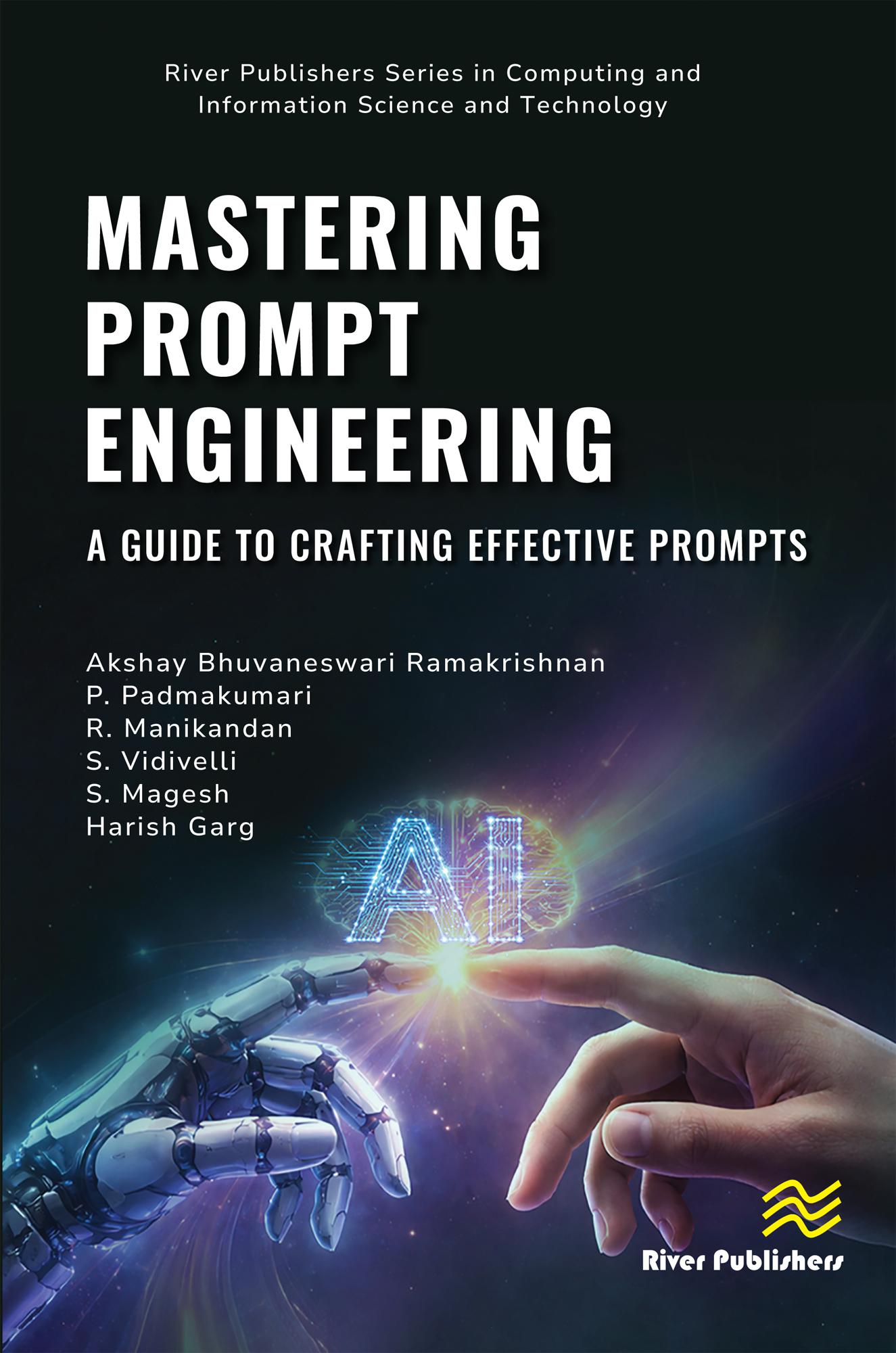
This book explains the principles, structure, and real-world practice of prompt engineering in a way that anyone working with large language models can understand and apply. Rather than treating prompting as a collection of hacks, it walks the reader through how to think about role, context, task, constraints, and examples so that LLMs produce reliable, domain-appropriate outputs. Starting from the basics of “what is a prompt,” the book then connects prompting to how generative AI models actually work, introduces core and advanced prompting patterns (prompt chaining, dynamic templates, tool-augmented prompting), and shows how to evaluate and refine model responses.
Designed for students, educators, and practitioners, each chapter includes learning objectives and hands-on exercises that can be tried directly in tools like ChatGPT. Later chapters move from theory to application, demonstrating how to build LLM-powered chatbots and retrieval-augmented generation (RAG) systems, and how to incorporate ethics, safety, and bias awareness into prompt design. By the end, readers will have a reusable toolkit for crafting effective prompts across education, research, business, and technical use cases.
Payez facilement par carte, Klarna, Apple Pay ou Google Pay. Pas satisfait ? Vous avez toujours une garantie de remboursement de 14 jours. En savoir plus dans nos conditions. Si vous avez des questions, envoyez-nous un e-mail à hello@memmo.org.
Memmo facilite tes études, où que tu sois dans le monde. On rassemble tes manuels de cours et des outils d'étude intelligents au même endroit : résumés, quiz, podcasts et flashcards. Et il y a Ted, ton compagnon d'étude qui répond à toutes tes questions. Plus de 50 000 étudiants étudient déjà ici – conçu pour t'aider à apprendre plus vite et à moins stresser.