
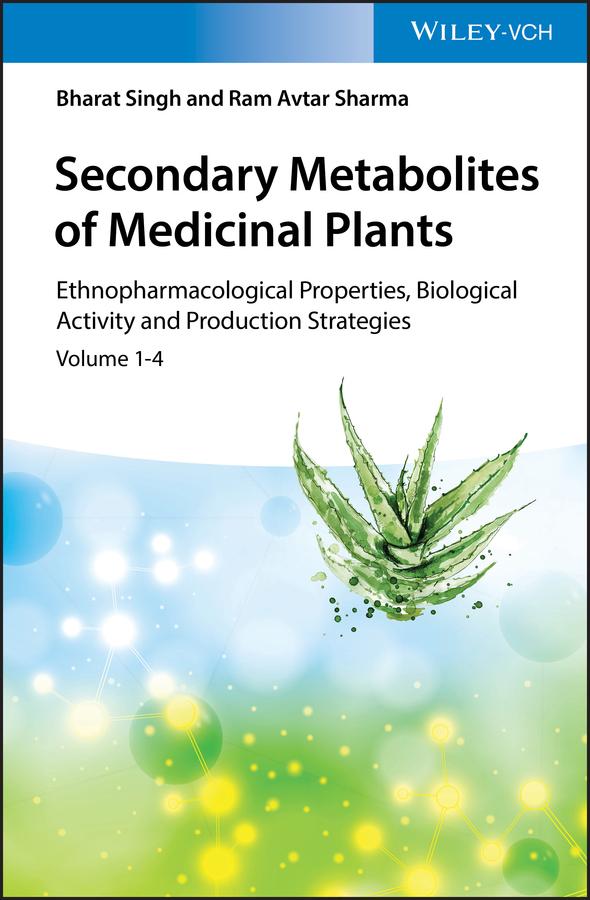
Covers the structurally diverse secondary metabolites of medicinal plants, including their ethnopharmacological properties, biological activity, and production strategies
Secondary metabolites of plants are a treasure trove of novel compounds with potential pharmaceutical applications. Consequently, the nature of these metabolites as well as strategies for the targeted expression and/or purification is of high interest. Regarding their biological and pharmacological activity and ethnopharmacological properties, this book offers a comprehensive treatment of 100 plant species, including Abutilon, Aloe, Cannabis, Capsicum, Jasminum, Malva, Phyllanthus, Stellaria, Thymus, Vitis, Zingiber, and more. It also discusses the cell culture conditions and various strategies used for enhancing the production of targeted metabolites in plant cell cultures.
Secondary Metabolites of Medicinal Plants: Ethnopharmacological Properties, Biological Activity and Production Strategies is presented in four parts. Part I provides a complete introduction to the subject. Part II looks at the ethnomedicinal and pharmacological properties, chemical structures, and culture conditions of secondary metabolites. The third part examines the many strategies of secondary metabolites production, including: biotransformation; culture conditions; feeding of precursors; genetic transformation; immobilization; and oxygenation. The last section concludes with an overview of everything learned.
-Provides information on cell culture conditions and targeted extraction of secondary metabolites confirmed by relevant literature
-Presents the structures of secondary metabolites of 100 plant species together with their biological and pharmacological activity
-Discusses plant species regarding their distribution, habitat, and ethnopharmacalogical properties
-Presents strategies of secondary metabolites production, such as organ culture, pH, elicitation, hairy root cultures, light, and mutagenesis
Secondary Metabolites of Medicinal Plants is an important book for students, professionals, and biotechnologists interested in the biological and pharmacological activity and ethnopharmacological properties of plants.
Secondary metabolites of plants are a treasure trove of novel compounds with potential pharmaceutical applications. Consequently, the nature of these metabolites as well as strategies for the targeted expression and/or purification is of high interest. Regarding their biological and pharmacological activity and ethnopharmacological properties, this book offers a comprehensive treatment of 100 plant species, including Abutilon, Aloe, Cannabis, Capsicum, Jasminum, Malva, Phyllanthus, Stellaria, Thymus, Vitis, Zingiber, and more. It also discusses the cell culture conditions and various strategies used for enhancing the production of targeted metabolites in plant cell cultures.
Secondary Metabolites of Medicinal Plants: Ethnopharmacological Properties, Biological Activity and Production Strategies is presented in four parts. Part I provides a complete introduction to the subject. Part II looks at the ethnomedicinal and pharmacological properties, chemical structures, and culture conditions of secondary metabolites. The third part examines the many strategies of secondary metabolites production, including: biotransformation; culture conditions; feeding of precursors; genetic transformation; immobilization; and oxygenation. The last section concludes with an overview of everything learned.
-Provides information on cell culture conditions and targeted extraction of secondary metabolites confirmed by relevant literature
-Presents the structures of secondary metabolites of 100 plant species together with their biological and pharmacological activity
-Discusses plant species regarding their distribution, habitat, and ethnopharmacalogical properties
-Presents strategies of secondary metabolites production, such as organ culture, pH, elicitation, hairy root cultures, light, and mutagenesis
Secondary Metabolites of Medicinal Plants is an important book for students, professionals, and biotechnologists interested in the biological and pharmacological activity and ethnopharmacological properties of plants.
Payez facilement par carte, Klarna, Apple Pay ou Google Pay. Pas satisfait ? Vous avez toujours une garantie de remboursement de 14 jours. En savoir plus dans nos conditions. Si vous avez des questions, envoyez-nous un e-mail à hello@memmo.org.
Memmo facilite tes études, où que tu sois dans le monde. On rassemble tes manuels de cours et des outils d'étude intelligents au même endroit : résumés, quiz, podcasts et flashcards. Et il y a Ted, ton compagnon d'étude qui répond à toutes tes questions. Plus de 50 000 étudiants étudient déjà ici – conçu pour t'aider à apprendre plus vite et à moins stresser.