
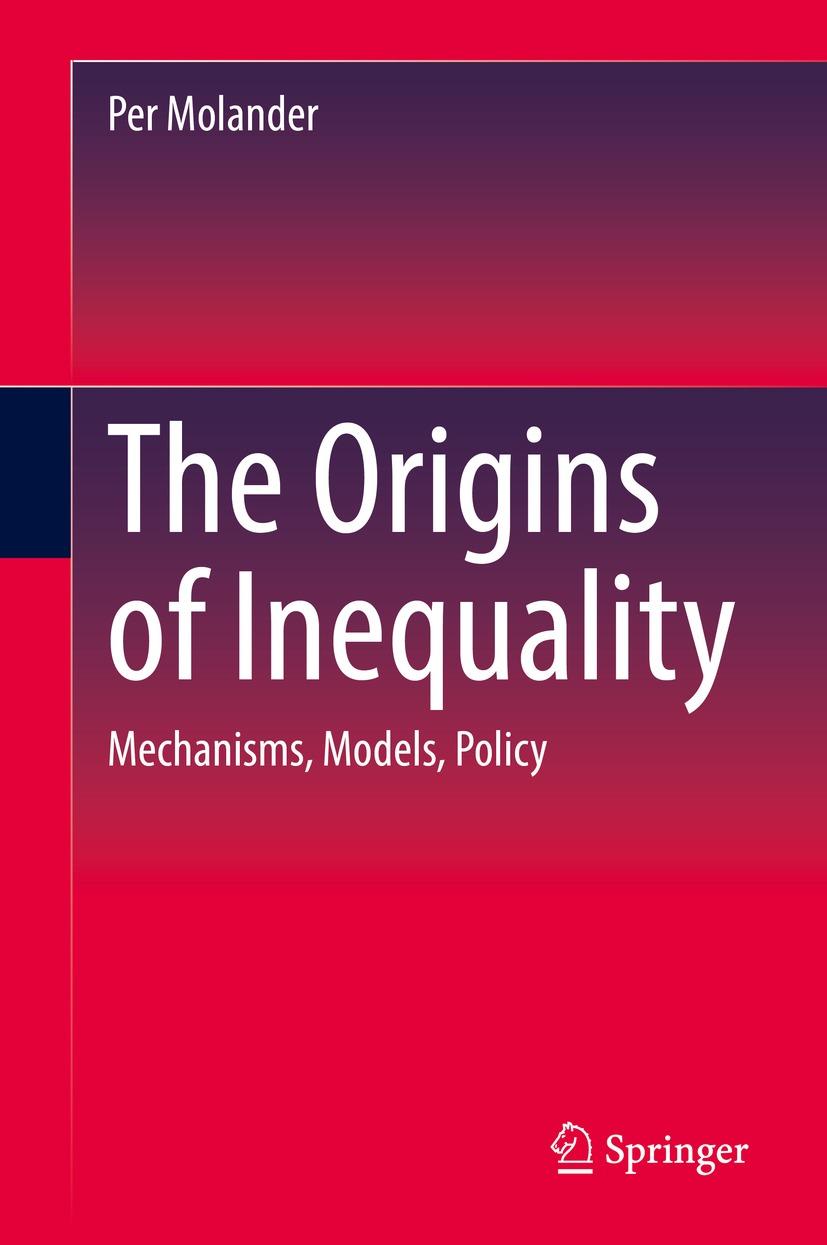
This book presents a unified approach to the problem of inequality, combining results from a variety of research fields – the human life cycle, group dynamics, networks, markets, and economic geography. Its main message is that inequality emerges as the natural result of mechanisms operating both in individual human development and in social interaction. It posits that inequality is not an anomalous deviation from a naturally egalitarian social structure; quite to the contrary, inequality is to be expected as part of the human condition. The author states that the growth of inequality, on the other hand, is not a natural law – the level and character of inequality can be affected by collective decisions. This perspective on human inequality has potentially far-reaching consequences both for the political philosophy of inequality and for public policy-making.
This book is of interest to a wide interdisciplinary social science readership, including public policy, decisionsciences, economic geography, and life course studies.
Payez facilement par carte, Klarna, Apple Pay ou Google Pay. Pas satisfait ? Vous avez toujours une garantie de remboursement de 14 jours. En savoir plus dans nos conditions. Si vous avez des questions, envoyez-nous un e-mail à hello@memmo.org.
Memmo facilite tes études, où que tu sois dans le monde. On rassemble tes manuels de cours et des outils d'étude intelligents au même endroit : résumés, quiz, podcasts et flashcards. Et il y a Ted, ton compagnon d'étude qui répond à toutes tes questions. Plus de 50 000 étudiants étudient déjà ici – conçu pour t'aider à apprendre plus vite et à moins stresser.