
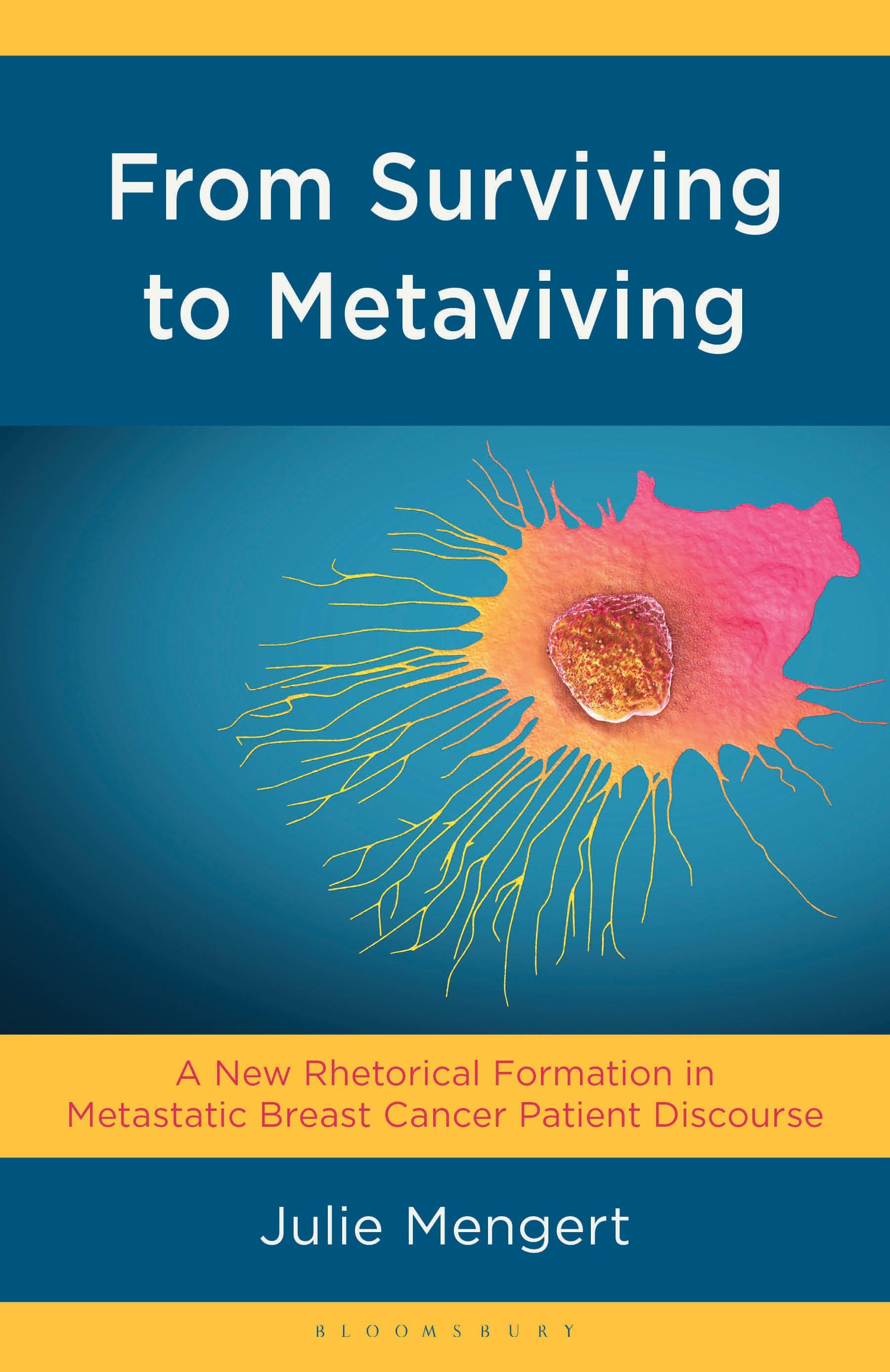
As treatments have advanced, metastatic breast cancer has become a disease that some women can live with for years, which has changed the language that women use to discuss living with this form of breast cancer as discussed in this book.
Using the framework of Celeste Condit's rhetorical formations, which includes uses of metaphors, topics, and values, among other rhetorical features, the author examines how language has shifted from one of war and survivor rhetoric to that of metavivor rhetoric, which includes metaphors of water and prison, among others. Another hallmark of this emerging rhetorical formation is existing in a state of liminality where the cancer neither progresses nor retreats, leading to women experiencing time differently. By examining how women discuss living with cancer in an online breast cancer support group, the author analyzes the language shifts taking place and argues that women have moved from the dominant war/survivor rhetorical formation to one grounded in metavivor rhetoric.
Within this evolution comes an understanding of what it means to live with a chronic, yet ultimately, terminal, illness and an acknowledgment of the impact that their lives' perceived time has on these language choices.
Using the framework of Celeste Condit's rhetorical formations, which includes uses of metaphors, topics, and values, among other rhetorical features, the author examines how language has shifted from one of war and survivor rhetoric to that of metavivor rhetoric, which includes metaphors of water and prison, among others. Another hallmark of this emerging rhetorical formation is existing in a state of liminality where the cancer neither progresses nor retreats, leading to women experiencing time differently. By examining how women discuss living with cancer in an online breast cancer support group, the author analyzes the language shifts taking place and argues that women have moved from the dominant war/survivor rhetorical formation to one grounded in metavivor rhetoric.
Within this evolution comes an understanding of what it means to live with a chronic, yet ultimately, terminal, illness and an acknowledgment of the impact that their lives' perceived time has on these language choices.
Payez facilement par carte, Klarna, Apple Pay ou Google Pay. Pas satisfait ? Vous avez toujours une garantie de remboursement de 14 jours. En savoir plus dans nos conditions. Si vous avez des questions, envoyez-nous un e-mail à hello@memmo.org.
Memmo facilite tes études, où que tu sois dans le monde. On rassemble tes manuels de cours et des outils d'étude intelligents au même endroit : résumés, quiz, podcasts et flashcards. Et il y a Ted, ton compagnon d'étude qui répond à toutes tes questions. Plus de 50 000 étudiants étudient déjà ici – conçu pour t'aider à apprendre plus vite et à moins stresser.