
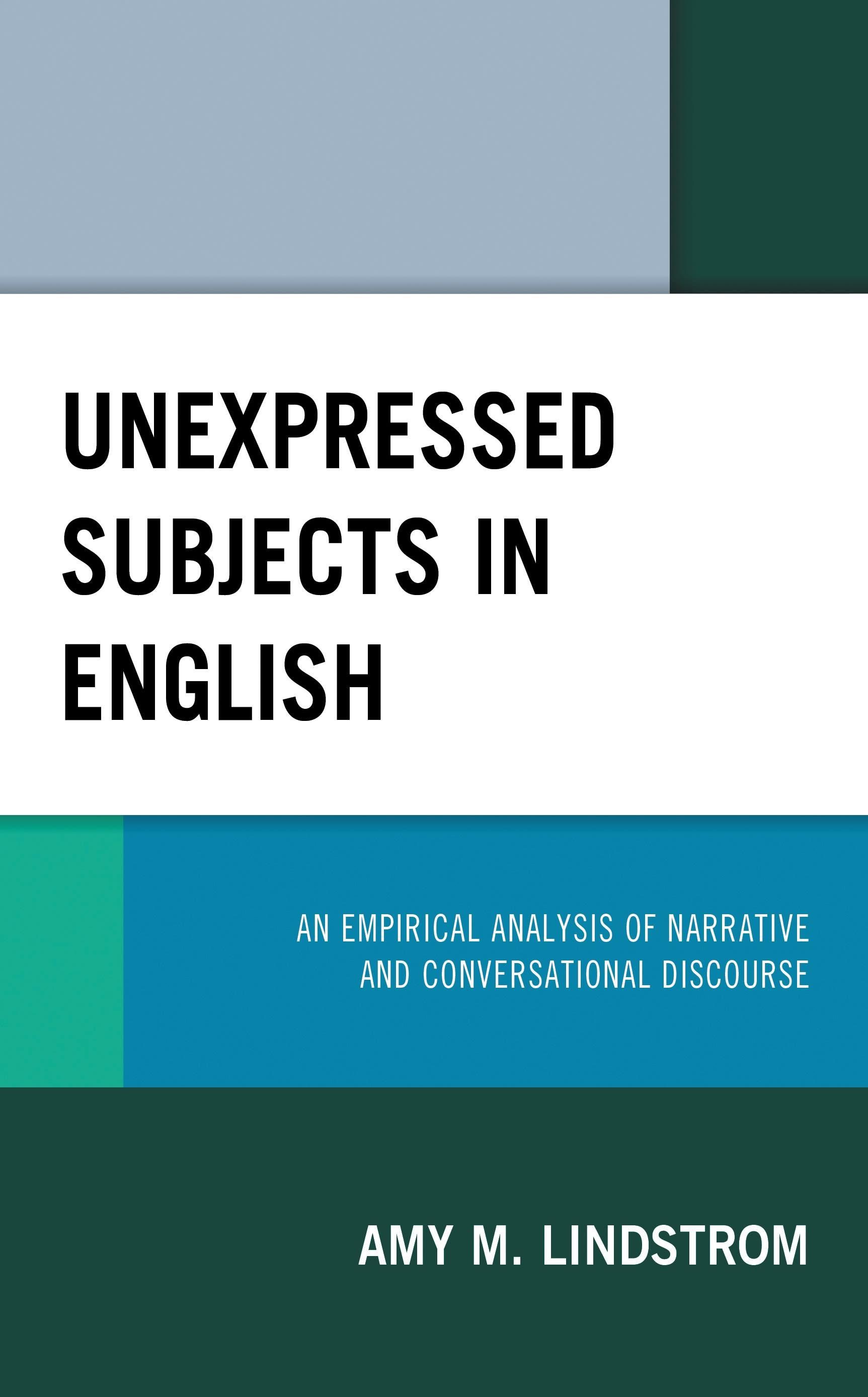
Unexpressed Subjects in English: An Empirical Analysis of Narrative and Conversational Discourse challenges previous assumptions of what is grammatically possible in English through an examination of contexts in which speakers omit subjects, demonstrating how language structure is influenced by communicative needs.
Through corpus-based analysis of both interactive conversations and monologic narratives, Amy M. Lindstrom reveals how the discourse/pragmatic factors of accessibility and chronological ordering, the prosodic effect of linking, and the mechanical effect of priming intersect to provide a rigorous account of subject (un)expression in spoken American English. Higher degrees of linking, cohesion, and connection lead to more unexpressed subjects. Lindstrom also analyzes frequent constructions with unexpressed subjects vis-à-vis paths of grammaticalization. The author presents a measurement of discourse connectedness that shows how the intersection of prosody and pragmatics illustrates the powerful effect of spontaneous discourse in shaping grammar. This study adds to our understanding of language and cognition by contributing to our knowledge of the conceptualization, categorization, and representation of experience and memory.
Through corpus-based analysis of both interactive conversations and monologic narratives, Amy M. Lindstrom reveals how the discourse/pragmatic factors of accessibility and chronological ordering, the prosodic effect of linking, and the mechanical effect of priming intersect to provide a rigorous account of subject (un)expression in spoken American English. Higher degrees of linking, cohesion, and connection lead to more unexpressed subjects. Lindstrom also analyzes frequent constructions with unexpressed subjects vis-à-vis paths of grammaticalization. The author presents a measurement of discourse connectedness that shows how the intersection of prosody and pragmatics illustrates the powerful effect of spontaneous discourse in shaping grammar. This study adds to our understanding of language and cognition by contributing to our knowledge of the conceptualization, categorization, and representation of experience and memory.
Payez facilement par carte, Klarna, Apple Pay ou Google Pay. Pas satisfait ? Vous avez toujours une garantie de remboursement de 14 jours. En savoir plus dans nos conditions. Si vous avez des questions, envoyez-nous un e-mail à hello@memmo.org.
Memmo facilite tes études, où que tu sois dans le monde. On rassemble tes manuels de cours et des outils d'étude intelligents au même endroit : résumés, quiz, podcasts et flashcards. Et il y a Ted, ton compagnon d'étude qui répond à toutes tes questions. Plus de 50 000 étudiants étudient déjà ici – conçu pour t'aider à apprendre plus vite et à moins stresser.