
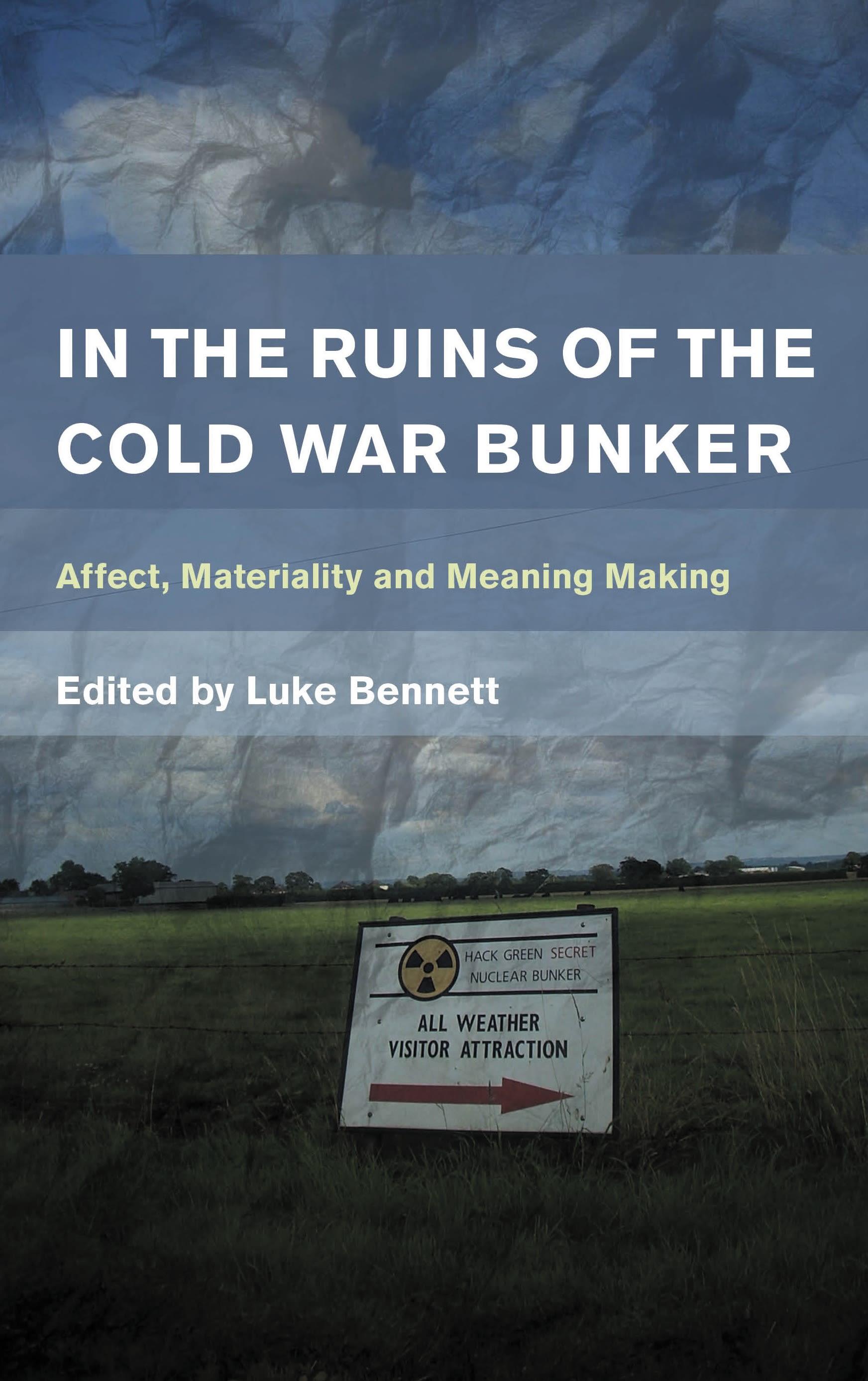
During the Cold War military and civil defence bunkers were an evocative materialisation of deadly military stand-off. They were also a symbol of a deeply affective, pervasive anxiety about the prospect of world-destroying nuclear war. But following the sudden fall of the Berlin Wall in 1989 these sites were swiftly abandoned, and exposed to both material and semantic ruination.
This volume investigates the uses and meanings now projected onto these seeming blank, derelict spaces. It explores how engagements with bunker ruins provide fertile ground for the study of improvised meaning making, place-attachment, hobby practices, social materiality and trauma studies. With its commentators ranging across the arts and humanities and the social sciences, this multi-disciplinary collection sets a concern with the phenomenological qualities of these places as contemporary ruins – and of their strange affective affordances – alongside scholarship examining how these places embody, and/or otherwise connect with their Cold War originations and purpose both materially and through memory and trauma.
Each contribution reflexively considers the process of engaging with these places – and whether via the archive or direct sensory immersion. In doing so the book broadens the bunker’s contemporary signification and contributes to theoretically informed analysis of ruination, place attachment, meaning making, and material culture.
This volume investigates the uses and meanings now projected onto these seeming blank, derelict spaces. It explores how engagements with bunker ruins provide fertile ground for the study of improvised meaning making, place-attachment, hobby practices, social materiality and trauma studies. With its commentators ranging across the arts and humanities and the social sciences, this multi-disciplinary collection sets a concern with the phenomenological qualities of these places as contemporary ruins – and of their strange affective affordances – alongside scholarship examining how these places embody, and/or otherwise connect with their Cold War originations and purpose both materially and through memory and trauma.
Each contribution reflexively considers the process of engaging with these places – and whether via the archive or direct sensory immersion. In doing so the book broadens the bunker’s contemporary signification and contributes to theoretically informed analysis of ruination, place attachment, meaning making, and material culture.
Payez facilement par carte, Klarna, Apple Pay ou Google Pay. Pas satisfait ? Vous avez toujours une garantie de remboursement de 14 jours. En savoir plus dans nos conditions. Si vous avez des questions, envoyez-nous un e-mail à hello@memmo.org.
Memmo facilite tes études, où que tu sois dans le monde. On rassemble tes manuels de cours et des outils d'étude intelligents au même endroit : résumés, quiz, podcasts et flashcards. Et il y a Ted, ton compagnon d'étude qui répond à toutes tes questions. Plus de 50 000 étudiants étudient déjà ici – conçu pour t'aider à apprendre plus vite et à moins stresser.