
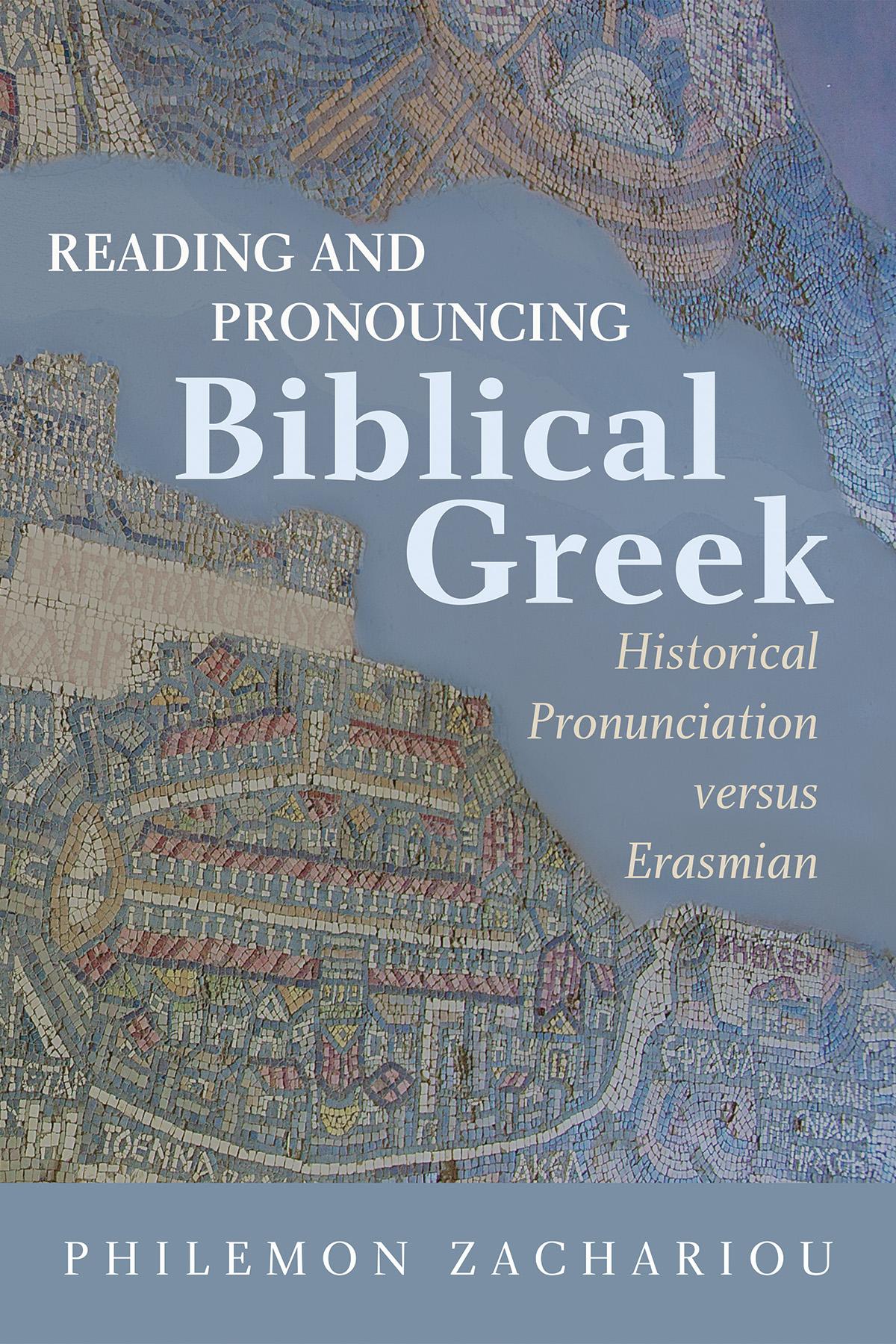
This book invites you to see not only how Hellenistic Koine ought to be pronounced but also why. Rigorously investigating the history of Greek orthography and sounds from classical times to the present, the author places linguistic findings on one side of the scale and related events on the other. The result is a balance between the evidence of the historical Greek sounds in Koine and pre-Koine times, and the political events that derailed those sounds as they were being transported through Europe's Renaissance academia and replaced them with Erasmian.
This book argues for a return to the historical Greek sounds now preserved in Neohellenic (Modern Greek) as a step toward mending the Erasmian dichotomy that rendered post-Koine Greek irrelevant to New Testament Greek studies. The goal is a holistic and diachronic application of the Hellenic language and literature to illume exegetically the Greek text, as the New Testament contains numerous features that have close affinity with Neohellenic and should not be left unexplored.
Payez facilement par carte, Klarna, Apple Pay ou Google Pay. Pas satisfait ? Vous avez toujours une garantie de remboursement de 14 jours. En savoir plus dans nos conditions. Si vous avez des questions, envoyez-nous un e-mail à hello@memmo.org.
Memmo facilite tes études, où que tu sois dans le monde. On rassemble tes manuels de cours et des outils d'étude intelligents au même endroit : résumés, quiz, podcasts et flashcards. Et il y a Ted, ton compagnon d'étude qui répond à toutes tes questions. Plus de 50 000 étudiants étudient déjà ici – conçu pour t'aider à apprendre plus vite et à moins stresser.
Tu pourrais aussi aimer
Acheter le livre0