
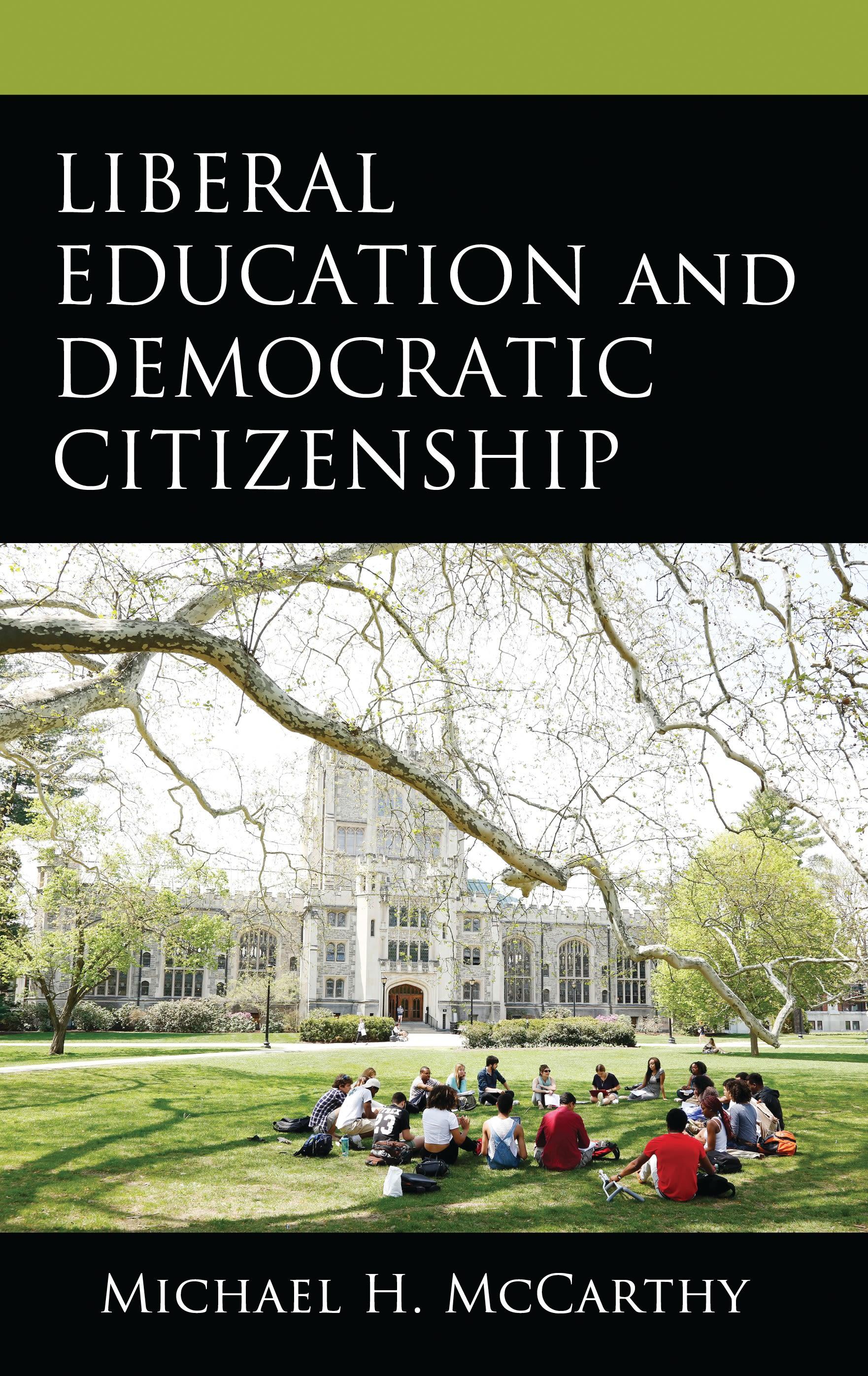
In Liberal Education and Democratic Citizenship, Michael H. McCarthy carefully describes the many crises confronting American democracy and identifies their philosophical, cultural, and institutional origins. He argues that a liberal education, properly understood, can address several of these crises effectively.
The book’s successive chapters explore the sources, areas, and levels of division in contemporary America, and show how they have created important disagreements about the major challenges we presently face and the credible solutions they require. McCarthy articulates what a liberal education actually is and why it is vitally important for both our personal and civic lives. He also clarifies the critical contrast between effective freedom, the aim of a liberal education, and the concepts of freedom within economic and political liberalism.
McCarthy addresses the distinctive educational challenges presented by modernity and post-modernity: their moral aspirations, acute historical consciousness, and passion for radical criticism, as well as the traditional (Tocqueville) and contemporary (William Galston and Charles Taylor) discontents of American democracy. A central part of the book’s unfolding argument is the enduring cultural contrast between the principles and aspirations of civic republicanism and the imperial assumptions of economics. This juxtaposition helps us to understand the power and limitations of the “stories we Americans live by” as well as the civic virtues we commonly need to create a free, just, and multi-racial America. These critical virtues, McCarthy argues, are the specific goal of a liberal and democratic education
The book’s successive chapters explore the sources, areas, and levels of division in contemporary America, and show how they have created important disagreements about the major challenges we presently face and the credible solutions they require. McCarthy articulates what a liberal education actually is and why it is vitally important for both our personal and civic lives. He also clarifies the critical contrast between effective freedom, the aim of a liberal education, and the concepts of freedom within economic and political liberalism.
McCarthy addresses the distinctive educational challenges presented by modernity and post-modernity: their moral aspirations, acute historical consciousness, and passion for radical criticism, as well as the traditional (Tocqueville) and contemporary (William Galston and Charles Taylor) discontents of American democracy. A central part of the book’s unfolding argument is the enduring cultural contrast between the principles and aspirations of civic republicanism and the imperial assumptions of economics. This juxtaposition helps us to understand the power and limitations of the “stories we Americans live by” as well as the civic virtues we commonly need to create a free, just, and multi-racial America. These critical virtues, McCarthy argues, are the specific goal of a liberal and democratic education
Payez facilement par carte, Klarna, Apple Pay ou Google Pay. Pas satisfait ? Vous avez toujours une garantie de remboursement de 14 jours. En savoir plus dans nos conditions. Si vous avez des questions, envoyez-nous un e-mail à hello@memmo.org.
Memmo facilite tes études, où que tu sois dans le monde. On rassemble tes manuels de cours et des outils d'étude intelligents au même endroit : résumés, quiz, podcasts et flashcards. Et il y a Ted, ton compagnon d'étude qui répond à toutes tes questions. Plus de 50 000 étudiants étudient déjà ici – conçu pour t'aider à apprendre plus vite et à moins stresser.