
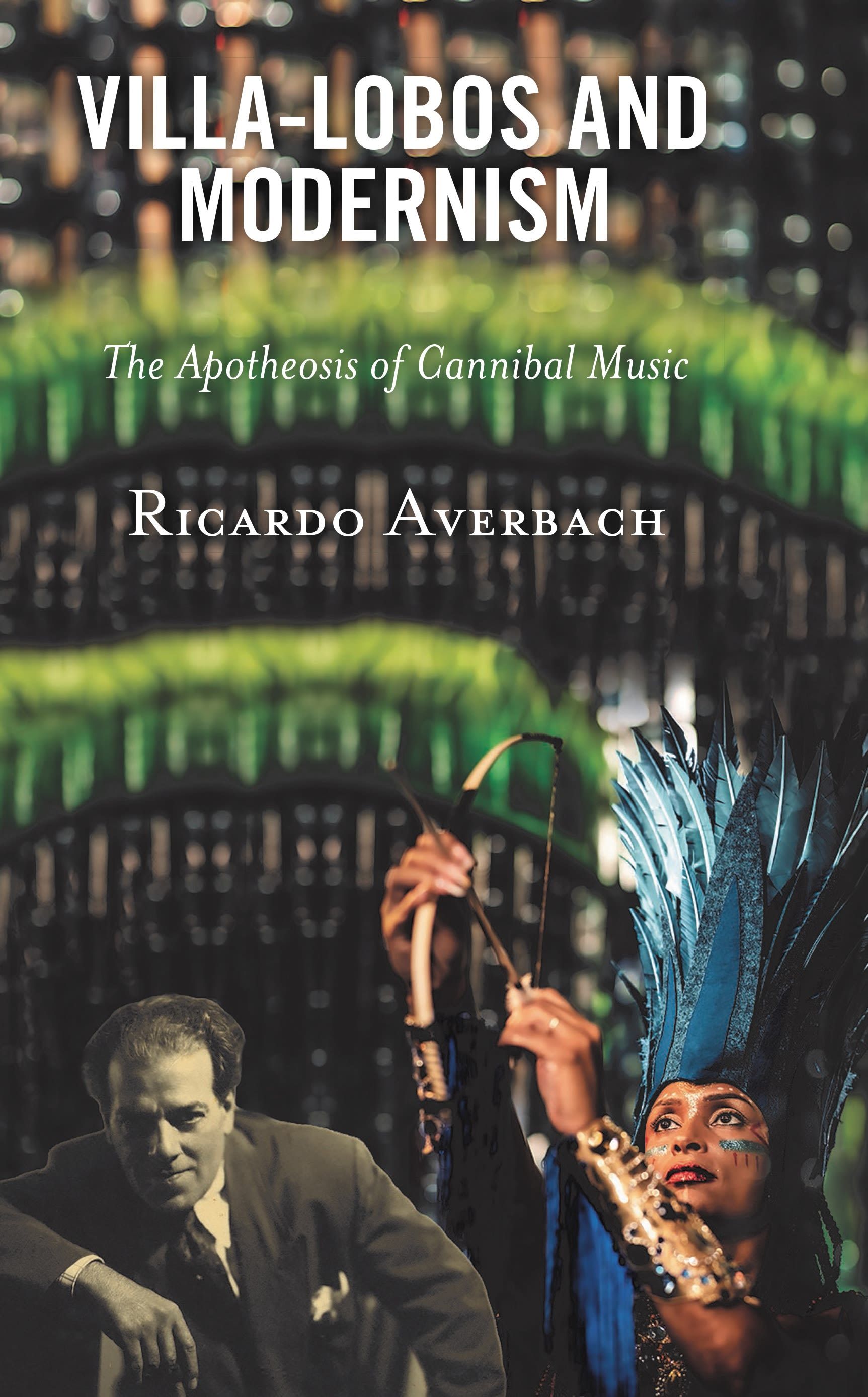
Villa-Lobos and Modernism: The Apotheosis of Cannibal Music provides a new assessment of the Brazilian composer Heitor Villa-Lobos in terms of his contributions to the Modernist Movement of the twentieth century. In this profound study, Ricardo Averbach elevates Cultural Cannibalism as a major manifestation of the Modernist aesthetics and Villa-Lobos as its top exponent in the music field. Villa-Lobos’s anthropophagic appetite for multiple opposing aesthetics enlightens through the juxtaposition of contradictory elements, leaving a legacy of unmatched originality, a glittering kaleidoscope of sounds that draw from the radical power of Josephine Baker to the outrageous extravagance of Carmen Miranda, from Dada to Einstein’s counterintuitive scientific findings, from folklorism to atonality. The constructed analyses use the works of Stravinsky as a familiar and popular touchstone for accessing Villa-Lobos as the leading exponent of an aesthetic movement that has been neglected due to a traditional Eurocentric view of Modernism. Averbach opens up new possibilities for the study of twentieth-century music, in general, while unveiling how much our present aesthetics owes to the Modernist ideas introduced by the Brazilian composer.
Payez facilement par carte, Klarna, Apple Pay ou Google Pay. Pas satisfait ? Vous avez toujours une garantie de remboursement de 14 jours. En savoir plus dans nos conditions. Si vous avez des questions, envoyez-nous un e-mail à hello@memmo.org.
Memmo facilite tes études, où que tu sois dans le monde. On rassemble tes manuels de cours et des outils d'étude intelligents au même endroit : résumés, quiz, podcasts et flashcards. Et il y a Ted, ton compagnon d'étude qui répond à toutes tes questions. Plus de 50 000 étudiants étudient déjà ici – conçu pour t'aider à apprendre plus vite et à moins stresser.