
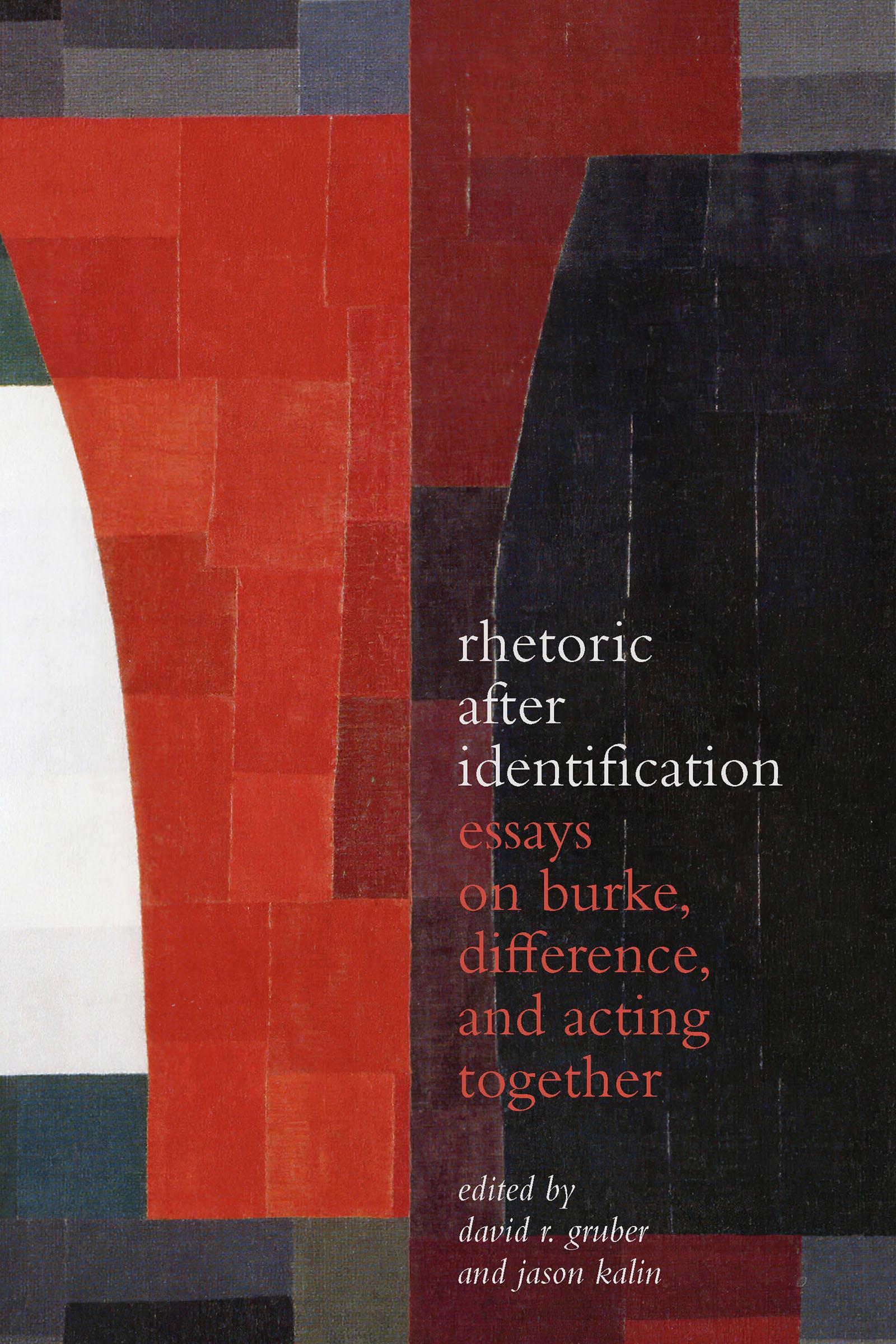
How can we act together when identification may no longer bridge the divide?
Since the publication of Kenneth Burke's A Rhetoric of Motives (1950), identification has been the central concept of rhetorical theory. Rhetoric After Identification offers new theoretical frameworks for engaging with and letting go of identification—to see difference as dignity and consider how we are never fully understandable to one another yet can work toward making worlds in common. The volume confronts the primacy of identification through a variety of interdisciplinary lenses, drawing on affect and body studies, new materialisms, and decolonial philosophies. Challenging the assumption that identifying with one another is necessary to cooperation, contributors interrogate how the pursuit of "sameness" can perpetuate inequalities. In doing so, they do not abandon the potential for affective and symbolic identification; instead, they multiply the generative force of difference.
Contributors: Matthew Brigham, Catherine Chaput, Donovan Conley, Diane Davis, Matthew Halm, Chris Ingraham, J. G. Izaguirre III, Chris Mays, Kaden Milliren, Megan Poole, Krista Ratcliffe
Payez facilement par carte, Klarna, Apple Pay ou Google Pay. Pas satisfait ? Vous avez toujours une garantie de remboursement de 14 jours. En savoir plus dans nos conditions. Si vous avez des questions, envoyez-nous un e-mail à hello@memmo.org.
Memmo facilite tes études, où que tu sois dans le monde. On rassemble tes manuels de cours et des outils d'étude intelligents au même endroit : résumés, quiz, podcasts et flashcards. Et il y a Ted, ton compagnon d'étude qui répond à toutes tes questions. Plus de 50 000 étudiants étudient déjà ici – conçu pour t'aider à apprendre plus vite et à moins stresser.