
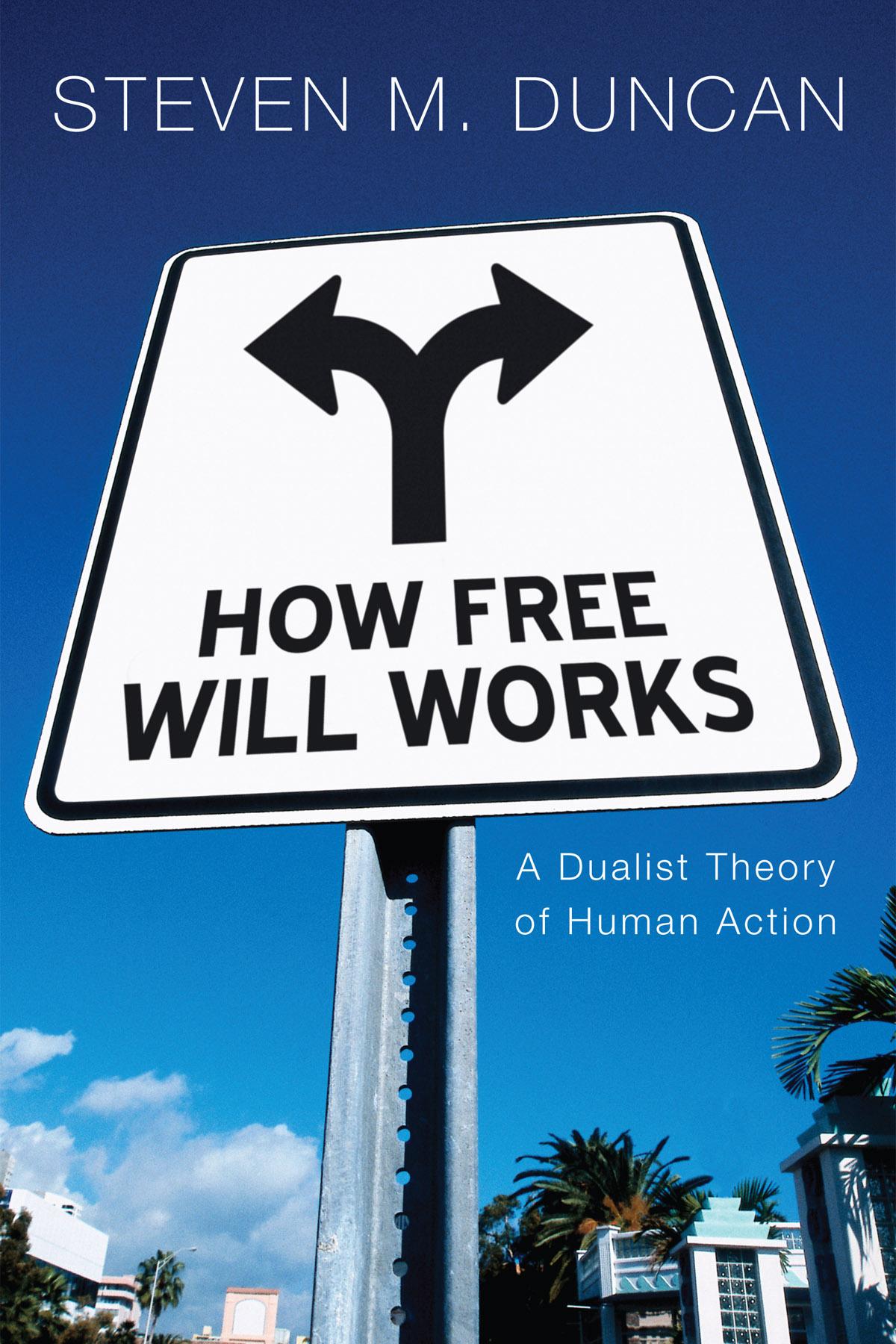
In How Free Will Works, Steven M. Duncan provides not merely discussions of, but potential answers to two of the most vexed questions discussed by philosophers concerning free choice. First, supposing that the mind and the body are separate substances of opposed natures, how is it possible for them to interact such that an entirely non-physical immanent mental act can give rise to changes in the external world? Second, supposing that there is free will, how is it possible for our acts of volition/free choice to be neither causally determined nor merely chance/random events?
This book spells out a new way of envisaging the mind/body relation and the nature of mind/body causal interaction that avoids the traditional "interaction problem." It also explains how it is possible for free choice neither to require an efficient cause nor to act as an efficient cause while nevertheless affecting the processes in the physical world through which intentional action is realized in human behavior. In the second half of the book, the theory developed in the first part of the book is applied to the difficult issues arising from the Christian doctrine of salvation: sin, grace, and redemption.
Payez facilement par carte, Klarna, Apple Pay ou Google Pay. Pas satisfait ? Vous avez toujours une garantie de remboursement de 14 jours. En savoir plus dans nos conditions. Si vous avez des questions, envoyez-nous un e-mail à hello@memmo.org.
Memmo facilite tes études, où que tu sois dans le monde. On rassemble tes manuels de cours et des outils d'étude intelligents au même endroit : résumés, quiz, podcasts et flashcards. Et il y a Ted, ton compagnon d'étude qui répond à toutes tes questions. Plus de 50 000 étudiants étudient déjà ici – conçu pour t'aider à apprendre plus vite et à moins stresser.
Tu pourrais aussi aimer
Acheter le livre0