
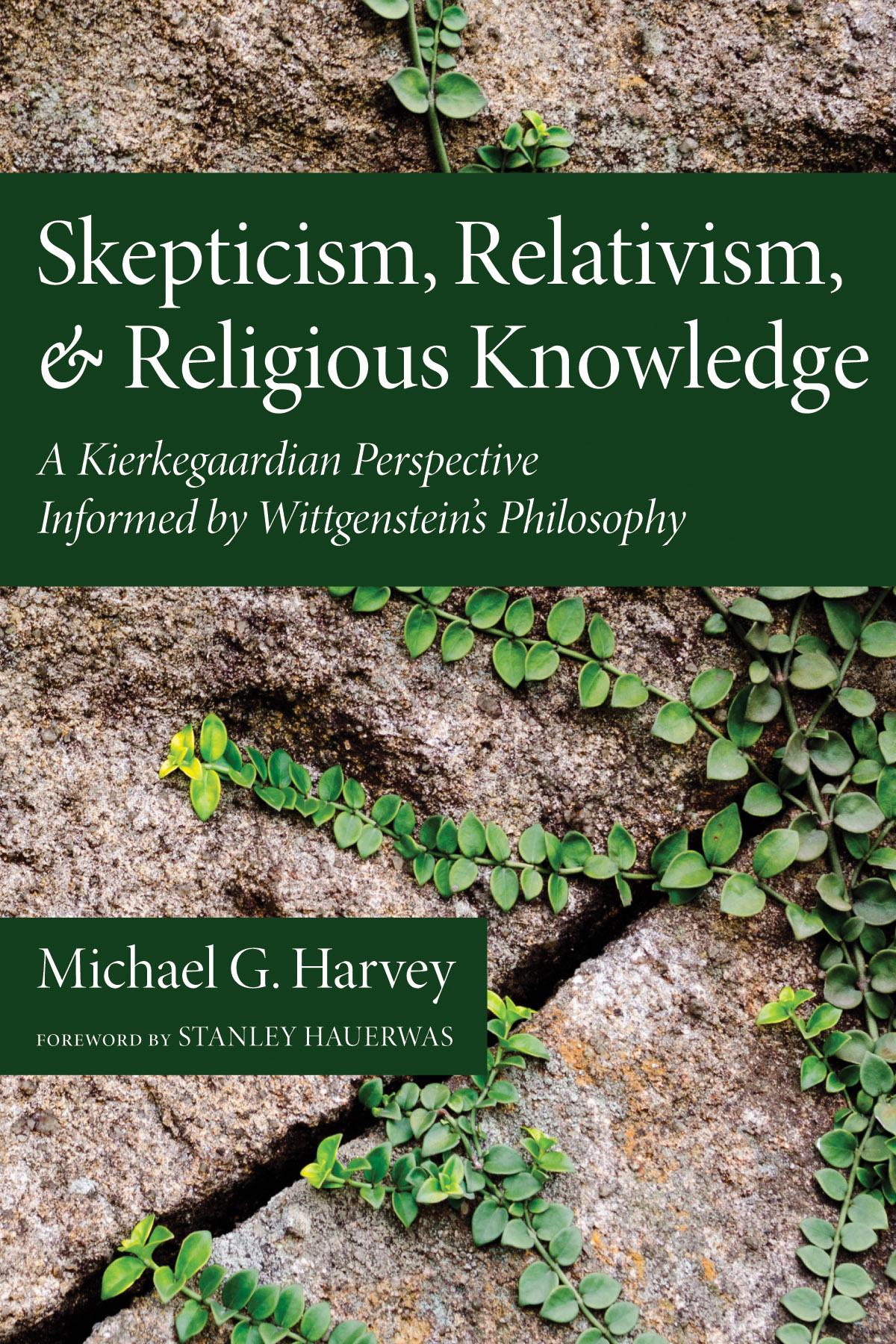
Skepticism, Relativism, and Religious Knowledge examines the challenges of skepticism and relativism to religious knowledge after the demise of classical foundationalism. Whereas skepticism doubts our capacity to know truth, relativism doubts whether we can find a sufficiently objective perspective to adjudicate strong disagreement about truth. Thus relativism involves skepticism about rationality rather than truth. In developing a critique of responses to these challenges by Karl Barth and Reformed epistemology, Michael G. Harvey develops a Kierkegaardian perspective on religious knowledge informed by Wittgenstein's philosophy. This perspective is based on a hermeneutical model of rationality that appeals to what we hold in common rather than private and parochial foundations in order to settle disagreement. Although doubt is necessary to produce more truth-preserving beliefs, we must scrutinize our doubts as well as beliefs in order to prevent the belief-forming mechanism of doubt from degenerating into a general mood of skepticism about rationality and truth. More fundamentally, we must realize that skepticism and relativism are rooted in attitudes of alienation. Whereas epistemology aims at a non-alienated view of the world, Christianity aims at a non-alienated way of living through faith that enables both our beliefs and lives to correspond with the truth.
Payez facilement par carte, Klarna, Apple Pay ou Google Pay. Pas satisfait ? Vous avez toujours une garantie de remboursement de 14 jours. En savoir plus dans nos conditions. Si vous avez des questions, envoyez-nous un e-mail à hello@memmo.org.
Memmo facilite tes études, où que tu sois dans le monde. On rassemble tes manuels de cours et des outils d'étude intelligents au même endroit : résumés, quiz, podcasts et flashcards. Et il y a Ted, ton compagnon d'étude qui répond à toutes tes questions. Plus de 50 000 étudiants étudient déjà ici – conçu pour t'aider à apprendre plus vite et à moins stresser.
Tu pourrais aussi aimer
Acheter le livre0