
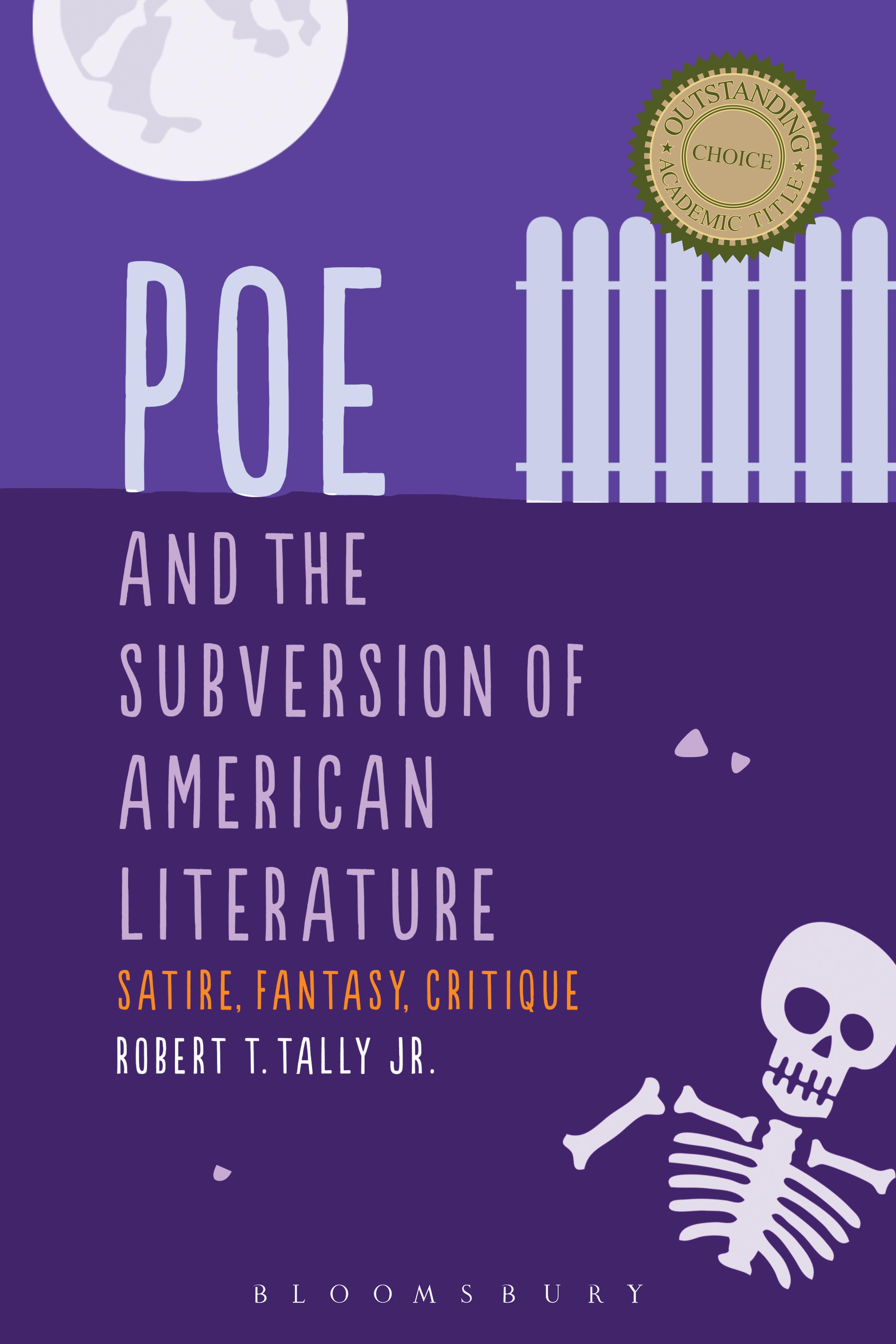
Choice Outstanding Academic Title 2014
In Poe and the Subversion of American Literature, Robert T. Tally Jr. argues that Edgar Allan Poe is best understood, not merely as a talented artist or canny magazinist, but primarily as a practical joker who employs satire and fantasy to poke fun at an emergent nationalist discourse circulating in the United States. Poe's satirical and fantastic mode, on display even in his apparently serious short stories and literary criticism, undermines the earnest attempts to establish a distinctively national literature in the nineteenth century. In retrospect, Poe's work also subtly subverts the tenets of an institutionalized American Studies in the twentieth century. Tally interprets Poe's life and works in light of his own social milieu and in relation to the disciplinary field of American literary studies, finding Poe to be neither the poète maudit of popular mythology nor the representative American writer revealed by recent scholarship. Rather, Poe is an untimely figure whose work ultimately makes a mockery of those who would seek to contain it. Drawing upon Gilles Deleuze's distinction between nomad thought and state philosophy, Tally argues that Poe's varied literary and critical writings represent an alternative to American literature. Through his satirical critique of U.S. national culture and his otherworldly projection of a postnational space of the imagination, Poe establishes a subterranean, nomadic, and altogether worldly literary practice.
In Poe and the Subversion of American Literature, Robert T. Tally Jr. argues that Edgar Allan Poe is best understood, not merely as a talented artist or canny magazinist, but primarily as a practical joker who employs satire and fantasy to poke fun at an emergent nationalist discourse circulating in the United States. Poe's satirical and fantastic mode, on display even in his apparently serious short stories and literary criticism, undermines the earnest attempts to establish a distinctively national literature in the nineteenth century. In retrospect, Poe's work also subtly subverts the tenets of an institutionalized American Studies in the twentieth century. Tally interprets Poe's life and works in light of his own social milieu and in relation to the disciplinary field of American literary studies, finding Poe to be neither the poète maudit of popular mythology nor the representative American writer revealed by recent scholarship. Rather, Poe is an untimely figure whose work ultimately makes a mockery of those who would seek to contain it. Drawing upon Gilles Deleuze's distinction between nomad thought and state philosophy, Tally argues that Poe's varied literary and critical writings represent an alternative to American literature. Through his satirical critique of U.S. national culture and his otherworldly projection of a postnational space of the imagination, Poe establishes a subterranean, nomadic, and altogether worldly literary practice.
Payez facilement par carte, Klarna, Apple Pay ou Google Pay. Pas satisfait ? Vous avez toujours une garantie de remboursement de 14 jours. En savoir plus dans nos conditions. Si vous avez des questions, envoyez-nous un e-mail à hello@memmo.org.
Memmo facilite tes études, où que tu sois dans le monde. On rassemble tes manuels de cours et des outils d'étude intelligents au même endroit : résumés, quiz, podcasts et flashcards. Et il y a Ted, ton compagnon d'étude qui répond à toutes tes questions. Plus de 50 000 étudiants étudient déjà ici – conçu pour t'aider à apprendre plus vite et à moins stresser.