
"This is the most comprehensive manual written on natural dyes since the early 1800s. Jim Liles has rescued ancient skills from near-extinction and shared them in a book that will inspire, challenge, and guide the modern dyer."—Rita Buchanan, author of A Weaver's Garden and editor of the new Brooklyn Botanic Gardens Handbook on Natural Dyes
" A must for every dyer. The recipes are explicit and detailed as to success and failure."—Mary Frances Davidson
For several thousand years, all dyes were of animal, vegetable, or mineral origin, and many ancient civilizations possessed excellent dye technologies. The first synthetic dye was produced in 1856, and the use of traditional dyes declined rapidly thereafter. By 1915 few nonsynthetics were used by industry or craftspeople. The craft revivals of the 1920s explored traditional methods of natural dyeing to some extent, particularly with wool, although the great eighteenth- and nineteenth-century dye manuals, which recorded the older processes, remained largely forgotten.
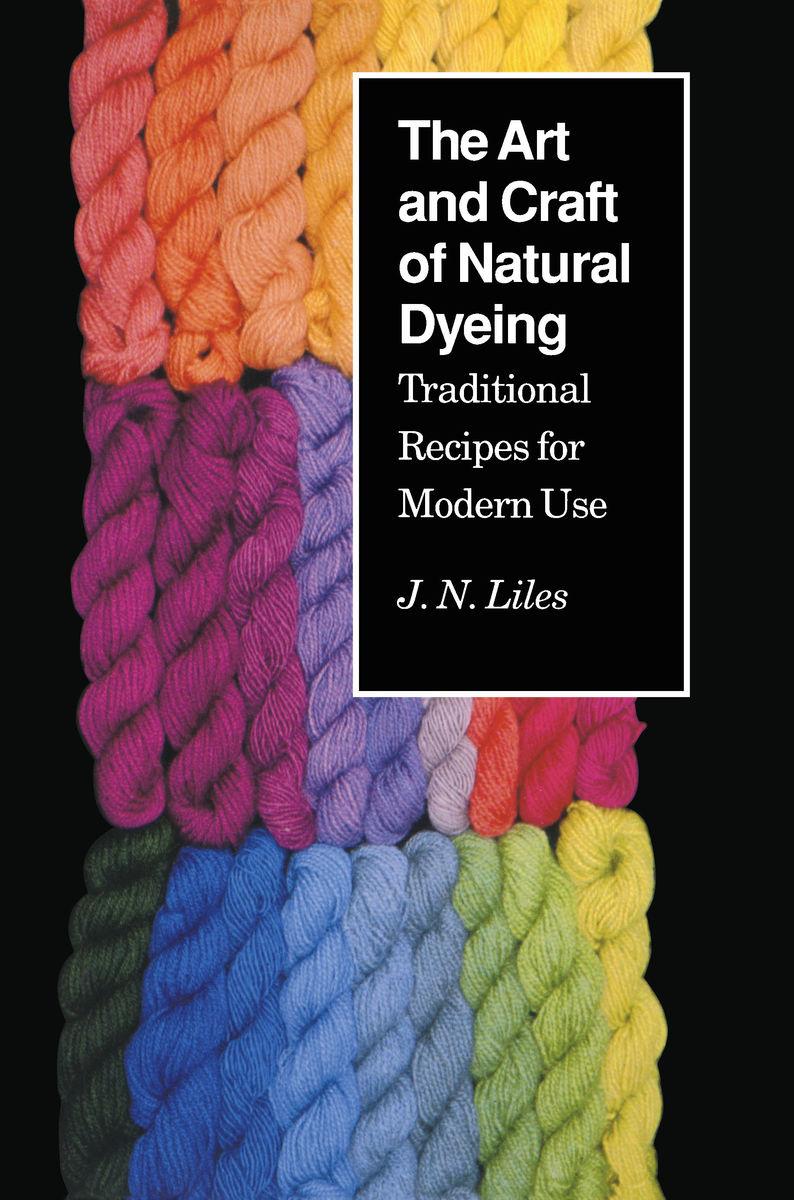
In The Art and Craft of Natural Dyeing, J. N. Liles consolidates the lore of the older dyers with his own firsthand experience to produce both a history of natural dyes and a practical manual for using presynthetic era processes on all the natural fibers—cotton, linen, silk, and wool. A general section on dyeing and mordanting and a glossary introduce the beginner to dye technology. In subsequent chapters, Liles summarizes the traditional dye methods available for each major color group. Scores of recipes provide detailed instructions on how to collect ingredients—flowers, weeds, insects, wood, minerals—prepare the dyevat, troubleshoot, and achieve specific shades.
The book will appeal not only to beginning and veteran dyers but also to students of restorations and reconstruction as well as to craftspeople—spinners, quilters, weavers, knitters, and other textile artists—interested in natural dyes for their beauty and historical authenticity.
" A must for every dyer. The recipes are explicit and detailed as to success and failure."—Mary Frances Davidson
For several thousand years, all dyes were of animal, vegetable, or mineral origin, and many ancient civilizations possessed excellent dye technologies. The first synthetic dye was produced in 1856, and the use of traditional dyes declined rapidly thereafter. By 1915 few nonsynthetics were used by industry or craftspeople. The craft revivals of the 1920s explored traditional methods of natural dyeing to some extent, particularly with wool, although the great eighteenth- and nineteenth-century dye manuals, which recorded the older processes, remained largely forgotten.
In The Art and Craft of Natural Dyeing, J. N. Liles consolidates the lore of the older dyers with his own firsthand experience to produce both a history of natural dyes and a practical manual for using presynthetic era processes on all the natural fibers—cotton, linen, silk, and wool. A general section on dyeing and mordanting and a glossary introduce the beginner to dye technology. In subsequent chapters, Liles summarizes the traditional dye methods available for each major color group. Scores of recipes provide detailed instructions on how to collect ingredients—flowers, weeds, insects, wood, minerals—prepare the dyevat, troubleshoot, and achieve specific shades.
The book will appeal not only to beginning and veteran dyers but also to students of restorations and reconstruction as well as to craftspeople—spinners, quilters, weavers, knitters, and other textile artists—interested in natural dyes for their beauty and historical authenticity.
Payez facilement par carte, Klarna, Apple Pay ou Google Pay. Pas satisfait ? Vous avez toujours une garantie de remboursement de 14 jours. En savoir plus dans nos conditions. Si vous avez des questions, envoyez-nous un e-mail à hello@memmo.org.
Memmo facilite tes études, où que tu sois dans le monde. On rassemble tes manuels de cours et des outils d'étude intelligents au même endroit : résumés, quiz, podcasts et flashcards. Et il y a Ted, ton compagnon d'étude qui répond à toutes tes questions. Plus de 50 000 étudiants étudient déjà ici – conçu pour t'aider à apprendre plus vite et à moins stresser.
Tu pourrais aussi aimer
Acheter le livre0