
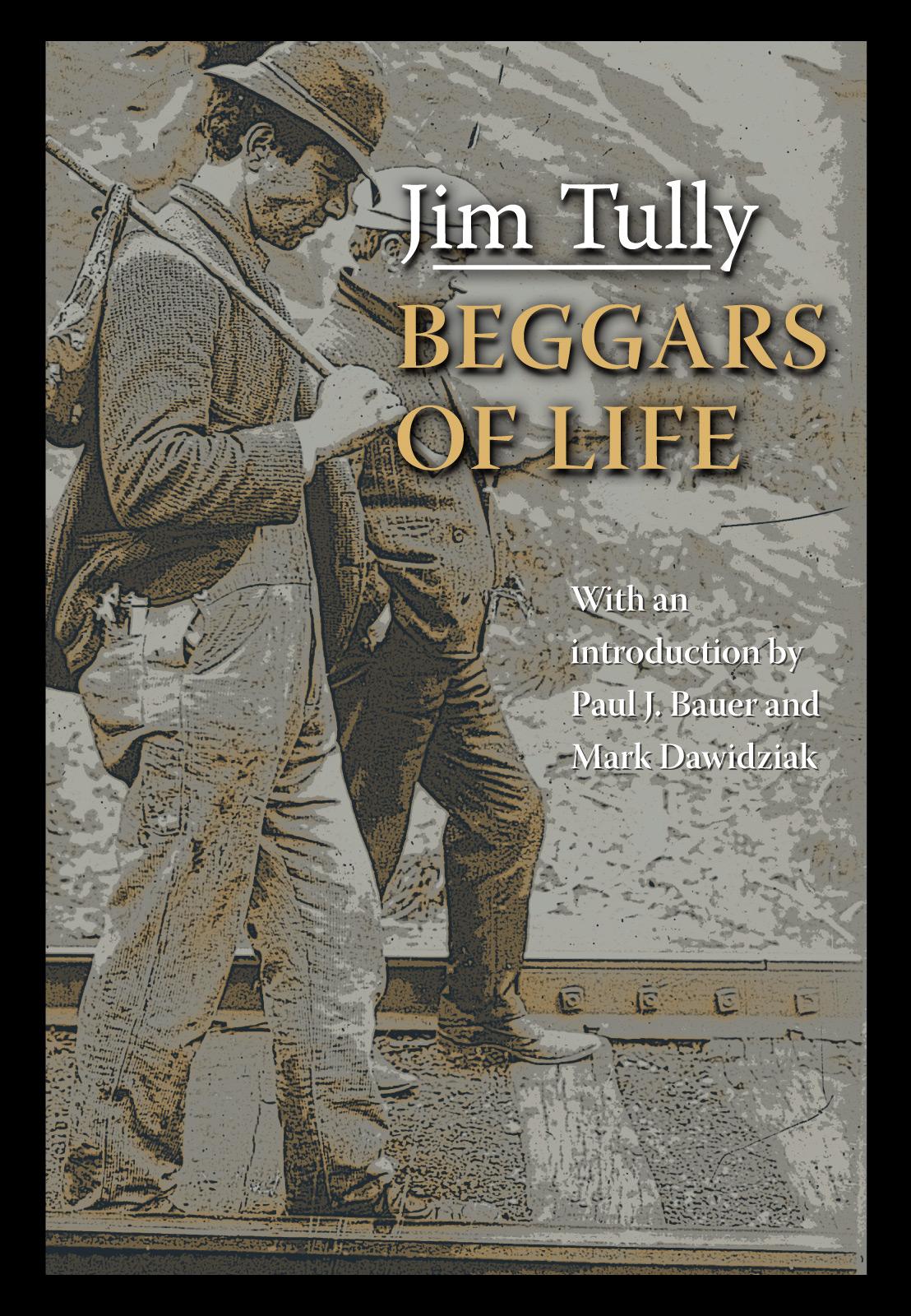
Jim Tully left his hometown of St. Marys, Ohio, in 1901, spending most of his teenage years in the company of hoboes. Drifting across the country as a “road kid,” he spent those years scrambling into boxcars, sleeping in hobo jungles, avoiding railroad cops, begging meals from back doors, and haunting public libraries. Tully crafted these memories into a dark and astonishing chronicle of the American underclass—especially in his second book, Beggars of Life, an autobiographical novel published in 1924. Tully saw it all, from a church baptism in the Mississippi River to election day in Chicago. And in Beggars of Life, he captures an America largely hidden from view.
This novelistic memoir impressed readers and reviewers with its remarkable vitality and honesty. Tully’s devotion to Mark Twain and Jack London taught him the importance of giving the reader a sense of place, and this he does brilliantly, again and again, throughout Beggars of Life. From the opening conversation on a railroad trestle, Beggars of Life rattles along like the Fast Flyer Virginia that Tully boards midway through the book. This is the book that defined Tully’s hard-boiled style and set the pattern for the twelve books that followed over the next two decades. Startling in its originality and intensity, Beggars of Life is a breakneck journey made while clinging to the lowest rungs of the social ladder.
Payez facilement par carte, Klarna, Apple Pay ou Google Pay. Pas satisfait ? Vous avez toujours une garantie de remboursement de 14 jours. En savoir plus dans nos conditions. Si vous avez des questions, envoyez-nous un e-mail à hello@memmo.org.
Memmo facilite tes études, où que tu sois dans le monde. On rassemble tes manuels de cours et des outils d'étude intelligents au même endroit : résumés, quiz, podcasts et flashcards. Et il y a Ted, ton compagnon d'étude qui répond à toutes tes questions. Plus de 50 000 étudiants étudient déjà ici – conçu pour t'aider à apprendre plus vite et à moins stresser.