
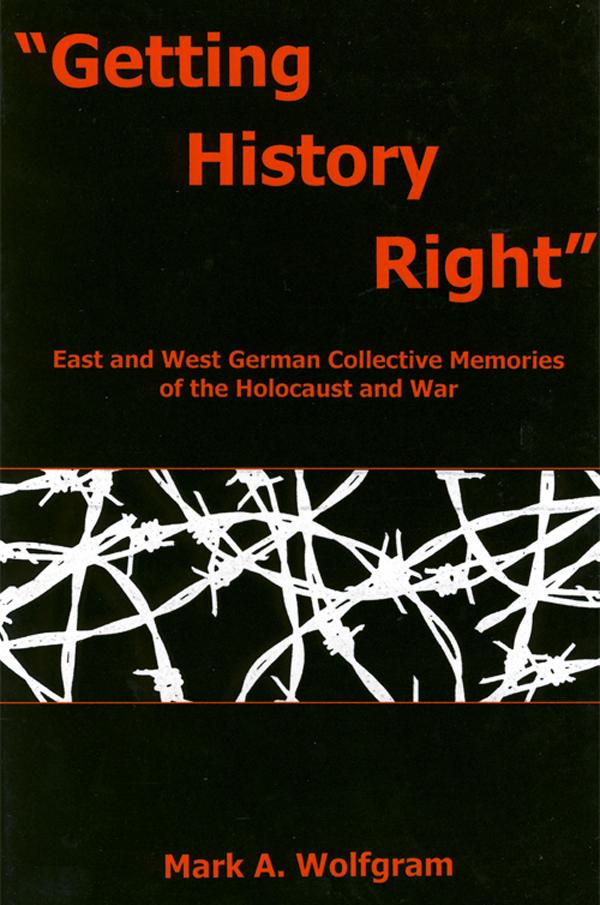
How do individuals, societies, and nations deal with their difficult pasts? "Getting History Right" examines this question in a comparative context by looking at an authoritarian East Germany and a pluralistic, democratic West Germany. Eschewing a narrow focus on elites, this work draws extensively on societal level discussions of the past in popular culture, such as film, television, radio, and newspapers. It examines how societal level discussions of the past shaped individual perceptions and interpretations of the past; and how individual perceptions and struggles over the meaning of the past shaped societal level discussions. These struggles over meaning and "getting history right" are not only shaped by political power, but are also a source of symbolic power.
To understand political life, scholars must embrace not only material political power, but also the symbolic and cultural roots of power. The research presented here makes extensive use of public opinion data, cinema attendance, and television viewer data, as well as other sources, to look at the multiple meanings that East and West Germans assigned to the Holocaust and World War II across time. Rather than culture merely being an extension of political power, this work argues that culture and the boundaries of the cultural matrix shape the use of political power by different social actors. Getting history right is not only a reflection of political power; it is a source of power itself.
To understand political life, scholars must embrace not only material political power, but also the symbolic and cultural roots of power. The research presented here makes extensive use of public opinion data, cinema attendance, and television viewer data, as well as other sources, to look at the multiple meanings that East and West Germans assigned to the Holocaust and World War II across time. Rather than culture merely being an extension of political power, this work argues that culture and the boundaries of the cultural matrix shape the use of political power by different social actors. Getting history right is not only a reflection of political power; it is a source of power itself.
Payez facilement par carte, Klarna, Apple Pay ou Google Pay. Pas satisfait ? Vous avez toujours une garantie de remboursement de 14 jours. En savoir plus dans nos conditions. Si vous avez des questions, envoyez-nous un e-mail à hello@memmo.org.
Memmo facilite tes études, où que tu sois dans le monde. On rassemble tes manuels de cours et des outils d'étude intelligents au même endroit : résumés, quiz, podcasts et flashcards. Et il y a Ted, ton compagnon d'étude qui répond à toutes tes questions. Plus de 50 000 étudiants étudient déjà ici – conçu pour t'aider à apprendre plus vite et à moins stresser.